BYLINE: Lauren Quinn
Newswise — URBANA, Ill. — Plants may look inert and harmless, but, at any given moment, they’re waging chemical warfare against attackers, preparing tissues to withstand freezing temperatures, or synthesizing compounds that become medicines for humans. These leafy biochemists produce over a million chemicals, or metabolites, to help them survive their rooted existence.
Amit Rai, assistant professor at the University of Illinois Urbana-Champaign, has dedicated his career to understanding plant metabolites through metabolomics — the study of the ubiquitous chemicals that dictate nearly all of a plant’s cellular, ecological, and adaptive processes. But the field, which got its start just 20-odd years ago, has had its challenges. For example, just because a chemical could be extracted from a plant didn’t mean scientists could tell what it was or how the plant was using it.
Recently, new tools have been developed to radically expand what plant metabolomics can do, enabling researchers to help plants cope with environmental stress, produce useful compounds, and more. Rai’s recent article in Plant Physiology explains.
“We often think DNA determines how a plant functions, but genes mostly provide possibilities. What actually determines success is chemistry,” said Rai, assistant professor in the Department of Crop Sciences, part of the College of Agricultural, Consumer and Environmental Sciences at Illinois. “The metabolites a plant produces control how it resists disease, tolerates drought, and interacts with its environment. Over time, natural selection favors plants that make the right chemicals, and the genome evolves to support those biochemical strategies.”
In their new paper, Rai and his co-authors explore what’s been discovered about plants’ chemical repertoire in the past decades, including plant responses to stressful conditions. For example, researchers have used metabolomic tools to discover the specific compounds involved in salt, drought, heat, and heavy metal tolerance in common crop plants, offering finely tuned targets for future breeding efforts.
The authors also point out where the field has stalled, and how new community-based tools can fill in the gaps.
“In the past, identifying plant compounds required purified chemical standards, but these simply don’t exist for the millions of compounds plants produce,” Rai said. “Now, advances in high-resolution mass spectrometry and AI-based analysis have changed that.”
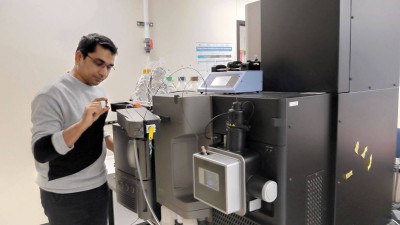
The new approach runs plant samples — often intentionally grown under stressful conditions — through sensitive laboratory equipment for a full inventory of the stress chemicals present. Then AI goes to work, detecting thousands of chemicals simultaneously and comparing patterns across shared databases to predict chemical identities.
“Untargeted metabolomics extracts a vast amount of information from a single sample,” Rai explained. “As researchers share their data and build common databases, our ability to recognize and interpret plant chemicals improves for everyone. Each dataset makes the next discovery easier.”
Rai says experiments are still needed to confirm the functions of the chemicals, but the new technologies allow scientists to pinpoint important molecules far more quickly, leading to a greater understanding of how plants respond to stress and environmental conditions.
Rai sees metabolomics as the next frontier for plant science — complementing gains made in related -omics fields — with applications in everything from food production to pharmaceutical products. Metabolomics is especially well poised to clarify how plants respond to multiple simultaneous stress factors, a priority research focus in the era of climate change.
“There’s a sticking point in the translation of sciences, from controlled experiments to the field. Testing one factor at a time is never going to determine how that individual is going to behave. The moment you add multiple factors, which is the reality in the field and in the chemical space, we always struggle,” Rai said. “That chemical space is noisy, but the new metabolomics tools we discuss in our article and use in my lab are helping us understand how plants behave in the real world.
“Only when we understand that complexity can we develop truly resilient crops, foster natural product discovery, and advance fundamental biology.”
The study, “A deep dive into plant metabolomics: Milestones, technologies, and translational impact,” is published in Plant Physiology [DOI: 10.1093/plphys/kiaf408]. Research in the College of ACES is made possible in part by Hatch funding from USDA’s National Institute of Food and Agriculture.
Rai is also affiliated with the Carl R. Woese Institute for Genomic Biology at Illinois.
https%3A%2F%2Fwww.newswise.com%2Farticles%2Fplants-speak-in-chemicals-scientists-are-learning-how-to-listen%2F%3Fsc%3Drsla