Prime Minister Narendra Modi’s interaction with students focused on making education meaningful, balanced, and free from fear.
pm modi urges students to view education as a joyful journey, not an exam-driven burden
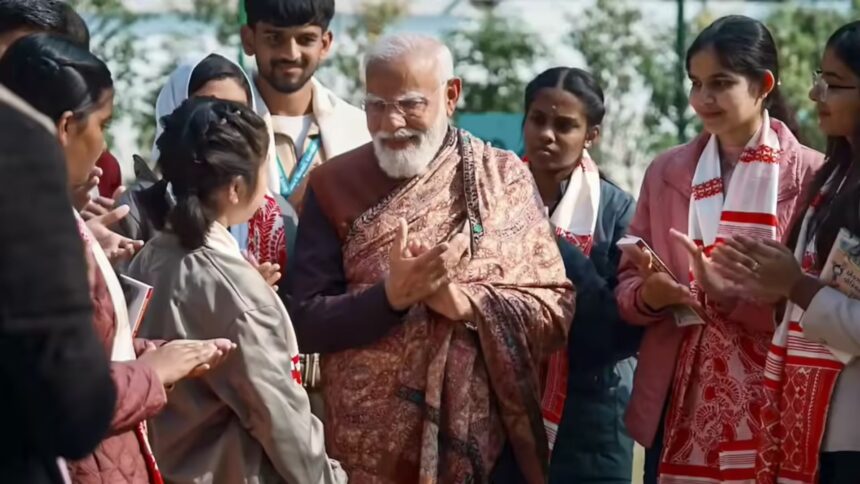
During the ninth edition of Pariksha Pe Charcha, Prime Minister Narendra Modi engaged with students from across the country at his residence in New Delhi, offering guidance that went far beyond examination preparation. Addressing a wide range of questions, the Prime Minister emphasised that education should never feel like a burden, but rather an engaging process that encourages curiosity, participation, and personal growth.
He told students that incomplete or mechanical learning has little value, urging them to immerse themselves fully in their studies. According to him, education becomes powerful only when students are actively involved and emotionally connected to what they are learning. He encouraged children to see exams not as sources of fear but as opportunities to understand themselves better and measure personal progress.
Drawing inspiration from India’s freedom struggle, the Prime Minister urged young learners to dream big and align their aspirations with the nation’s future. He reminded students that when India completes 100 years of independence, they will be at the forefront of shaping the country’s destiny. He called upon them to make the idea of a developed India their personal goal, much like freedom was the dream that guided earlier generations.
Throughout the interaction, Modi discouraged rote learning and excessive focus on marks. He questioned the obsession with rankings, asking whether people remember past toppers years later, and suggested that true success lies in how education shapes one’s character and thinking. He described examinations as tools for self-evaluation rather than final judgements of ability.
The session also featured lighter moments, with students sharing creative gifts and performing songs, creating an atmosphere that reflected the programme’s intent to humanise the exam experience. Modi’s interactions reinforced the idea that learning flourishes best in an environment of encouragement rather than pressure.
focus on balance, confidence, and responsible use of technology
A recurring theme of the discussion was balance. The Prime Minister repeatedly stressed that life, like education, requires equilibrium. Whether it is balancing studies with hobbies, skills with knowledge, or rest with hard work, leaning too heavily in one direction, he said, can lead to stress and instability. He advised students to cultivate both life skills and professional skills, explaining that knowledge forms the foundation upon which all skills are built.
Responding to questions about confidence and fear, Modi explained that self-belief comes from truth and lived experience. He suggested simple mindfulness practices, such as pausing briefly to breathe and reflect, as effective ways to regain clarity and confidence. According to him, genuine understanding naturally dispels fear, whether during presentations, exams, or life challenges.
Time management emerged as another key area of advice. The Prime Minister encouraged students to plan their days thoughtfully, suggesting habits like writing a brief plan before sleeping and reviewing progress the next day. He shared that even with a demanding schedule, organising time effectively helps reduce stress and improve productivity.
On technology and social media, Modi urged students to act responsibly. He acknowledged the immense potential of tools like artificial intelligence in learning and innovation, but cautioned against distractions such as online betting and unproductive screen time. He encouraged students to harness technology creatively and ethically to contribute to building a skilled and progressive nation.
The Prime Minister also advised students to trust their own learning patterns rather than blindly following others’ suggestions. While respecting guidance from parents and teachers, he said students must understand what works best for them individually. He emphasised that learning styles differ, and recognising one’s strengths is essential for growth.
Through anecdotes, practical advice, and philosophical reflections, the interaction reinforced the idea that education is not limited to textbooks or classrooms. Instead, it is a lifelong process of observation, sharing, and self-discovery. The programme once again highlighted Pariksha Pe Charcha’s role as a platform that shifts the narrative around exams from fear to confidence and from pressure to possibility.