Los Angeles emergency managers have issued a public apology after a series of false evacuation alerts caused widespread panic in the city, which is already grappling with an unprecedented wildfire disaster. The alerts, sent out to millions of mobile phones on Thursday afternoon and again on Friday morning, set off automated evacuation warnings urging residents to be ready to flee their homes.
The initial message, which was sent to areas far from the actual danger zones, stated: “This is an emergency message from the Los Angeles County Fire Department. An EVACUATION WARNING has been issued in your area.” The message continued with instructions to remain vigilant and be prepared to evacuate, urging people to gather loved ones, pets, and necessary supplies.
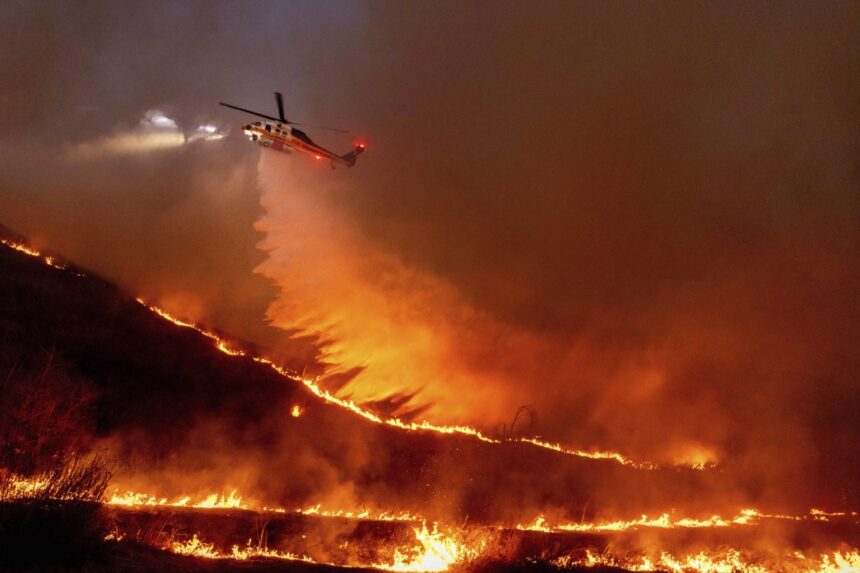
In reality, the warning only applied to those living near the new Kenneth Fire that was rapidly spreading to the north of the city. However, the erroneous alerts, which were sent to residents outside the affected areas, caused widespread confusion, particularly for people who were unaware of the wildfire’s proximity. For many Angelenos, this was the first indication they had received about the fire’s presence and the urgent need to evacuate.
The wildfires currently ravaging parts of Los Angeles, including the Pacific Palisades and Altadena, have already consumed over 35,000 acres of land. Thousands of buildings have been destroyed, and at least 10 people have lost their lives. In addition to the devastation caused by the fires, some 153,000 people across the region are now under mandatory evacuation orders, further heightening the sense of urgency and fear.
As the false alerts continued, emergency managers sent a correction 20 minutes later, clarifying that the warnings only applied to the Kenneth Fire. Despite this attempt at clarification, another erroneous message was sent out around 4 a.m. on Friday, causing further distress among residents.
Kevin McGowan, the director of the Los Angeles County Office of Emergency Management, expressed his deep regret over the errors, acknowledging that the false alerts had caused frustration, anger, and fear among the community. “I can’t express enough how sorry I am,” McGowan told reporters. He assured the public that he was working closely with specialists to determine the cause of the errors and to prevent similar issues in the future. “I implore everyone to not disable the messages on your phone,” he urged, emphasizing that the alerts were critical for ensuring public safety.
In addition to McGowan’s comments, Los Angeles County Supervisor Lindsey Horvath condemned the mistake as “unacceptable.” She expressed her frustration with the alert system, noting that it had caused confusion and additional panic at a time when the community was already dealing with a major crisis. “Whatever the cause, it is unacceptable,” Horvath stated.
The malfunctioning emergency alerts have raised questions about the reliability of automated warning systems. Chris Sheach, an assistant professor in disaster management at Paul Smith’s College, explained that while automated warning systems are crucial in disaster situations, they are also prone to errors, particularly when used at a large scale. “Likely, it was a coding error,” Sheach suggested, attributing the erroneous alerts to mistakes in the system that caused the warnings to reach unintended recipients in the wrong area codes. Despite these occasional flaws, Sheach emphasized the importance of alert systems in saving lives during emergencies, noting that, in the past, evacuation efforts would have relied on fire trucks driving through streets with loudspeakers.
Sheach also pointed out that the benefits of such systems far outweigh the risks, explaining that millions of these alerts are sent out every year across the country and the globe. “The key is for authorities to be upfront about the mistakes, so that citizens don’t ignore or disable future alerts,” he said. Trust in the system is essential for ensuring that these alerts continue to be effective in future emergencies.
As Los Angeles continues to battle the ongoing wildfires, residents are advised to remain vigilant and follow all official evacuation orders. Despite the recent confusion caused by the false alerts, emergency officials are working to ensure that accurate and timely information is provided to the public moving forward. The incident serves as a reminder of the challenges faced by emergency management systems and the need for continued efforts to improve the effectiveness and reliability of such systems in safeguarding public safety during natural disasters.