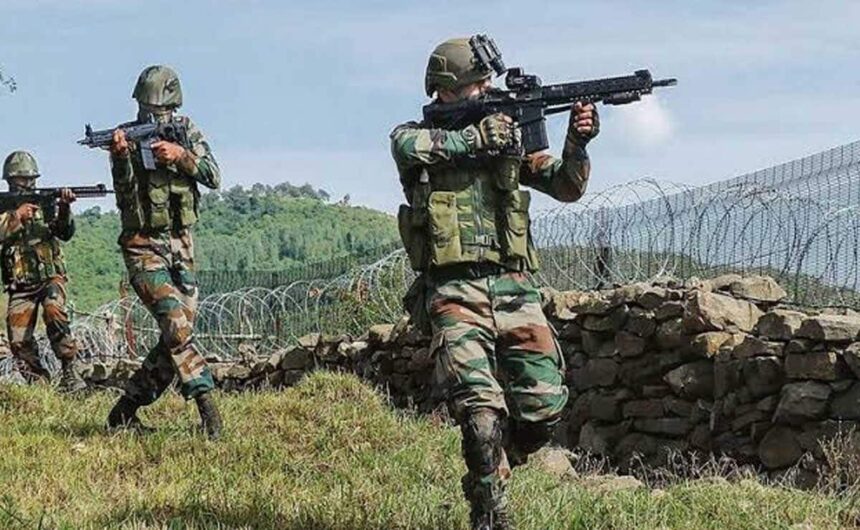
Just hours before Indian Army chief General Upendra Dwivedi’s scheduled visit to Jammu and Kashmir, Pakistani troops opened fire at several points along the Line of Control (LoC), escalating tensions already on edge after a deadly terror attack in Pahalgam. India responded swiftly and effectively, while simultaneously ramping up diplomatic and strategic pressure on Islamabad over its alleged support for cross-border terrorism.
According to sources cited by PTI, Pakistani forces initiated small arms fire across multiple LoC locations in a clear breach of the ceasefire agreement. The Indian Army, maintaining operational readiness, returned fire promptly. While no casualties were immediately reported, the timing of the attack—just before the Army Chief’s arrival—has raised concerns among defence and intelligence officials.
General Upendra Dwivedi is visiting key forward areas in Srinagar and Udhampur to review the security scenario. He will meet top commanders and security officials to assess Pakistan’s recent ceasefire violations and review India’s strategic response. The Army chief’s visit is seen as crucial amid rising hostilities along the border.
Rising Tensions Post-Pahalgam Attack
The border skirmish comes amid India’s strong response to the recent Pahalgam terror attack that killed 26 people. In a high-level Cabinet Committee on Security (CCS) meeting chaired by Prime Minister Narendra Modi, India decided to suspend the Indus Waters Treaty of 1960. The treaty, which has governed water-sharing between the two countries for decades, will remain on hold until Pakistan ceases support for terrorism.
Furthering its crackdown, India also closed the integrated Attari Check Post and expelled several Pakistani High Commission officials, declaring them persona non grata. Visas issued under the SAARC Visa Exemption Scheme were revoked, giving Pakistani nationals in India just 48 hours to leave.
Pakistan Reacts Sharply to Diplomatic Moves
In response, Pakistan rejected India’s suspension of the treaty and warned that any attempt to block or divert water would be treated as an “act of war.” The treaty, brokered by the World Bank, distributes the waters of the Indus river system. While India controls the eastern rivers—Ravi, Beas, and Sutlej—Pakistan primarily relies on the western rivers—Indus, Jhelum, and Chenab—for its water needs. The Kabul river, another vital tributary, does not run through Indian territory.
These developments mark a significant escalation in India-Pakistan tensions, with military, diplomatic, and strategic dimensions all unfolding simultaneously.