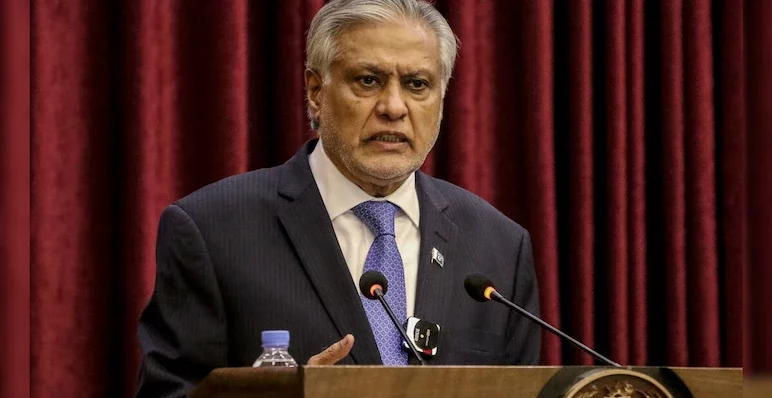
Pakistan’s Foreign Minister Ishaq Dar has reiterated his country’s readiness for a composite dialogue with India in a dignified and respectful manner, stressing that Islamabad seeks engagement on all outstanding bilateral issues, including the long-standing Jammu and Kashmir dispute. Ishaq Dar, who also serves as Pakistan’s Deputy Prime Minister, emphasized that Pakistan would not “beg” for talks, underlining the importance of equal respect and recognition in any future diplomatic engagement. The statement comes at a time when India has made it unequivocally clear that dialogue with Pakistan would be contingent upon discussions on Pakistan-occupied Kashmir and cross-border terrorism, reflecting the complex and sensitive nature of relations between the two nuclear-armed neighbors.
The announcement by Ishaq Dar highlighted Pakistan’s desire to return to the framework of a composite dialogue, which was originally launched in 2003 under the administration of then-President General Pervez Musharraf. This dialogue mechanism had incorporated eight distinct baskets encompassing all contentious issues between India and Pakistan, ranging from Kashmir to trade, water-sharing, and security concerns. However, the dialogue suffered a major setback following the 2008 Mumbai terror attacks, which derailed diplomatic engagement and led to prolonged periods of mistrust and hostility. Pakistan’s renewed emphasis on “dignified” talks signals an attempt to revive bilateral engagement, while simultaneously asserting its position on sovereignty, security, and regional legitimacy.
Pakistan’s Stance on Dialogue and Kashmir
During his interaction with the media, Ishaq Dar articulated Pakistan’s perspective that the Kashmir issue remains central to the bilateral relationship. He asserted that Pakistan is prepared to address all outstanding matters through constructive dialogue, provided it is conducted with mutual respect and in accordance with Pakistan’s long-standing position on the Kashmir dispute. However, he reiterated that Pakistan would not be coerced into initiating talks and that the engagement must respect Pakistan’s dignity and national interests. The foreign minister’s statement comes amid persistent tension along the Line of Control and ongoing debates about the governance and status of Jammu and Kashmir, particularly after India’s revocation of Article 370, which granted special autonomy to the region.
India, in contrast, has maintained a firm stance that dialogue with Pakistan will only occur on specific issues, primarily focusing on the return of Pakistan-occupied Kashmir and curbing cross-border terrorism. This position reflects New Delhi’s insistence that discussions must be grounded in addressing the security challenges posed by terror networks operating from Pakistani territory. Indian officials have repeatedly underscored that while India remains open to dialogue, it will not compromise on matters of national security and territorial integrity, framing any conversation with Pakistan within the context of accountability and anti-terror measures.
Historically, the composite dialogue mechanism included eight distinct areas of cooperation and negotiation, each representing a crucial facet of the bilateral relationship. These “baskets” covered issues ranging from counterterrorism and security cooperation to trade, cultural exchanges, and water-sharing agreements. The framework was intended to provide a structured environment for addressing both long-standing and emerging challenges in a comprehensive manner. While the 2008 Mumbai attacks forced a suspension of the process, the core principles of dialogue—mutual recognition, respect, and adherence to agreed frameworks—remain central to any potential revival.
Recent Cross-Border Tensions and Military Engagements
Ishaq Dar’s remarks also contextualized Pakistan’s stance by referring to the recent escalations along the India-Pakistan border, highlighting what Islamabad perceives as successful diplomatic and military positioning. He claimed that Pakistan’s narrative regarding regional developments had been accepted and acknowledged at the global level through proactive diplomacy. The recent conflict was triggered by the April 22 Pahalgam terror attack, which killed 26 people in Jammu and Kashmir, prompting India to launch precision strikes under “Operation Sindoor” on May 7, targeting terror infrastructure across the border. India’s response, Ishaq Dar noted, reflected New Delhi’s emphasis on counterterrorism, while Pakistan subsequently attempted retaliatory actions against Indian military bases on May 8, 9, and 10.
According to Ishaq Dar, Pakistani forces demonstrated operational proficiency and tactical skill both on land and in the air during the confrontations, asserting their ability to respond effectively to provocations. The four-day series of cross-border drone and missile strikes ended with an understanding between India and Pakistan on May 10, designed to de-escalate the immediate conflict. Nevertheless, Ishaq Dar emphasized Pakistan’s readiness to respond with full force to any aggression from India, including potential attacks from sea-based assets, highlighting the strategic dimension of the bilateral relationship and the emphasis on military deterrence alongside diplomacy.
Ishaq Dar’s narrative underscores a dual approach adopted by Pakistan: advocating for dialogue and reconciliation while simultaneously signaling defensive and retaliatory capabilities. This strategy reflects Islamabad’s attempt to balance its diplomatic overtures with a demonstration of military readiness, projecting both openness to negotiation and the capacity to defend national interests. It also reinforces Pakistan’s insistence that any dialogue must respect its sovereignty and dignity, and cannot be framed unilaterally by India or any external actor. The emphasis on a “composite dialogue” indicates Pakistan’s desire for a holistic engagement covering all contentious issues rather than limiting discussions to narrow, pre-determined topics.
The recent flare-up in tensions has reignited debates on regional security, the role of international actors, and the mechanisms through which India and Pakistan can engage constructively despite historical distrust. Analysts suggest that while India’s insistence on linking dialogue to terrorism and the status of Kashmir reflects legitimate security concerns, Pakistan’s call for a dignified, comprehensive discussion emphasizes the importance of parity, mutual respect, and recognition in diplomatic processes. The juxtaposition of these positions illustrates the fundamental challenges in Indo-Pak relations: balancing security imperatives with diplomatic engagement, reconciling territorial disputes with bilateral cooperation, and addressing domestic political considerations alongside international expectations.
Furthermore, the episode highlights the enduring complexity of the Kashmir issue, which continues to serve as both a flashpoint and a potential catalyst for dialogue. Pakistan’s repeated references to Kashmir in diplomatic statements, combined with its insistence on equitable treatment in negotiations, suggest that the matter remains central to its foreign policy agenda. India’s counterposition, emphasizing security and counterterrorism, underlines the asymmetry in priorities and approaches between the two nations. The interplay of these divergent perspectives shapes not only bilateral interactions but also influences regional stability, defense planning, and international perceptions of the South Asian geopolitical landscape.
In addition to territorial and security considerations, Ishaq Dar’s remarks addressed the broader narrative surrounding Pakistan’s international diplomacy. He claimed that the country had successfully communicated its perspective globally, portraying Pakistan as a responsible state seeking peace while asserting its rights and defending its national interests. This assertion reflects Islamabad’s awareness of global scrutiny and the importance of international perception in shaping bilateral negotiations. By emphasizing diplomatic achievements alongside military preparedness, Pakistan aims to project a multidimensional approach to its engagement with India, balancing negotiation, deterrence, and strategic communication.