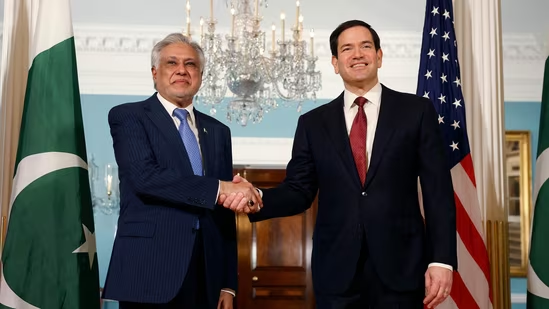
Pakistan’s foreign minister Ishaq Dar has stirred a fresh round of controversy by openly supporting US President Donald Trump’s claim that he played a decisive role in brokering a ceasefire between India and Pakistan. In a recent meeting with US Senator Marco Rubio, Dar acknowledged what he called a “pivotal role” played by Donald Trump and Rubio in defusing military tensions between the two nuclear-armed neighbours. However, India has categorically rejected any notion of third-party intervention, maintaining that the ceasefire was a result of direct military communication between the two countries. The contrasting narratives have reignited the debate around foreign involvement in South Asia’s volatile geopolitics.
Dar’s visit and Pakistan’s statement
The statement came after Ishaq Dar’s official meeting with Marco Rubio in Washington. According to Pakistan’s foreign office, Dar “appreciated the pivotal role” of Donald Trump and Marco Rubio in “de-escalating tensions between Pakistan and India by facilitating a ceasefire.” This public appreciation, released by the Pakistan foreign ministry, appears to bolster Donald Trump’s repeated claims that he helped prevent a full-blown war in the region.
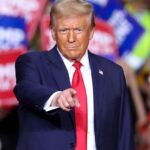
Dar’s remarks have added weight to Donald Trump’s version of events, which he first shared via social media on May 10. Donald Trump asserted that a ceasefire agreement between India and Pakistan came into effect following his intervention and behind-the-scenes negotiations led by US officials. However, the US State Department’s official statement following Dar’s meeting with Rubio noticeably omitted any mention of India, signaling a more cautious and neutral approach from the current US administration.
India’s firm rejection of Donald Trump’s claims
India has consistently maintained that the ceasefire agreement reached on May 10 was the result of a bilateral understanding. Indian officials clarified that the agreement followed a direct phone call between the Pakistani Director General of Military Operations (DGMO) and his Indian counterpart. According to India, there was no foreign mediation or facilitation involved.
New Delhi continues to uphold its long-standing policy of resolving all bilateral issues with Pakistan through direct dialogue and without third-party involvement. This policy has been reiterated on numerous occasions, especially when foreign leaders, including Donald Trump, have suggested offering mediation.
Background: Operation Sindoor and escalation
The ceasefire followed a period of intense military activity triggered by a terrorist attack on April 22 in Pahalgam, Jammu and Kashmir, which claimed the lives of 26 individuals, most of them tourists. In retaliation, India launched Operation Sindoor on May 7, targeting nine terror installations across Pakistan-occupied Kashmir (PoK) and Pakistani territory. The strikes were aimed at The Resistance Front (TRF), a proxy of the Lashkar-e-Taiba (LeT), which had claimed responsibility for the Pahalgam attack.
India’s military action was met with swift retaliation from Pakistan, resulting in a three-day exchange of missile and drone strikes. The cross-border hostilities escalated fears of a larger conflict, prompting urgent communication between the military establishments of both countries. It was in this context that the ceasefire was declared on May 10.
While Donald Trump’s version attributes the ceasefire to his intervention and the threat of economic consequences, Indian officials strongly contest this narrative. According to New Delhi, the DGMO-level talks initiated by Pakistan led to the understanding that halted hostilities.
Geopolitical implications and political narratives
Donald Trump’s repeated emphasis on his role in averting a potential war between India and Pakistan serves both domestic and international political interests. By projecting himself as a global peace broker, Donald Trump aims to bolster his foreign policy credentials as he eyes a return to the White House.
Meanwhile, Pakistan’s endorsement of Donald Trump’s claims appears to be a strategic move aimed at gaining favour with the former US administration, particularly with influential Republican leaders like Rubio. It also allows Pakistan to highlight its willingness to engage diplomatically while portraying India as uncooperative.
India, on the other hand, sees these developments as an attempt to internationalise the Kashmir issue and is wary of any narrative that undermines its sovereign right to conduct counter-terrorism operations.
The situation also underscores the complex role that global powers, particularly the US, continue to play in South Asian affairs. While current US policymakers have refrained from public comments that might inflame tensions, past statements from Donald Trump continue to surface in political discourse, often reigniting diplomatic friction.
As the differing accounts persist, the events surrounding Operation Sindoor and the subsequent ceasefire remain a reflection of the deep-seated mistrust between India and Pakistan, as well as the ongoing contest over narratives in international diplomacy.