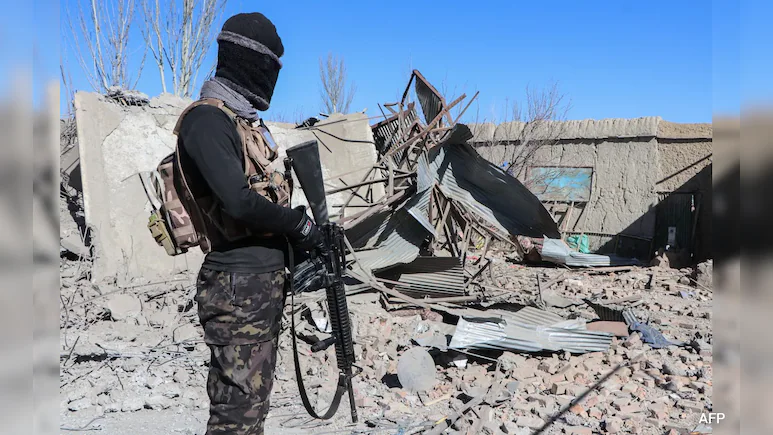
The latest escalation between Afghanistan and Pakistan has once again exposed the fragile security situation along their shared border. According to multiple reports, a series of strikes hit Kunar Province, particularly the provincial capital Asadabad. Key locations, including Syed Jamaluddin Afghani University and nearby residential areas, were affected, leading to civilian casualties. Among those injured were students, children, and local residents, raising serious concerns about the humanitarian impact of the incident.
The Taliban-led administration in Afghanistan has alleged that the strikes were carried out by Pakistan, claiming that mortars and rockets were fired beginning in the afternoon. Government spokesperson Hamdullah Fitrat accused Pakistan of targeting civilian infrastructure, further intensifying tensions between the two countries. Pakistan, however, has categorically denied these allegations. Its Information Ministry described the claims as “completely false” and rejected any suggestion that it had targeted civilian areas.
Deadly Border Clashes Intensify Conflict
The reported missile strikes come shortly after renewed clashes along the Afghanistan-Pakistan border, particularly in the Spin Boldak region of Kandahar. According to local sources, a firefight broke out late Sunday night, escalating an already tense situation.
Unverified reports suggest that six Pakistani soldiers were killed during the clash, and one was allegedly taken captive. The incident reportedly began after cross-border firing led to the death of a local Afghan child, triggering a retaliatory response from Taliban fighters. While these details remain unconfirmed, they highlight the volatility of the region and the potential for rapid escalation.
The border between Afghanistan and Pakistan has long been a source of tension. Disputes over territory, cross-border militancy, and security concerns have contributed to frequent confrontations, making it one of the most sensitive regions in South Asia.
Ceasefire Under Strain
The recent violence has placed significant pressure on a ceasefire agreement reached in March, which had temporarily reduced hostilities between the two nations. The agreement was seen as a step toward stabilizing the region after weeks of intense fighting, but recent developments indicate that the truce is weakening.
Earlier incidents, including alleged attacks in Kabul and surrounding areas, had already strained the ceasefire. Reports of high casualties in previous confrontations further complicated efforts to maintain peace. Despite diplomatic efforts by countries such as China, Turkey, Qatar, the United Arab Emirates, and Saudi Arabia, tensions continue to rise.
The inability to sustain the ceasefire underscores the deep challenges facing both countries. Mutual distrust, conflicting narratives, and ongoing security concerns have made it difficult to achieve lasting stability.
Background of the Conflict
Tensions between Afghanistan and Pakistan have been elevated since February, when Pakistan conducted airstrikes in Afghan border regions. Pakistani officials stated that the operations targeted hideouts of the Tehrik-i-Taliban Pakistan, claiming that several militants were killed.
Afghanistan condemned the strikes as a violation of its sovereignty and warned of retaliation. The Taliban-led government has consistently denied allegations that it allows TTP militants to operate from its territory, further deepening the divide between the two countries.
The TTP has been involved in a long-running insurgency against Pakistan, carrying out attacks on security forces and civilian targets. Its alleged links with the Afghan Taliban have complicated diplomatic relations and contributed to ongoing tensions.
Civilian Impact and Humanitarian Concerns
The attacks in Kunar Province have raised serious humanitarian concerns. Strikes near educational institutions and residential areas have resulted in significant civilian casualties, with many of the injured requiring urgent medical attention. Local healthcare facilities are reportedly under pressure as they deal with the large number of casualties.
Such incidents highlight the broader impact of conflict on civilian populations. Beyond immediate casualties, they disrupt daily life, create fear and uncertainty, and hinder development in already vulnerable regions.
Regional Implications and Global Attention
The escalation between Afghanistan and Pakistan has wider implications for regional stability. Both countries occupy strategic positions in South Asia, and continued conflict could have ripple effects across neighboring regions.
International efforts to mediate tensions have so far had limited success. The persistence of violence suggests that deeper structural issues remain unresolved. There are concerns that further escalation could draw in additional actors and complicate the security landscape even more.
Uncertain Outlook
The situation remains fluid, with both sides maintaining conflicting positions. While there have been calls for restraint and dialogue, repeated incidents of violence have made it difficult to build trust.
The recent strikes and clashes serve as a reminder of how quickly tensions can escalate. Without sustained diplomatic engagement and effective conflict resolution mechanisms, the risk of further violence remains high.
For now, attention is focused on managing the immediate crisis, assisting those affected, and preventing further escalation. However, achieving long-term peace will require addressing the underlying causes of the conflict and rebuilding trust between the two nations.