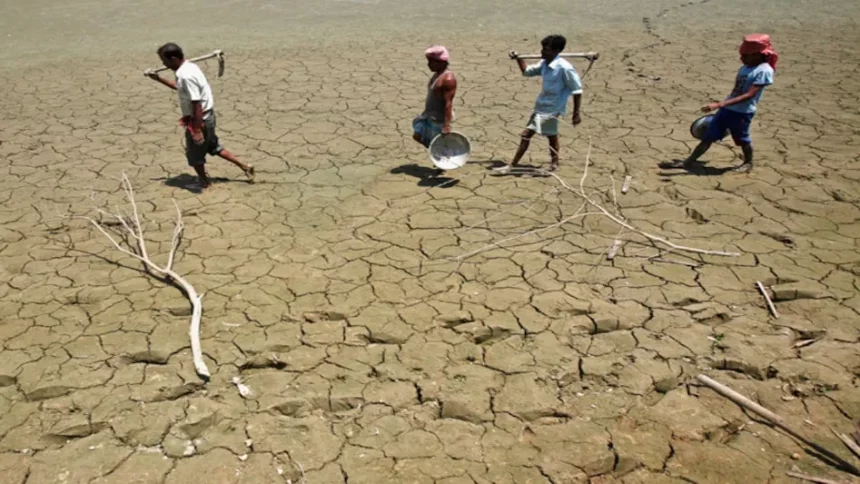
India’s massive extraction of groundwater is not only causing a crisis in water resources but is also affecting the planet in an alarming way. A recent study reveals that excessive groundwater extraction, which accounts for 25% of the world’s total, is shifting Earth’s axis. This shift could trigger a cascade of problems, including disruptions in the cycle of day and night, and lead to severe global challenges like food and water shortages.
Groundwater extraction has become a major issue in India, where it is used primarily for agricultural irrigation. Crops such as paddy, sugarcane, and wheat require large amounts of water, and the extensive use of groundwater has led to an imbalance in the Earth’s mass distribution. When large volumes of water are extracted, the planet attempts to redistribute its mass, causing shifts in its axis, a phenomenon known as ‘polar motion.’
Research by NASA and other institutions has shown that between 1993 and 2010, the extraction of groundwater, particularly in India, shifted the Earth’s North Pole direction by about 78 cm. In total, around 54 trillion liters of water were removed from groundwater sources across India, Pakistan, Bangladesh, and China. India, the largest extractor, uses between 250 and 260 cubic kilometers of groundwater annually, more than the US and China combined. States like Punjab, Haryana, and Uttar Pradesh face the highest levels of depletion, with significant declines in water levels observed each year.
This overexploitation is not only affecting the groundwater levels but is also causing cities like Delhi, Bengaluru, and Hyderabad to experience land subsidence. This phenomenon, where the land sinks due to water extraction, further exacerbates the crisis. In addition, the extraction is reducing river flows, including major ones like the Yamuna and Godavari, affecting water availability for both human consumption and agriculture.
The consequences of continued excessive groundwater extraction extend far beyond India. A shift in the Earth’s axis could lead to altered weather patterns, changing the length of seasons and potentially causing droughts or excessive rainfall. Such changes could impact global food production, particularly crops like wheat and rice. Coastal areas, including cities like Mumbai and Kolkata, could face rising sea levels due to accelerated ice melt in the polar regions.
Scientists warn that while these shifts are slow, the impact could become much more pronounced as groundwater exploitation continues unchecked, with potentially catastrophic global consequences in the long term.