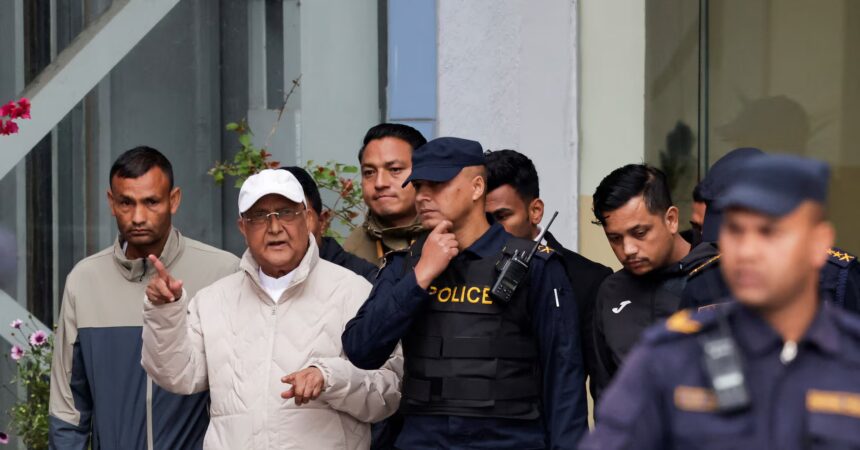
Kathmandu, March 29, 2026 | Former Nepal Prime Minister K P Sharma Oli and ex-Home Minister Ramesh Lekhak were arrested on Saturday in connection with alleged actions taken during the 2025 Gen Z protests. The arrests came just hours after Balendra Shah assumed office as the country’s new Prime Minister.
Oli was taken into custody from his residence in Gundu, Bhaktapur, by Nepal Police. According to reports, the arrest is linked to a culpable homicide-related case tied to the alleged suppression of protests that took place in September 2025.
Probe Findings Lead to Arrests
The action follows the findings of an investigation commission led by Gauribahadur Karki, which reportedly held Oli and Lekhak, among others, responsible for the crackdown on the Gen Z movement on Bhadra 23 and 24 (as per the Nepali calendar).
With the formation of a new government under Balendra Shah, authorities have begun implementing the commission’s recommendations, resulting in the arrests of key figures from the previous administration.
Background: 2025 Gen Z Protests
The Gen Z protests, which began in September 2025, played a significant role in reshaping Nepal’s political landscape. The demonstrations were largely led by young people and were triggered by a nationwide ban on major social media platforms, including YouTube, Facebook, and WhatsApp.
Protesters raised concerns over multiple issues, including alleged corruption, growing wealth inequality highlighted by trends such as “NepoBaby,” and high youth unemployment, which was reported at 20.6%.
The movement quickly gained momentum, leading to widespread demonstrations across the country and ultimately contributing to the fall of Oli’s government.
Political Shift and Election Outcome
The protests set the stage for snap elections held in March 2026. Balendra Shah’s Rastriya Swatantra Party secured a majority, campaigning on promises of anti-corruption reforms and governance transparency.
The party’s campaign strongly resonated with younger voters, reflecting the impact of the Gen Z movement. Reports indicate that approximately 915,000 new voters were registered during the election process, with a median voter age of around 25.
A Turning Point in Nepal’s Politics
The arrests of Oli and Lekhak mark a significant development in Nepal’s political transition, signalling accountability measures linked to past governance decisions. The move is also seen as an early indication of the new government’s stance on addressing allegations of misuse of power.
Ongoing Legal and Political Implications
Legal proceedings against the former leaders are expected to unfold in the coming days, with authorities likely to present further details of the case. The situation remains politically sensitive, given Oli’s prominence in Nepal’s recent political history.
As Nepal navigates this transition, the developments underscore the growing influence of youth-led movements and their impact on governance and policy direction in the country.