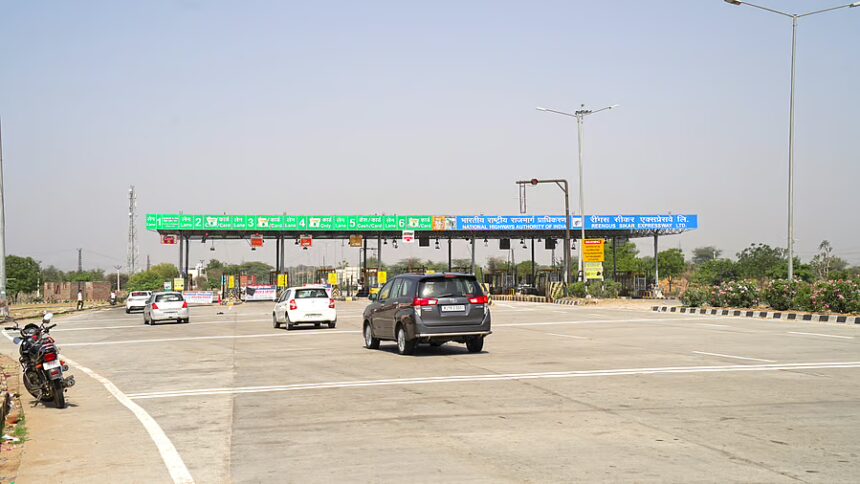
The decision by the union ministry of road transport and highways marks a significant policy shift in india’s infrastructure and mobility ecosystem. From april 10, commuters on national highways will no longer be able to pay toll fees using cash, as the government moves towards a fully digital toll collection system. This reform is designed to reduce congestion, improve efficiency, and align with the country’s broader push toward digital transactions. The move builds on the already widespread adoption of fastag, which has been gradually implemented across toll plazas over the past few years.
Transition to fully digital toll collection system
The government’s move to eliminate cash payments at toll plazas reflects a long-term strategy to modernize india’s highway infrastructure. Over the years, toll plazas have been associated with long queues, delays, and frequent disputes, largely due to cash transactions and the need for change. By mandating digital payments, authorities aim to create a seamless travel experience where vehicles can pass through toll gates with minimal stoppage.
Under the new system, payments will primarily be made through fastag, a radio-frequency identification-based system that automatically deducts toll charges from a linked prepaid account. In addition to fastag, digital payment methods such as upi are also being promoted, ensuring flexibility for users who may not have sufficient balance in their accounts. This shift is expected to significantly reduce waiting times at toll plazas, thereby improving traffic flow and lowering fuel consumption caused by idling vehicles.
The government has also indicated that this transition will enhance transparency in toll collection and reduce the scope for human error or cash-related discrepancies. By digitizing the entire process, authorities can better monitor transactions, ensure accountability, and optimize revenue collection. The initiative aligns with india’s broader digital economy goals and complements other reforms aimed at improving infrastructure efficiency.
Another important aspect of the policy is the standardization of toll collection rules. By reducing manual intervention and eliminating inconsistencies, the system is expected to minimize disputes and create a smoother experience for commuters. This step is also seen as a foundation for future advancements in tolling technology, including more automated and barrier-free systems.
Impact on commuters and fastag compliance rules
For regular highway users, the new rules bring both convenience and responsibility. While the elimination of cash payments is expected to make travel smoother and faster, it also means that commuters must be fully prepared for a digital system. Having an active and properly linked fastag account will be essential to avoid inconvenience or penalties.
One of the key provisions under the new rules is the penalty for vehicles that do not have a valid fastag. Such users may be required to pay higher toll charges, making it financially disadvantageous to ignore the system. This measure is intended to ensure universal adoption and discourage non-compliance.
The emphasis on fastag is part of a broader effort by the government to digitize transportation systems. Over the years, fastag has become an integral part of highway travel, enabling vehicles to pass through toll plazas without stopping. With the introduction of the no cash rule, its role becomes even more critical.
For occasional travelers or those unfamiliar with digital payments, the transition may require some adjustment. Ensuring that fastag accounts are recharged and linked to active payment methods will be crucial. Users must also familiarize themselves with alternative options like upi to handle situations where fastag may not function properly.
From a wider perspective, the move is expected to deliver significant environmental and economic benefits. Reduced congestion will lead to lower fuel consumption and emissions, contributing to a cleaner environment. Faster movement of vehicles will also improve logistics efficiency, supporting economic activity and reducing travel time across highways.
The policy signals a broader shift toward a digitally driven infrastructure system in india. As technology continues to evolve, the government is likely to introduce more advanced solutions that further enhance efficiency and convenience for commuters.