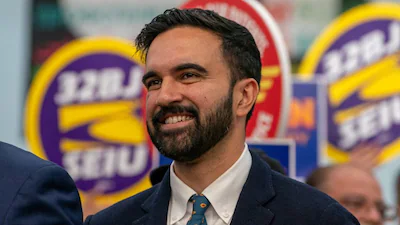
New York City’s newly elected mayor Zohran Mamdani found himself at the centre of an unexpected social media storm just days after taking office, as a satirical rumour about him “mandating Arabic numerals in public schools” spiralled into widespread confusion and cultural misunderstanding. Mamdani, the city’s first South Asian and first Muslim mayor, entered office with an ambitious policy agenda aimed at transforming transportation, housing, childcare and tax structures. Yet a humorous post on social media momentarily overshadowed these serious initiatives, illustrating how quickly digital misinformation can overtake policy discourse in a highly polarised environment. The episode revealed deep gaps in digital literacy, cultural awareness and the vulnerability of public perception in an era dominated by rapid, unverified online sharing.
The Viral Satire, Social Media Confusion and the Digital Misunderstanding Behind the Controversy
The controversy began when an account on X, formerly known as Twitter, posted a satirical claim that Mayor Zohran Mamdani planned to make “Arabic numerals” mandatory in every primary school in New York. The post was intended to be humorous, relying on the irony that the numerals 0, 1, 2, 3, 4, 5, 6, 7, 8 and 9—used worldwide across all academic and professional fields—are historically referred to as Arabic numerals. While the comedic intent should have been obvious, the environment of political polarisation and cultural bias allowed the satire to be interpreted by many as a genuine policy proposal.
Within hours, the post spread widely, amplified by users who either misunderstood the joke or deliberately used it to stoke cultural anxieties. Some users framed the rumour as an attempt to “Islamicise New York,” revealing how cultural stereotypes often override basic historical knowledge and factual understanding. Others displayed unawareness of the global origins of the numeral system, failing to recognise that Arabic numerals are already universal and used daily by every student, teacher and resident of the city.
Users who grasped the satire responded with amusement, some describing it as a test of common sense in the age of instant digital communication. They pointed out that the virality of the rumour demonstrated how many people accept online claims without critical evaluation. Several users expressed concern over the broader societal implications, arguing that unverified content can rapidly evolve into public outrage when consumed in a politically charged context. The incident highlighted a persistent problem: despite the increasing reliance on digital platforms for news and public discussion, digital literacy remains uneven, and misinformation often spreads faster than truth.
The viral nature of the satire also exposed the fragile dynamics of modern political discourse. Even humorous posts can be weaponised or misunderstood, fracturing public trust and distracting from genuine policy debates. The Mamdani episode became an example of how quickly conversations can drift from substantive governance issues to baseless cultural controversies driven by prejudice or misunderstanding.
For many observers, the episode represented more than a simple social media misunderstanding. It reflected a deeper vulnerability in the digital ecosystem where satire, misinformation and political narratives collide. In such an environment, public perception can be shaped not by verified information but by the emotional reactions generated through viral posts. The episode reaffirmed that while digital platforms can democratise information, they also blur the lines between humour, misinformation and political manipulation. In the case of Zohran Mamdani, an absurd rumour temporarily overshadowed a slate of major policy proposals, demonstrating the challenges modern leaders face as they navigate digital narratives alongside administrative responsibilities.
Mamdani’s Real Policy Agenda: Transportation Reform, Housing Stability, Childcare Access and Social Equity
While social media was distracted by a satirical rumour, Zohran Mamdani’s actual governance agenda laid out plans for sweeping structural reforms across several sectors of New York City. One of his cornerstone proposals is the implementation of fare-free city buses. Mamdani argues that eliminating bus fares will promote both economic justice and environmental sustainability by making public transportation universally accessible. He emphasises that millions of New Yorkers, particularly those from low-income and working-class backgrounds, rely on buses for their daily commute. Fare-free transit, combined with the expansion of dedicated bus lanes, is envisioned as a step toward improving mobility, reducing congestion and cutting emissions in a densely populated urban environment.
Experts have described this proposal as a transformative shift that could reshape the social and economic foundations of the city. By reducing transportation costs for families and increasing the efficiency of transit systems, the plan has the potential to improve employment access, boost economic participation and enhance overall urban mobility. For many residents, fare-free transportation would represent a practical improvement to daily life and a strong move toward a more equitable urban system.
Housing is another major priority for Mamdani. In a city where rising rent burdens have long posed severe challenges for middle- and low-income families, the mayor has proposed a freeze on rent increases for rent-controlled apartments, a policy that could affect nearly 28 percent of New Yorkers. This measure is intended to provide immediate relief to residents struggling amid inflation and a prolonged housing crisis. Mamdani also envisions the creation of a social housing development agency to expand access to affordable housing by constructing publicly owned homes. This shift toward prioritising accessible housing aligns with global models of social housing that emphasise long-term stability, community wellbeing and economic inclusion.
Mamdani’s third major initiative centres on universal childcare. His plan proposes free childcare for children aged six weeks to five years, aiming to reduce financial pressure on families and provide better early-education opportunities for young children. The policy is particularly beneficial for working mothers, low-income families and parents who struggle to balance childcare costs with employment responsibilities. Universal childcare, Mamdani argues, is an investment in both present and future generations, fostering educational readiness and economic participation while reducing stress on working households.
Together, these three policies signal a new vision for New York City—one grounded in expanding public services, enhancing social protections and addressing long-standing inequalities. Mamdani’s approach places community welfare at the centre of governance, aspiring to create a city where essential services are accessible to all, not just those who can afford them. His legislative proposals suggest a departure from traditional urban governance models and a shift toward progressive frameworks that prioritise collective wellbeing.
Mamdani’s victory over Republican candidate Curtis Sliwa and independent candidate Andrew Cuomo has also contributed to his emerging national profile. Political analysts view his win as a reflection of changing urban political dynamics in the United States, with growing support for progressive governance in major cities. The fact that former President Donald Trump publicly acknowledged the new mayor’s election highlights the national relevance of New York City’s leadership and suggests that Mamdani’s policies will be watched closely by national and international observers.
These ambitious initiatives underscore Mamdani’s intention to reshape New York City through principles of economic fairness, community participation and social equity. His administration aims to transform public services into accessible, community-driven systems capable of supporting diverse populations. The contrast between the seriousness of these policy proposals and the frivolity of the viral rumour demonstrates the dual challenges of modern political life: governing large, complex urban systems while simultaneously navigating the unpredictable influence of online narratives.
The satirical rumour, though humorous in origin, exposed the fragility of public discourse in a digital age. It showed how misinformation—even when rooted in comedy—can overshadow substantive policy initiatives and distort public understanding. Mamdani’s experience illustrates the political reality that leaders today must not only manage cities but also respond to, counteract and contextualise viral online stories that can quickly dominate public conversation. This tension between digital perception and administrative responsibility has become one of the defining challenges of modern governance, and the Mamdani episode stands as a vivid example of how political leadership now requires navigating both real-world policies and fast-moving digital narratives.