At the beginning of each year, UNICEF looks ahead to the risks that children are likely to face and suggests ways to reduce the potential harm. The latest report, Prospects for Children 2025: Building Resilient Systems for Children’s Futures, demands strengthening national systems that are designed to mitigate the impacts of crises on children and ensure they have access to the support they need.
Here is a breakdown of the main trends to look out for in 2025.
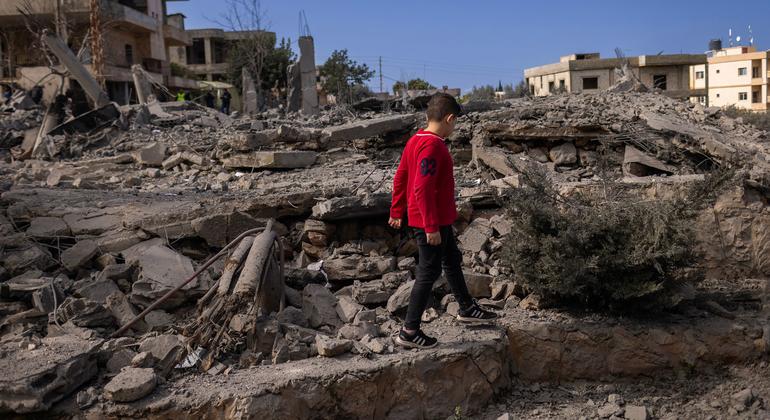
A doubling of children living in conflict zones
Intensifying armed conflict will continue to pose serious risks to children in 2025. Conflicts are also increasing in intensity and violence.
Over 473 million children — more than one in six globally — now live in areas affected by conflict, with the world experiencing the highest number of conflicts since World War II. And the percentage of the world’s children living in conflict zones has doubled — from around 10 per cent in the 1990s to almost 19 per cent today.
Amid growing geopolitical rivalries and the paralysis of multilateral institutions, both state and non-state actors appear increasingly willing to flout international laws designed to protect civilian populations, with attacks on civilian infrastructure like schools and hospitals becoming ever more common.
This unravelling of decades of efforts to safeguard civilians is taking a heavy toll on children. As well as the risks to their lives, children face displacement and the threat of starvation and disease. There are also substantial risks to their psychological wellbeing.
The multilateral system has struggled to respond effectively. A concerted and sustained effort is needed to reverse the losses of recent years.
Children eat lunch in a village in Tagal, Chad.
The financial system isn’t working
Governments of developing countries are finding it increasingly difficult to fund key investments in children, thanks to slow growth, rising debt and inadequate tax revenues and development assistance.
Another important factor is the growing burden of sovereign debt. Nearly 400 million children live in countries in debt distress, and without major reforms this figure is set to rise. The cost of servicing this debt is squeezing out essential investments for children.
In 2025, we face crucial decisions about reforms to the framework of institutions, policies, rules and practices that govern the global financial system.

In Tabatinga -Amazonan State- in Brazil on October 2024.
The irreversible consequences of the climate crisis
Children are disproportionately impacted by climate change and the effects on their development, health, education and well-being can be lifelong and irreversible.
2025 presents crucial opportunities to make progress towards global climate goals. This means comprehensive and robust policymaking, adequate and equitable financing and investments, strong regulatory and accountability frameworks, and effective monitoring systems.

Improved access to digital services
Several digital trends are poised to shape our future in 2025 and beyond. Rapid advancements in emerging technologies will continue to shape all spheres of children’s lives from education to communication to participation in digital economy.
One key trend is the emergence of digital public infrastructure (DPI). DPI is a set of shared digital systems that can provide equitable access to public and private services. It allows large-scale delivery of digital public services, including for children, and is now being rapidly adopted around the world.
DPI has the potential to fundamentally shift how governments serve and engage with their citizens, including children. It can also be central to promoting rules driving development, inclusion, trust, innovation, and respect for human rights.
But persistent inequalities in digital access, particularly in least-developed countries, are a major barrier to ensuring DPI serves every child. There are issues, too, with ensuring data harmonization across systems and with guaranteeing adequate data protection and security.

Youth advocates at the 2023 G20 meeting (file)
Global governance under pressure
New and ongoing crises will continue to challenge the future of global governance.
In 2025, nations and institutions must address the critical question of whether the global multilateral framework will unify to form a cohesive response to our shared challenges or fragment further, risking a loss of collective action.
The direction we take will deeply impact efforts to protect children’s rights and well-being across the world.
Rights of children must remain at the forefront
The conclusion drawn by the report’s authors is the critical importance of adopting and promoting systems to improve the lives and prospects of children.
These systems must embody principles of inclusion, equity, and accountability, ensuring that the rights and needs of children remain at the forefront. And, just as importantly, they must not only address current global challenges but also anticipate and prepare for what lies ahead.
https%3A%2F%2Fnews.un.org%2Ffeed%2Fview%2Fen%2Fstory%2F2025%2F01%2F1158771