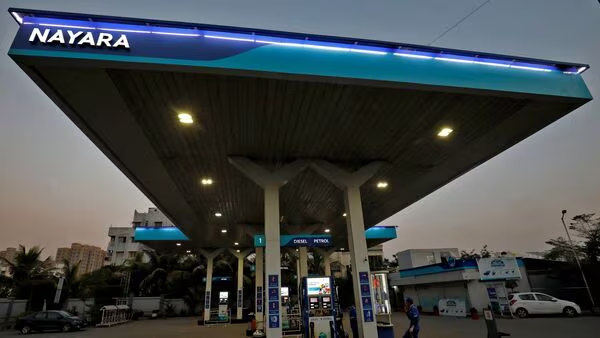
Nayara Energy, one of India’s largest private fuel retailers, has increased petrol and diesel prices across its network, citing rising global uncertainties. The price hike, effective from Thursday, comes amid ongoing tensions in West Asia, which have disrupted global crude oil markets and influenced fuel pricing trends.
According to reports, petrol prices have been raised by ₹5 per litre, while diesel prices have increased by ₹3 per litre. The company operates approximately 6,700 petrol pumps across India, making the hike significant for a large number of consumers, especially in states like Rajasthan where it has a strong presence.
Fuel Price Hike Impacts Daily Commuters and Transport Sector
The increase in fuel prices is expected to have a direct impact on daily commuters, transport operators, and small businesses. Auto drivers, taxi operators, and logistics providers are likely to face higher operating costs, which may eventually be passed on to consumers.
With fuel being a key component of transportation expenses, even a moderate price hike can influence the cost of goods and services. In urban areas, where dependence on personal and public transport is high, the impact is expected to be more noticeable.
Dealers associated with Nayara Energy confirmed that the price revision has been implemented across retail outlets. A petrol pump operator in Rajasthan stated that the decision was taken at the company level, highlighting that private retailers do not receive government subsidies.
Global Crude Volatility Drives Pricing Decisions
The price hike is widely believed to be linked to fluctuations in international crude oil prices. The ongoing conflict in West Asia has created uncertainty in global energy markets, affecting supply chains and pushing up operational costs for oil companies.
Although Nayara Energy has not officially disclosed the exact reasons behind the increase, market trends suggest that rising crude prices and logistical challenges have played a role. The disruption of key shipping routes and geopolitical tensions have added pressure on fuel pricing worldwide.
Unlike public sector oil companies, private players often adjust prices more dynamically based on market conditions. This allows them to respond quickly to global price changes but also results in more frequent fluctuations for consumers.
Private Retailers and Pricing Flexibility
As a private fuel retailer, Nayara Energy operates under a different pricing mechanism compared to state-run oil companies. It does not receive subsidies from the government, which means it must align its pricing closely with market conditions.
This flexibility enables the company to manage costs effectively but also exposes consumers to sudden price changes. Industry experts note that such adjustments are part of a broader trend where private players increasingly influence fuel pricing dynamics in India.
The company’s extensive network of petrol pumps amplifies the impact of its pricing decisions, affecting a wide consumer base across multiple states.
Broader Economic Implications
Fuel price increases often have a ripple effect on the economy. Higher transportation costs can lead to increased prices of essential goods, contributing to inflationary pressures.
Sectors such as agriculture, manufacturing, and logistics are particularly sensitive to fuel price changes. Any sustained increase can affect production costs and supply chain efficiency.
For consumers, rising fuel prices can reduce disposable income and alter spending patterns. This makes fuel pricing an important factor in overall economic stability.
The decision by Nayara Energy to raise petrol and diesel prices reflects the ongoing impact of global geopolitical tensions on domestic fuel markets. As crude oil prices remain volatile, further adjustments cannot be ruled out.
Consumers and businesses alike will need to adapt to these changes, while policymakers and industry players continue to monitor the situation closely. The coming weeks will be crucial in determining the direction of fuel prices in India.