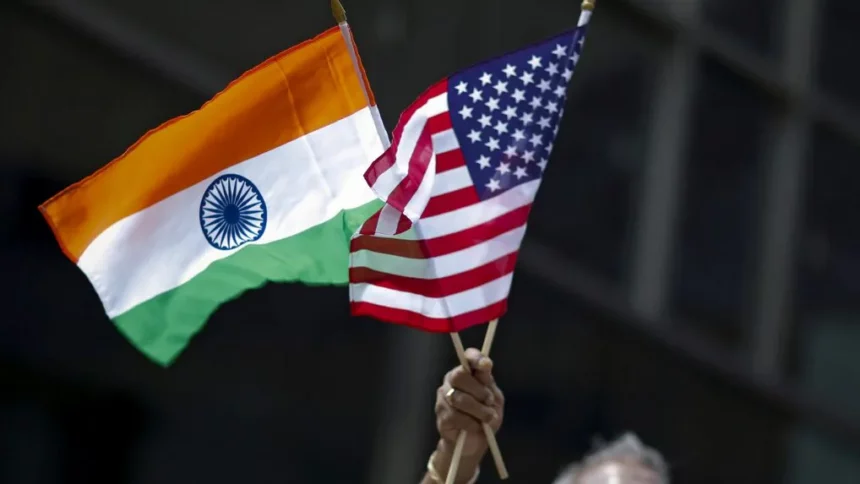
The India-US Bilateral Trade and Investment Agreement (BTIA) negotiations present both challenges and opportunities as both countries aim to strengthen their trade ties. With the goal of boosting bilateral trade from $200 billion to $500 billion by 2030, India faces hurdles such as the US pushing for stricter rules of origin to counter Chinese inputs, while also dealing with sensitive issues like intellectual property and market access for agricultural products. Strategic compromises will be crucial for both sides to navigate these complexities and maximize the benefits of the agreement.
The Terms of Reference (ToR) for the India-US BTIA cover critical areas, including trade in goods and services, intellectual property rights (IPRs), government procurement, and investment protection. These negotiations aim to address longstanding trade imbalances and barriers, but challenges persist, particularly with rules of origin and IPRs. One key issue is the US’s attempt to impose stringent origin rules, aimed at limiting Chinese inputs into Indian exports. This could risk diminishing the advantages of the trade agreement by making it difficult for Indian firms to take full advantage of tariff reductions, as many Indian products rely on imported materials, particularly from China.
On the issue of intellectual property, India has resisted the US’s push for stronger IPR protection, concerned that it could harm the generic pharmaceutical sector. The potential for “evergreening” patents—extending patent protections on minor changes—could stifle the growth of India’s pharma industry. However, India does recognize the need to strengthen its IPR regime to encourage innovation and attract more investment in research and development. Indian companies currently invest far less in R&D compared to global standards, and stronger protection could provide the necessary incentives to boost innovation.
Agriculture remains another sensitive issue in the trade talks. While India has historically had high tariffs on agricultural products, there may be a need to lower these barriers in order to facilitate the deal. Rationalizing tariffs on certain agricultural imports and offering trade-offs, such as increasing imports of American products like corn, could help address this challenge. At the same time, India should continue to push for better access for its agricultural exports to the US, such as mangoes, grapes, and pomegranates.
Another area of focus is India’s automobile sector, where trade negotiations with the US have raised concerns about the impact of reducing import tariffs. However, Indian car manufacturers should embrace competition as consumer preferences in India remain strongly rooted in affordable, fuel-efficient vehicles. By lowering tariffs, India could strengthen its position in the US market and expand exports of auto components.
Lastly, investment protection remains a crucial aspect of the BTIA, with India seeking a robust framework to attract more foreign direct investment (FDI). The lack of an investment protection treaty has been a barrier to FDI inflows, and with declining investment trends, India must work to create a more attractive environment for foreign investors looking for alternatives to China.