Newswise — LOS ANGELES (Oct. 8, 2025) — Professional dancer Mataya Dade remembers the morning two years ago when she felt a lump in her breast. At 30, she wasn’t expecting breast cancer. But Dade turned out to be part of a growing trend of breast cancer diagnoses in young women.
According to the Centers for Disease Control and Prevention, about 10 percent of new breast cancer cases in the U.S. are in women younger than 45.
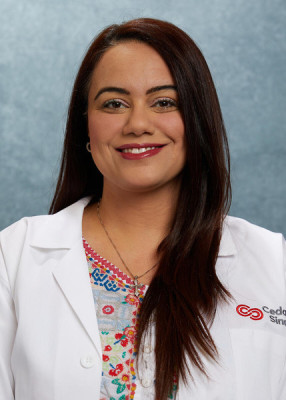
“We don’t have routine screening recommendations for patients younger than 40, and people aren’t aware that if they have a strong family history, especially in a first-degree relative like a mother, sister or aunt, they should be screened sooner,” said Mary El-Masry, MD, the hematologist-oncologist who led Dade’s care team.
Dade, who received her care from an integrated team at Cedars-Sinai Cancer Beverly Hills, is dancing once again, but treatment for triple-negative breast cancer wasn’t easy. It began with a regimen known as KEYNOTE-522. The protocol included four types of chemotherapy medications to shrink the tumor, plus an immunotherapy drug to help Dade’s immune system do its part in fighting the cancer.
Also there to help were her mother and her partner, Marcus Mack.
“I really just kind of fell into the hands of my care team, knowing that this treatment regimen was going to be extremely rough,” Dade said. “I had moved in with Marcus only three months before I was diagnosed. And then my mom moved in. Who would have thought that my mother and my partner would both be taking care of me.”
Tumors like Dade’s are “negative” for three important receptors—estrogen, progesterone and HER2—that many treatments use to target tumors, making them among the most aggressive and challenging to treat. El-Masry called the protocol Dade received a “breakthrough” in the world of triple-negative breast cancer.
“Mataya has an excellent prognosis,” El-Masry said. “She had a complete clinical response to her treatment. We could see her tumor shrinking.”
Following her chemotherapy and immunotherapy regimen, Dade opted for a double mastectomy with reconstructive surgery. And as a social media influencer, she chose to document her treatment journey.
“This is a message to my future me that I am a baddie and I will get through cancer,” she said to her followers.
For young women like Dade, El-Masry said that it is important to seek out earlier screening if there is family history of cancer—and to be your own advocate.
“If you feel something, bring it to someone’s attention and push to have some imaging done,” El-Masry said. “That could mean a mammogram or, if you are concerned about radiation exposure, an ultrasound. And if imaging isn’t showing anything but you feel a lump, you should ask to have it biopsied so we can be sure it isn’t something we need to be concerned about.”
Several days after her surgery, Dade was able to post the news her friends and family had been waiting for: “I, Mataya Dade, am cancer free.”
With that, she is at work creating a podcast—supported by Mack, a composer and producer—called “You Survived! Now What?” The plan is to offer advice and create a community for other young cancer survivors who are taking their next steps in life—just like Dade and Mack are taking theirs.
Cedars-Sinai Health Sciences University is advancing groundbreaking research and educating future leaders in medicine, biomedical sciences and allied health sciences. Learn more about the university.
https%3A%2F%2Fwww.newswise.com%2Farticles%2Fmoving-on-from-breast-cancer%2F%3Fsc%3Drsla