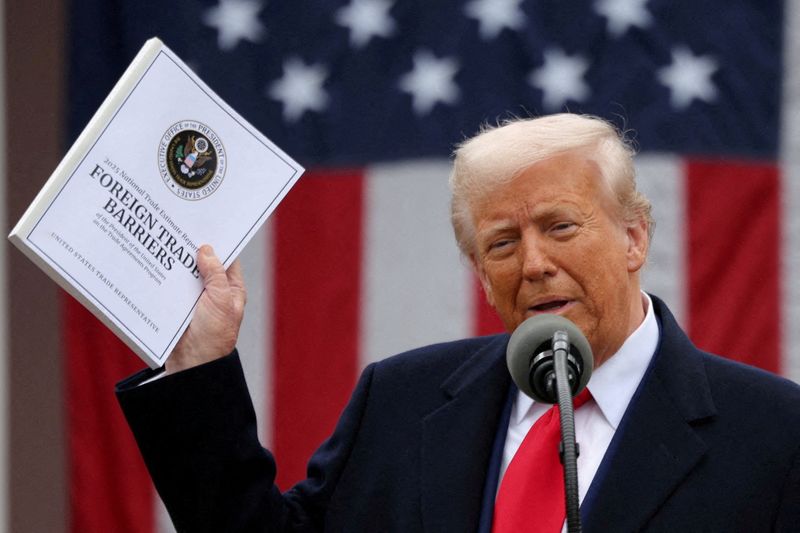
More than 50 countries have approached the White House for trade talks since President Donald Trump introduced sweeping tariffs on U.S. imports, according to senior Trump administration officials. This move, which has already triggered global market turbulence, has placed the U.S. in a strong position to renegotiate trade terms, though the rapid onset of negotiations raises concerns about the potential for prolonged uncertainty and logistical challenges.
In an appearance on Sunday talk shows, Trump’s top economic advisers framed the new tariffs as a strategic maneuver to strengthen the U.S.’s position in global trade. Treasury Secretary Scott Bessent emphasized that the talks with more than 50 countries put President Trump in a position of leverage, with many nations eager to avoid the damaging tariffs that have already begun to impact global markets. However, he acknowledged that managing multiple negotiations simultaneously could present difficulties for the administration.
Despite the sharp decline in U.S. stock values—almost $6 trillion lost in two days following the announcement of tariffs—Trump officials sought to reassure the public that the economy would not slide into a recession. They pointed to strong U.S. job growth as evidence of the economy’s resilience, despite predictions from JPMorgan economists that the tariffs would reduce the U.S. GDP growth by 0.3% for the year. Furthermore, some officials downplayed concerns that the tariffs were a deliberate attempt to destabilize the financial markets to pressure the Federal Reserve into lowering interest rates.
The tariffs, which include a 10% duty on a wide range of imports from multiple countries, took effect over the weekend. A higher set of reciprocal tariffs, varying between 11% and 50% on specific countries, is set to begin on Wednesday. Several nations, including Taiwan, Israel, and India, have signaled their willingness to engage in trade talks with the U.S. in a bid to reduce the impact of these tariffs. For instance, Taiwan’s president proposed eliminating tariffs entirely in exchange for trade negotiations, while Israeli Prime Minister Benjamin Netanyahu is seeking relief from the 17% tariff imposed on his country’s goods.
As the U.S. government pushes forward with its trade agenda, it faces increasing pressure from global economic instability. While some leaders have offered solutions to bypass the tariffs, many fear the long-term economic fallout. The situation remains fluid, and the coming weeks are likely to bring more intense discussions on the future of global trade relationships.