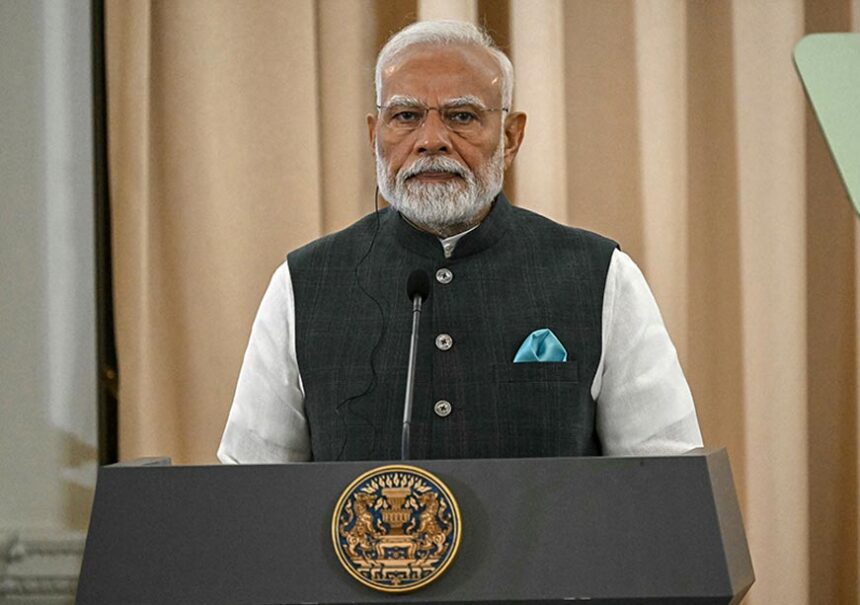
Prime Minister Narendra Modi’s visits to Thailand and Sri Lanka have reaffirmed India’s growing role as a connector between South and Southeast Asia. While his primary reason for visiting Bangkok was to attend the sixth BIMSTEC Summit, the outcomes of the trip suggest a broader strategic recalibration. India is no longer treating South and Southeast Asia as distinct spheres—it is integrating both regions under a unified geopolitical and economic vision.
This approach represents a clear shift from the earlier tendency to view these regions in isolation. By recognising the Bay of Bengal as the connective centre of the Indo-Pacific, India is not only expanding its regional footprint but also strengthening its position as a natural partner in Southeast Asia—not as an outsider, but as a country with organic links via Myanmar and Thailand.
BIMSTEC at the Core of India’s Regional Strategy
India’s proactive role in BIMSTEC (Bay of Bengal Initiative for Multi-Sectoral Technical and Economic Cooperation) reflects this strategic reorientation. Although established in 1997, BIMSTEC had remained underutilised until the Modi government chose to energise it, positioning it as a key platform in India’s regional engagement strategy. The latest summit in Bangkok, themed “Prosperous, Resilient, and Open BIMSTEC,” saw Modi making a series of capacity-building announcements, pushing for regional economic integration, and urging closer cooperation in areas like disaster management, sustainable maritime transport, traditional medicine, agriculture research, and digital public infrastructure.
India also proposed BIMSTEC Centres of Excellence to be set up in India and offered to conduct a pilot study on the region’s digital public infrastructure needs. Additionally, it introduced a cancer care capacity-building programme and launched BODHI—an initiative aimed at skilling youth through training, scholarships, and professional development across BIMSTEC nations.
The strategic objective is clear: With SAARC largely inactive, India sees BIMSTEC as the alternative framework to sustain regional cooperation and as a vehicle for its ‘Neighbourhood First’ and ‘Act East’ policies. Modi also emphasised India’s northeast as a natural bridge, linking the South Asian and Southeast Asian regions—a positioning that places India at the geographic and strategic heart of the Indo-Pacific.
India-Thailand Relations Reinvigorated
Modi’s Bangkok visit also marked the first official trip by an Indian Prime Minister to Thailand in over a decade. It culminated in the signing of a strategic partnership agreement between the two countries, enhancing defence cooperation and expediting a key regional infrastructure project—a 1,300-kilometre highway linking India’s northeast to northern Thailand via Myanmar.
Trade talks were also initiated to revisit India’s existing Free Trade Agreements (FTAs) with both Thailand and ASEAN, with the aim of making these frameworks more responsive to today’s economic realities. As two neighbours with deep-rooted civilisational links, India and Thailand are now working to translate that shared history into a modern partnership grounded in infrastructure, trade, and strategic convergence.
Sri Lanka: Building Trust and Strategic Depth
In Sri Lanka, Modi’s visit came amid initial uncertainties about the new government under President Anura Kumara Dissanayake. However, the visit turned out to be a high point in India-Sri Lanka relations. Modi was awarded the Mitra Vibhushana, Sri Lanka’s highest civilian honour for a foreign leader, and received a ceremonial welcome at Colombo’s iconic Independence Square—demonstrating Colombo’s strong diplomatic signal to New Delhi.
President Dissanayake assured India that Sri Lankan territory would not be used against India’s security interests, a reassurance that paves the way for deeper strategic collaboration. Among the key outcomes were a first-ever defence cooperation pact, a plan to develop Trincomalee as an energy hub in collaboration with the UAE, and initiatives on digital innovation, healthcare, medicine, and assistance for Sri Lanka’s eastern provinces.
Modi also raised longstanding concerns on the Tamil issue and the fishing rights dispute. Though complex, these matters were addressed with constructive intent by both sides, marking a step forward in mutual understanding.
India’s Expanding Strategic Imagination
These twin visits underscore how India’s foreign policy under Modi is evolving in both depth and direction. New Delhi is no longer merely engaging its neighbours—it is redefining its periphery. It is becoming increasingly clear that South and Southeast Asia are not disconnected geopolitical regions but part of a larger continuum. In today’s Indo-Pacific framework, the old binary divisions make little sense.
By investing in BIMSTEC, enhancing sub-regional connectivity, and building robust bilateral ties, India is asserting itself as an anchor of stability and a driver of regional integration. Whether through infrastructure, diplomacy, defence, or digital innovation, India is steadily shaping the strategic landscape around the Bay of Bengal.