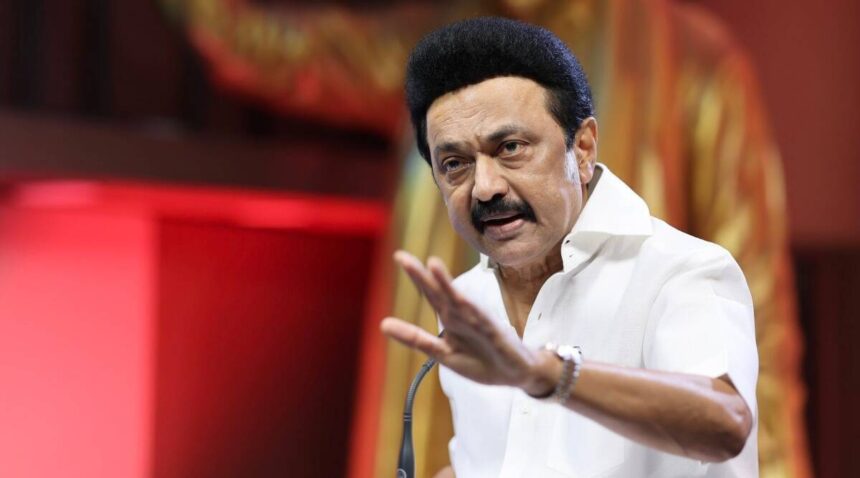
Tamil Nadu Chief Minister and Dravida Munnetra Kazhagam (DMK) President MK Stalin has issued a clear and uncompromising warning to his party’s local leaders in Tirunelveli and adjoining constituencies, asking them to ensure electoral victory in the upcoming polls or face removal from their positions. In what is seen as both an internal wake-up call and a subtle political message to the Bharatiya Janata Party (BJP), MK Stalin’s remarks have set the tone for an intense political contest in the southern districts ahead of the elections. His meeting with the party’s regional functionaries underscored DMK’s determination to defend its political turf and counter the BJP’s growing influence in Tamil Nadu’s southern belt.
The closed-door meeting titled ‘Udanpirappe Vaa’ (Come, My Sibling) took place in Sankarankoil and Tirunelveli, where MK Stalin directly addressed district secretaries, senior cadres, and local office-bearers. The session was attended by DMK’s South Zone in-charge and Member of Parliament Kanimozhi, who reiterated the need for disciplined coordination and grassroots mobilisation in the upcoming campaign. Tirunelveli, known as the home constituency of Tamil Nadu BJP President Nainar Nagendran, has become a key battleground, and MK Stalin’s directive indicates the party’s intent to reclaim the constituency with a strong local strategy.
Warning to Party Cadres: Deliver Results or Lose Posts
According to party insiders present at the meeting, MK Stalin’s tone was both motivational and firm. He reportedly told district secretaries and senior functionaries that the days of complacency were over and that the DMK’s organisational credibility depended on electoral results. His message was direct: those who fail to secure a victory in Tirunelveli would be stripped of their party posts. “Don’t wait to be pushed to work—step up and deliver results,” he is said to have told them, urging them to demonstrate energy and commitment in reaching out to voters.
The Chief Minister’s warning also reflected growing concern within the DMK leadership about the need to maintain momentum in southern Tamil Nadu, where the BJP has been attempting to make inroads through targeted campaigns. MK Stalin’s clear message was that the DMK cannot afford to take any constituency lightly, especially one that holds symbolic importance as the home base of the state BJP chief.
Sources revealed that MK Stalin advised local functionaries to shift from an authoritarian style of leadership to one that encourages and motivates the grassroots cadre. He urged the district secretaries of Tenkasi and Tirunelveli to “pat and appreciate people instead of intimidating or ordering them.” This, he said, would create a more cohesive and motivated workforce capable of mobilising voters effectively. The DMK chief also reminded his team that internal unity and mutual respect were essential to securing voter trust and ensuring electoral success.
The meeting comes at a time when political temperatures are rising across Tamil Nadu as parties begin preparations for the upcoming Lok Sabha and local elections. MK Stalin’s address has been interpreted as a strong attempt to streamline the DMK’s regional machinery and eliminate complacency. The move signals his awareness that retaining dominance in southern Tamil Nadu will require renewed effort, particularly against a BJP leadership eager to demonstrate its growth in the state.
Political analysts have described the directive as both a tactical and symbolic maneuver. By specifically naming Tirunelveli—a constituency that serves as the political base of Nainar Nagendran—MK Stalin has turned the upcoming contest into a prestige battle for both the DMK and the BJP. A victory there would not only reinforce the DMK’s organisational strength but also send a clear message that the BJP’s southern strategy remains unviable in the state’s heartland.
Focus on Electoral Preparedness and Voter List Accuracy
Beyond internal discipline, MK Stalin also addressed another pressing concern: irregularities in the Special Intensive Revision (SIR) of voter lists. According to reports, MK Stalin expressed alarm over the possibility of lakhs of voters being excluded from the rolls due to administrative lapses or manipulation. He instructed party workers to treat the voter verification drive as a top priority, urging them to personally oversee the accuracy of electoral rolls in their respective regions.
“The exclusion of even a few thousand voters can tilt the outcome in closely contested seats,” MK Stalin reportedly said, underlining the need for meticulous data collection and verification. He directed cadres to conduct door-to-door surveys, identify missing names, and work with local election officers to ensure that every eligible voter remains on the rolls. This emphasis on ground-level voter engagement demonstrates the DMK’s recognition of how micro-level management could determine electoral outcomes in competitive constituencies.
MK Stalin’s remarks also served as a critique of what he described as administrative irregularities that could affect democratic participation. His appeal to DMK workers to act as guardians of voter rights aligns with the party’s larger narrative of defending social justice and democratic inclusivity—core tenets of Dravidian ideology.
Kanimozhi, who was present during the meeting, supported MK Stalin’s directives by elaborating on the party’s southern campaign strategy. She called on district secretaries to strengthen booth-level committees and increase the visibility of welfare initiatives launched by the DMK government. Her message complemented MK Stalin’s tone, combining electoral discipline with proactive outreach.
Party insiders say that the meeting also focused on feedback from the grassroots regarding the government’s ongoing welfare programs, including free bus travel for women, financial aid schemes, and educational subsidies. MK Stalin reportedly instructed local leaders to communicate the impact of these schemes to the public more effectively, turning governance achievements into electoral advantages.
At the same time, the DMK leadership appears to be preparing for a more aggressive opposition campaign. The BJP’s growing efforts to portray itself as a rising force in Tamil Nadu, combined with alliances in select regions, have prompted the DMK to strengthen its regional networks. MK Stalin’s meeting is seen as an attempt to preemptively counter this by energizing the party’s local cadres and reinforcing discipline before the campaign gains full momentum.
Tirunelveli’s political importance goes beyond local boundaries. As the stronghold of BJP state chief Nainar Nagendran, it has become a symbolic battlefield where both parties seek to test their grassroots strength. The DMK’s renewed focus on the district signals that the ruling party views the area as a strategic test case for its statewide preparedness. Winning in Nagendran’s constituency would provide a psychological advantage, demonstrating the DMK’s enduring dominance in Tamil Nadu’s southern political landscape.
Observers believe that MK Stalin’s pointed directive reflects his evolving leadership style—combining a paternal approach with performance accountability. While his tone remains consistent with his image as a leader focused on discipline and results, it also highlights his willingness to confront internal weaknesses openly. In the broader political narrative, this assertiveness sends a message not only to DMK cadres but also to opponents that the Chief Minister remains firmly in command of his organisation.
Meanwhile, the subtle message to the BJP was hard to miss. By targeting a constituency led by the state BJP president, MK Stalin has drawn attention to the DMK’s determination to contest the saffron party’s claim of expanding influence. The political subtext suggests that the ruling party intends to check any narrative of BJP growth in Tamil Nadu well before it takes root.
The meeting, therefore, served dual purposes—fortifying DMK’s internal machinery and signaling to the opposition that the southern districts remain firmly under the Dravidian party’s control. As the election season draws near, MK Stalin’s assertive push for accountability and preparedness underscores his intent to ensure that every constituency contributes to the DMK’s larger victory.
His direct engagement with local cadres marks a return to grassroots leadership, a hallmark of successful Dravidian politics. With his son and cabinet minister Udhayanidhi Stalin taking on greater public responsibilities, the DMK appears focused on presenting a unified, disciplined, and determined image to the electorate. The chief minister’s warning may thus be seen not as an act of reprimand but as a strategic call to arms—an effort to remind his cadre that political complacency has no place in the DMK’s roadmap to sustained governance.