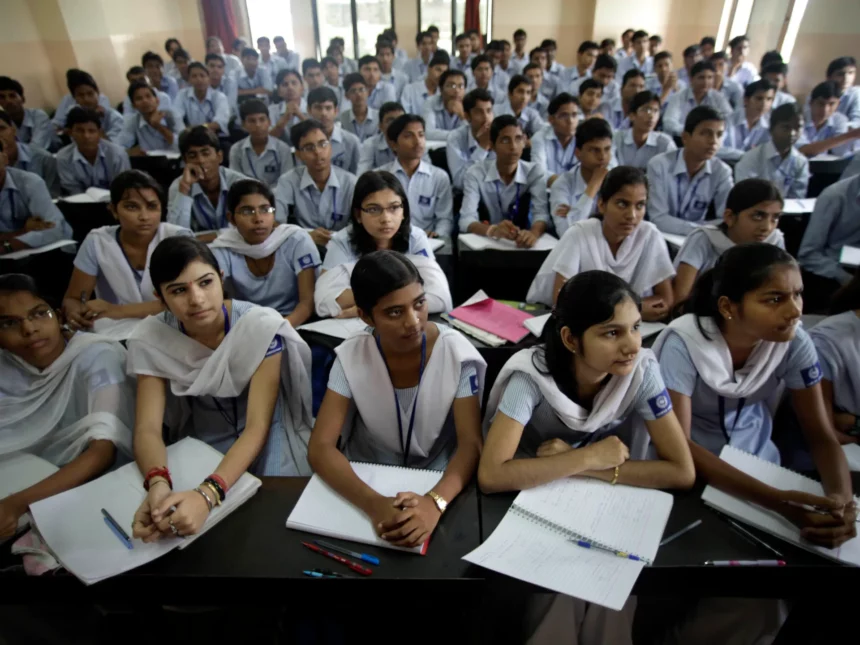
As students across India eagerly await college admissions and scholarship results, a disturbing trend has surfaced—widespread scams targeting aspiring scholars and their families. With dreams of financial aid to support their education, many are falling victim to fraudulent schemes. Recent government investigations have revealed shocking data, exposing the scale of deception in the system.
A closer look at scholarship applications for the 2022-2023 period found that out of 25.5 lakh applicants, more than 6.7 lakh were fake. Biometric verification confirmed that only 30% of students applying for scholarship renewals were genuine. These findings reveal how fraudsters are exploiting scholarship schemes designed for underprivileged students.
Fraudulent Institutions and Fake Beneficiaries
A report by the Ministry of Minority Affairs found that of the 1,572 minority institutions inspected, around 830 were either fake or non-functional. These institutions siphoned off nearly ₹144.83 crore over five years—money meant for the education of minority students. The scale of this fraud prompted the ministry to hand over the investigation to the Central Bureau of Investigation (CBI).
In another case, the Himachal Pradesh scholarship scam came under scrutiny, where officials from the Enforcement Directorate (ED) and CBI were allegedly involved in misappropriating ₹250 crore meant for SC, ST, and OBC students. In connection with this case, assets worth ₹18.27 crore have been frozen.
Students Under Scanner in Tripura and Expert Warnings
In Tripura, the state government plans to file FIRs against 34 students accused of submitting fake income certificates to avail of post-matric scholarships. This incident shows that not just institutions, but individuals too are misusing these schemes.
Experts believe rising education costs are driving students into the trap of fake scholarship offers. Dr. Deepankar Chakrabarti of Jaipuria Institute of Management pointed out that professional education has become so expensive that students, in desperation, fall prey to scams disguised as scholarship opportunities. Scammers often demand bank details, advance payments, or personal data by posing as legitimate organizations.
Government’s Countermeasures and Awareness Drive
To counter these growing frauds, the government has implemented stricter verification processes for institutions, including on-ground infrastructure checks. Public awareness campaigns are also underway to educate students and parents on red flags—such as unsolicited offers, upfront fees, and vague eligibility criteria. These steps aim to protect genuine beneficiaries and ensure scholarships reach the deserving.