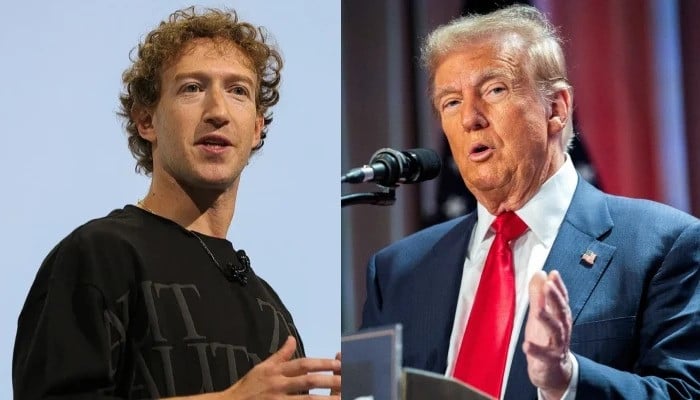
Meta CEO Mark Zuckerberg met with US President-elect Donald Trump at the latter’s Mar-a-Lago estate in Florida on Friday, according to a report by the Semafor news website, which cited a source familiar with the matter. The details of the meeting were not disclosed, and neither Meta nor Donald Trump’s transition team provided an immediate response to Reuters’ request for comment.
The meeting comes at a time when Meta, the parent company of Facebook, is undergoing significant changes in its internal policies. In a move that has attracted considerable attention, Meta announced on Friday that it would be ending its diversity, equity, and inclusion (DEI) programs, which included initiatives related to hiring, training, and selecting suppliers. The company sent a memo to its employees informing them of the decision, which is seen as part of the broader changes the company is making under Mark Zuckerberg’s leadership.
The announcement regarding the cessation of DEI programs follows another recent shift in Meta’s approach. Earlier this week, Meta also scrapped its fact-checking program in the United States, a decision that has raised eyebrows among critics and sparked debates about the role of social media companies in managing content on their platforms. In addition to the fact-checking program, Meta has also relaxed its restrictions on discussions related to contentious issues such as immigration and gender identity, which has been viewed as an attempt to appease conservative voices.
These changes come at a time when Donald Trump is preparing to take office for a second term, and his influence over political and public discourse remains significant. Donald Trump’s return to the political spotlight has coincided with Meta’s decision to modify some of its content moderation practices, reflecting the pressure the company faces from various political and ideological groups. Meta’s policy shifts, including the reduction of curbs on certain discussions, are seen as a way to balance its approach to content moderation as it navigates the changing political landscape.
The meeting between Mark Zuckerberg and Donald Trump, which has yet to be fully disclosed, could indicate an ongoing dialogue between the tech giant and the incoming administration, especially as social media platforms continue to play a pivotal role in shaping political narratives. Both figures have been at the center of controversies in recent years, with Mark Zuckerberg facing criticism over Meta’s handling of misinformation and user privacy, while Donald Trump has been a polarizing figure in US politics.
As Meta navigates these changes, questions remain about the impact on its platform’s content moderation, its relationship with users and regulators, and its stance on political neutrality. The company’s shift away from DEI programs and its adjustments to content policies suggest that Meta is responding to pressures from various quarters, aiming to adapt to the changing political and social environment as Donald Trump’s second term approaches.
In conclusion, the meeting between Mark Zuckerberg and Donald Trump, alongside Meta’s strategic policy adjustments, underscores the ongoing evolution of social media platforms and their role in the political sphere. As Meta aligns itself with the new political realities, it will be interesting to see how these shifts impact its operations, public perception, and regulatory scrutiny in the coming years.