


Our planet is like a giant puzzle made of massive pieces known as tectonic plates, and these plates are always on the move, shaping the world we see today. Let’s get to know the seven major tectonic plates that are the key players in Earth’s crust:
1. The Pacific Plate

This is the heavyweight champion, covering a huge portion of Earth’s surface, including the Pacific Ocean. It stretches from California to New Zealand and is responsible for the Ring of Fire, a zone famous for frequent earthquakes and volcanic eruptions.
2. The African Plate
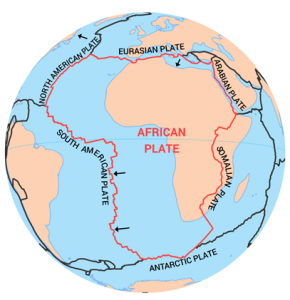
Encompassing Africa and parts of the Atlantic Ocean, this ancient giant is known for its stable core and diverse landscapes. The Great Rift Valley, a massive scar on the Earth, marks its separation from the Arabian Plate.
3. The Eurasian Plate
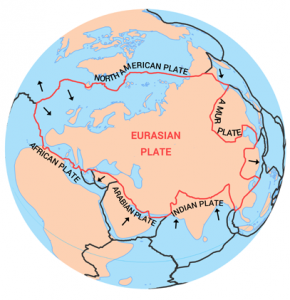
This expansive plate holds Europe and Asia together. It has shaped some of our planet’s most dramatic landscapes, from the Ural Mountains to the Himalayas, through its collisions with other plates.
4. The Antarctic Plate
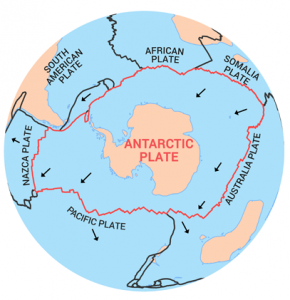
Home to Antarctica, this plate is surrounded by icy waters. Despite its frozen beauty, it’s still active and contributes to the movement of the Southern Ocean.
5. The Indo-Australian Plate
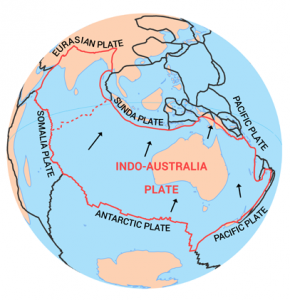
Created from the ancient supercontinent Gondwana, this plate includes India, Australia, and the Indian Ocean. Its northward movement is pushing the Himalayas to even greater heights.
6. The North American Plate
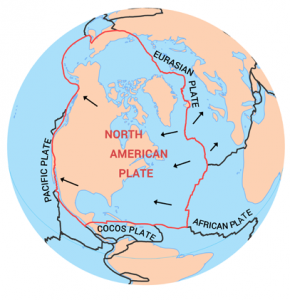
Cradling North America and parts of the Atlantic and Arctic Oceans, this plate is mostly stable, except for its western edge along the San Andreas Fault, where it collides with the Pacific Plate, causing earthquakes in California.
7. The South American Plate
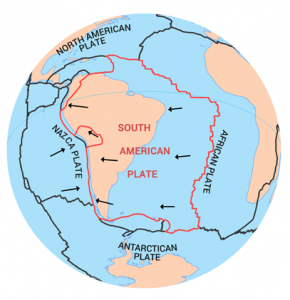
This lively plate hosts South America and the eastern Pacific Ocean. Its westward movement has shaped the Panama Canal and continues to influence the growth of the Andes Mountains.
These seven major plates are just a part of the tectonic story. There are many smaller plates at play, all contributing to the ever-changing landscapes of our planet. Understanding their movements helps us explore the fascinating world of geological history, which in turn deepens our understanding of earthquakes, volcanoes, and even climate change.






