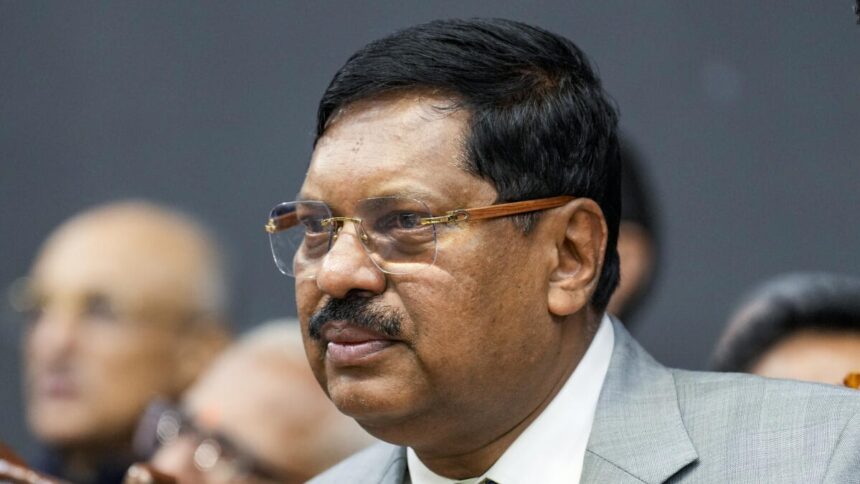
Chief Justice of India (CJI) B R Gavai, while addressing a gathering in Milan, Italy, called for an urgent need to address structural inequalities in India. He asserted that true democracy cannot exist without socio-economic justice, stating that real progress requires a nation to ensure dignity, opportunity, and equality for all citizens.
Constitutional Vision Rooted in Equality and Inclusion
Speaking at an event themed “Role of Constitution in Delivering Socio-Economic Justice in a Country: Reflections from 75 Years of Indian Constitution,” CJI B R Gavai emphasized that justice is not just an abstract idea. It must be reflected in social structures and opportunities that people access daily. He argued that addressing marginalisation is not simply a moral responsibility but a necessity for sustainable development and national stability.
B R Gavai said socio-economic justice is about creating a society where every individual can live with dignity and realise their full potential. Highlighting the Indian Constitution’s focus on inclusion, he noted the significance of affirmative action policies aimed at correcting historical injustices. Citing his own background from a marginalised community, he credited the Constitution’s ideals for enabling him to rise to the highest judicial office.
Judiciary and Parliament: Joint Custodians of Social Change
The Chief Justice reflected on India’s journey over the last 75 years, pointing out that the Constitution was more than a governance manual—it was a promise of a just and equal society. He revisited key moments in Indian legal history, including the landmark Kesavananda Bharati case of 1973, to illustrate how socio-economic rights have evolved.
He noted that both Parliament and the judiciary have played critical roles in expanding these rights in the 21st century. He referenced a recent Supreme Court verdict that struck down illegal demolitions of homes by state authorities, reaffirming the right to shelter as a fundamental right under Article 21. The ruling, he said, emphasized that executive actions cannot override judicial processes.
CJI B R Gavai concluded by underlining the Constitution’s transformative power, calling it a tool for empowerment, a shield for the vulnerable, and a moral guide for governance. He thanked the Chamber of International Lawyers for the platform to reflect on India’s democratic journey and reiterated the urgent need to prioritise equality as a cornerstone of national progress.