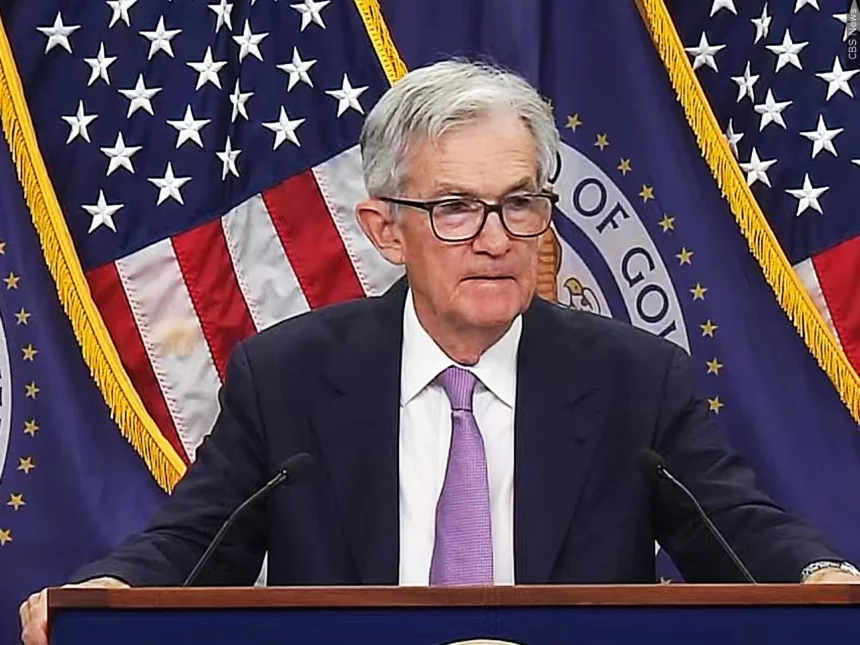
Federal Reserve Chair Jerome Powell has warned that President Donald Trump’s tariff policies could lead to weaker economic growth, higher unemployment, and rising inflation. His remarks came during a recent speech at the Economic Club of Chicago, highlighting the unprecedented nature of these tariff changes and their impact on the economy. Powell emphasized that the tariffs could challenge the Federal Reserve’s ability to manage both inflation and employment, a situation not seen in the U.S. for nearly 50 years.
Powell acknowledged that the level of tariff increases announced so far was far greater than anticipated. He noted that such changes could push the economy toward a scenario of simultaneous inflation and job losses. “We may find ourselves in the challenging scenario where our dual-mandate goals are in tension,” he explained. The Federal Reserve is tasked with managing inflation and employment, but these tariffs make it harder to balance both objectives.
In response to concerns about political interference, Powell assured the public that the Federal Reserve would remain independent and not be swayed by political pressure. “We’re never going to be influenced by any political pressure,” he said, underlining the central bank’s commitment to making decisions based solely on economic conditions, not political considerations.
The speech, however, sent shockwaves through the markets, with stocks tumbling after Powell’s comments. The Dow Jones dropped 700 points, or 1.7%, while the S&P 500 and Nasdaq also suffered significant losses, dropping 2.5% and 3.5%, respectively. Investors seemed to be reacting to the growing uncertainty around the impact of the tariffs.
Powell further explained that the tariffs could result in higher inflation, which would place a burden on consumers. He indicated that, while inflation is likely to rise, the exact extent remains uncertain. At the same time, unemployment is expected to increase as the economy slows down, a concerning trend that could affect many families and businesses across the country.
Powell’s comments come amid a broader debate on the tariffs. While President Donald Trump has called for lower interest rates to offset the potential economic damage, the Federal Reserve remains focused on navigating the complex challenges posed by the tariffs. As the situation continues to evolve, the central bank’s response will be crucial in addressing the economic consequences of Donald Trump’s trade policies.