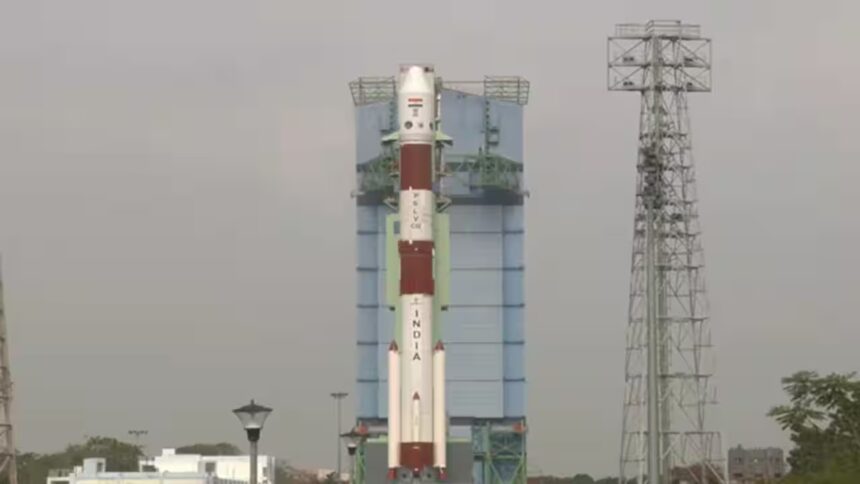
The Indian Space Research Organisation is preparing for a significant space mission that underscores India’s expanding ambitions in science, defence, and commercial space operations, with plans to launch 16 satellites in a single mission, including the Defence Research and Development Organisation’s advanced earth observation satellite Anvesha. The mission reflects a convergence of national security priorities, technological innovation, and the growing participation of academic institutions and private players in India’s space ecosystem, positioning the country as an increasingly influential actor in the global small-satellite and earth observation domain.
Mission objectives and strategic importance of Anvesha
At the heart of the upcoming mission is Anvesha, a sophisticated earth observation satellite developed by the Defence Research and Development Organisation. Designed with advanced imaging and sensing capabilities, Anvesha is intended to provide high-resolution data across multiple spectral bands, enabling detailed analysis of land, water, vegetation, and man-made structures. Such capabilities are crucial for a wide range of applications, including border surveillance, disaster management, environmental monitoring, agricultural assessment, and infrastructure planning.
For India’s defence establishment, Anvesha represents a strategic asset that enhances autonomous space-based reconnaissance and situational awareness. By reducing dependence on external data sources and strengthening indigenous intelligence capabilities, the satellite aligns with broader national objectives of self-reliance in critical technologies. Defence analysts note that satellites like Anvesha play a vital role in modern security frameworks, where timely and accurate geospatial information can influence decision-making across military and civilian domains.
The mission also highlights the close collaboration between India’s civilian space agency, the Indian Space Research Organisation, and defence research bodies. This partnership has grown steadily over the years, reflecting a shared understanding that space is no longer limited to scientific exploration but is integral to national security, economic development, and technological leadership. Through such joint missions, India aims to build a resilient and versatile space architecture capable of addressing diverse national needs.
Beyond Anvesha, the mission includes 15 additional satellites of varying sizes and purposes. These co-passenger satellites represent a mix of experimental, commercial, and educational payloads, many of them developed by Indian startups, universities, and research institutions. Their inclusion signals ISRO’s commitment to nurturing innovation and providing affordable launch opportunities to emerging players in the space sector. Small satellites focusing on communication technologies, internet of things applications, earth observation experiments, and technology demonstrations are expected to benefit from the mission’s shared launch platform.
The launch vehicle selected for the mission is the Polar Satellite Launch Vehicle, a workhorse of India’s space programme known for its reliability and flexibility. Over the years, the PSLV has successfully deployed hundreds of satellites for domestic and international customers, earning a reputation as a dependable option for sun-synchronous and low earth orbits. By entrusting this multi-satellite mission to the PSLV, ISRO is leveraging decades of operational experience while continuing to refine launch capabilities to meet evolving demands.
Expanding India’s space ecosystem and future outlook
The planned launch of 16 satellites in a single mission reflects broader changes underway in India’s space landscape. In recent years, the government has opened the sector to private participation, encouraging startups and industry players to engage in satellite development, launch services, and downstream applications. Missions like this one provide a critical platform for these new entrants, allowing them to test technologies in orbit and gain credibility in a competitive global market.
Academic institutions, too, are playing an increasingly visible role. University-built satellites included in the mission serve as hands-on training tools for students and researchers, fostering a new generation of space scientists and engineers. By integrating educational payloads alongside strategic and commercial satellites, ISRO reinforces its long-standing philosophy of using space technology as a catalyst for capacity building and inclusive development.
From a commercial perspective, multi-satellite launches offer cost efficiencies and operational advantages. Sharing a single launch vehicle reduces expenses for satellite operators and maximises the utilisation of available payload capacity. This approach aligns with global trends, where rideshare missions have become a preferred option for deploying small satellites quickly and economically. India’s ability to offer such services strengthens its position in the international launch market, particularly for customers seeking reliable access to orbit at competitive prices.
The mission also carries symbolic significance as part of India’s broader narrative of technological self-confidence. With successful interplanetary missions, lunar exploration, and a growing portfolio of earth observation and communication satellites, India has demonstrated its capacity to undertake complex space endeavours. The inclusion of a defence-focused satellite like Anvesha alongside civilian and commercial payloads illustrates the multifaceted nature of the country’s space ambitions.
Preparations for the launch involve meticulous planning, extensive testing, and coordination among multiple stakeholders. Engineers and scientists conduct detailed checks of the launch vehicle, satellites, and ground systems to ensure mission readiness. Each component must function flawlessly, as even minor anomalies can have cascading effects during the high-risk phases of liftoff and orbital insertion. This emphasis on precision and discipline reflects the demanding nature of space operations, where success depends on both technological excellence and rigorous execution.
Looking ahead, the mission is expected to contribute valuable data and operational experience that will inform future projects. Insights gained from Anvesha’s performance can guide the development of next-generation earth observation satellites, while lessons learned from deploying multiple payloads can refine launch integration processes. For commercial and academic participants, the mission offers an opportunity to validate designs, demonstrate capabilities, and build confidence for subsequent ventures.
As India continues to chart an ambitious course in space, missions of this scale and diversity are likely to become more frequent. They reflect a strategic vision that sees space not as an isolated domain, but as an enabler of security, sustainability, economic growth, and scientific progress. By bringing together defence priorities, civilian research, private innovation, and educational goals in a single launch, the upcoming mission exemplifies the evolving character of India’s space programme and its aspirations on the global stage.