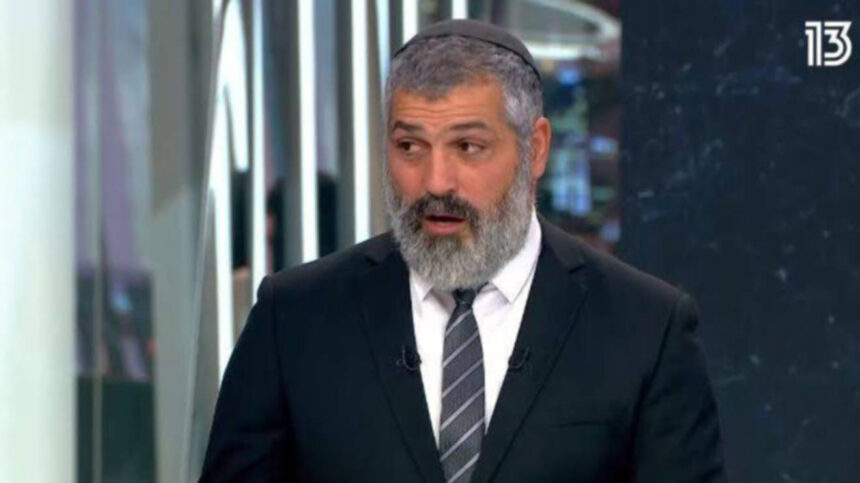
The ongoing conflict in Gaza has once again drawn international attention to the risks faced by journalists covering war zones, as Israeli journalist Zvi Yehezkeli publicly defended Israel’s targeted killing of Palestinian journalists in a recent strike on the Nasser Hospital in Khan Younis. Speaking on i24 News during a Monday broadcast, Zvi Yehezkeli claimed that the slain journalists were aligned with Hamas and that their deaths were justified. The comments, which were shared widely on social media platforms, have sparked controversy and condemnation from media organizations and human rights advocates worldwide, highlighting the dangerous intersection of journalism, military action, and political narratives in conflict zones.
Zvi Yehezkeli’s Justification and Controversial Statements
Zvi Yehezkeli, an Arab affairs correspondent for Israel’s i24 News, praised the Israeli military’s “double-tap” strike on the hospital, describing the journalists killed as members of Hamas’ elite military unit, or “Nukhba men.” According to Zvi Yehezkeli, the journalists were actively working against Israel by disseminating images showing the humanitarian crisis in Gaza, including widespread starvation caused by Israeli blockades. He further linked the journalists’ actions to Hamas’ slain leader Yahya Sinwar, claiming they were continuing his legacy through “so-called journalism.”
In his broadcast, Zvi Yehezkeli explicitly stated that the damage inflicted by these journalists justified their deaths. He suggested that Israel’s decision to target the reporters, though controversial, was necessary to counter perceived threats to its reputation and security. Zvi Yehezkeli’s remarks, as a settler living in the occupied West Bank, reflect a deeply polarizing viewpoint within parts of Israeli media and society, where journalists covering Palestinian issues are sometimes framed as active participants in militant campaigns rather than neutral observers.
The journalist’s statements come amid an intensification of hostilities in Gaza, where Israeli forces have repeatedly targeted locations that include hospitals, media centers, and residential areas. By publicly defending the killings, Zvi Yehezkeli has ignited debates over media ethics, press freedom, and the right to life of journalists in conflict zones. Critics argue that such statements normalize attacks on reporters and may encourage military operations that deliberately place journalists in harm’s way.
The Nasser Hospital Strike and Its Human Cost
On Monday, Israeli forces carried out a “double-tap” strike on the fourth floor of Nasser Hospital in Khan Younis, killing at least 20 Palestinians, including five journalists. The first missile hit the floor directly, and moments later, a second strike targeted rescuers, bystanders, and journalists who had gathered to provide aid and recover the wounded. Among those killed were Mohamed Salama and Ahmed Abu Aziz, who were covering events for Middle East Eye, as well as Mariam Dagga, a freelance reporter affiliated with several international outlets including the Associated Press; Hussam al-Masri, a Reuters photojournalist; and Moaz Abu Taha, another freelance reporter.
While Israeli authorities initially claimed that the deaths of journalists were an unintended “mistake,” reports from Israel’s Channel 14 news indicated that the operation was coordinated and approved by senior military commanders. This has intensified international scrutiny and criticism, particularly regarding compliance with international humanitarian law and the protection of civilians in conflict zones. Human rights organizations have emphasized that targeting hospitals and journalists constitutes a grave violation of the laws of war, raising questions about accountability and the distinction between combatants and non-combatants.
The broader context of the Gaza conflict underscores the scale of danger faced by Palestinian journalists. At least 245 Palestinian journalists have been killed since the onset of Israel’s current military campaign, illustrating the high stakes of reporting in the region. The deaths of these journalists not only deprive Gaza of independent reporting but also highlight the perilous conditions under which news is gathered amid ongoing violence and blockades. Media organizations around the world have condemned attacks on journalists and called for robust international mechanisms to safeguard press freedom, particularly in areas experiencing armed conflict.
Zvi Yehezkeli’s justification of the killings has prompted widespread condemnation from journalists’ unions, press freedom advocates, and international media organizations. Many argue that such statements may embolden further attacks on journalists, erode norms protecting media personnel, and contribute to the targeting of individuals based on perceived political affiliations rather than professional conduct. The tension between national security claims and the protection of journalists remains a critical issue, reflecting the broader challenge of maintaining press freedom in war zones.
In the aftermath of the Nasser Hospital strike, debates have intensified over the responsibility of media organizations and governments to ensure the safety of journalists. The killings underscore the urgent need for global scrutiny, legal oversight, and accountability mechanisms to prevent deliberate or negligent targeting of media personnel. Journalists reporting from Gaza continue to face extreme risks, balancing the duty to inform the public with personal safety concerns in a conflict environment where conventional protections are increasingly disregarded.
The ethical and legal dimensions of the strikes are further complicated by the political narratives advanced by media figures like Zvi Yehezkeli. While Israel maintains that security operations are justified against entities affiliated with Hamas, critics highlight that international law mandates protection for journalists, regardless of perceived political alignment. The situation reflects a broader trend in modern conflicts, where journalists are often caught between military objectives, political messaging, and humanitarian obligations, raising fundamental questions about the limits of wartime targeting and the responsibilities of states to uphold international norms.
The deaths of journalists at Nasser Hospital also emphasize the human cost of framing media coverage as a form of opposition activity. Palestinian reporters, who work under hazardous conditions, are essential in documenting the realities of occupation, blockades, and civilian suffering. International observers have repeatedly stressed that attacks on journalists undermine transparency, accountability, and the public’s right to information, which are fundamental to democratic societies and international oversight mechanisms.
As discussions continue, Zvi Yehezkeli’s statements have fueled a heated debate within Israel, among Palestinians, and across the global media community. The defense of targeted killings of journalists challenges established norms of press freedom and raises urgent ethical questions about the role of media personnel in conflicts. The ongoing conflict in Gaza, combined with repeated targeting of journalists and hospitals, has made clear that ensuring the safety of reporters remains a pressing concern for both international organizations and governments seeking to uphold the laws of war.
The Nasser Hospital incident exemplifies the complex intersection of military strategy, media coverage, and humanitarian law. It highlights the dangers inherent in environments where combatants, civilians, and journalists coexist under conditions of extreme violence. While Zvi Yehezkeli’s remarks reflect one perspective, the overwhelming response from global media, human rights organizations, and legal experts underscores the need for rigorous protection of journalists as neutral observers. The continued loss of life among Palestinian journalists serves as a stark reminder of the perils faced by reporters and the importance of international scrutiny, ethical standards, and accountability in conflict reporting.