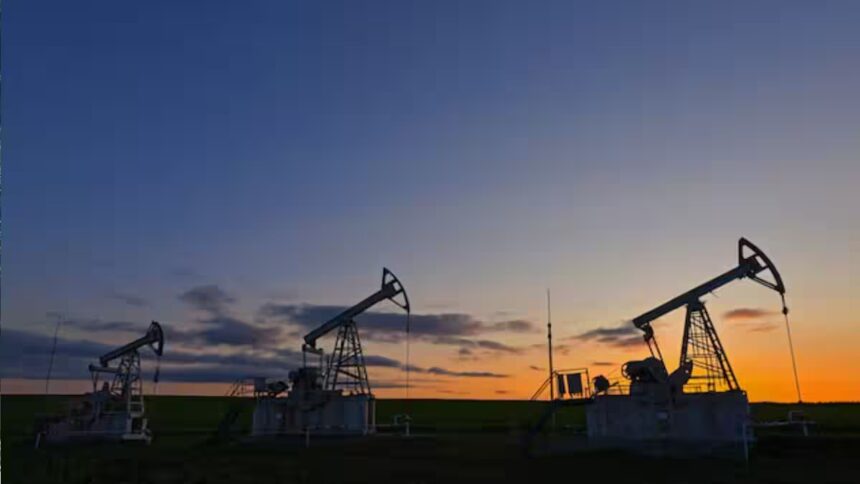
Amid escalating conflict in West Asia, Iran has managed to turn geopolitical tensions into an economic advantage by maintaining steady oil exports despite ongoing attacks. While the United States and Israel have targeted strategic locations near Iran, critical infrastructure like the Kharg oil terminal has remained operational, allowing the country to sustain significant export volumes. At the same time, major Gulf oil producers such as Saudi Arabia, Iraq and Kuwait are facing severe disruptions, with production reportedly dropping by up to 70 percent. This shift in supply dynamics has triggered a sharp rise in global crude oil prices, raising concerns about inflation and energy security worldwide. The evolving situation highlights how geopolitical conflict can dramatically alter global energy flows and economic outcomes.
Iran Maintains Oil Flow Through Kharg Terminal Despite Conflict
Iran has managed to sustain its oil exports at a time when regional instability has disrupted global supply chains. A significant portion of its exports, estimated at nearly 90 percent, continues to be routed through the Kharg oil terminal, which remains fully operational despite nearby military activity. Reports suggest that Iran is exporting between 1.7 to 2 million barrels of oil per day, largely to Asian markets including China. The country has relied on a network of unofficial shipping arrangements often referred to as a “ghost fleet” to bypass restrictions and maintain steady trade flows. This strategy has allowed Iran to capitalise on high global oil prices while ensuring continuity in its export operations. In addition to oil exports, Iran has also leveraged its strategic position near the Strait of Hormuz by imposing charges on vessels passing through the region, reportedly collecting significant revenue as a form of wartime levy. Although attacks on energy infrastructure such as the South Pars gas field have affected production to some extent, the overall supply of gas has not been completely halted. Iran’s ability to maintain energy exports under such conditions reflects both its logistical adaptability and the strategic importance of its infrastructure. This resilience has allowed the country to strengthen its economic position even during a period of heightened military conflict.
Gulf Nations Face Severe Production Decline and Export Challenges
While Iran continues to export oil, several Gulf countries are experiencing sharp declines in production due to security concerns and logistical disruptions. Nations including Saudi Arabia, Iraq, Kuwait, Qatar and the United Arab Emirates have seen their output fall significantly, in some cases by as much as 70 percent. The Strait of Hormuz, a critical maritime route for global oil transport, has become increasingly unsafe, leading to reduced tanker movement and increased insurance costs. Saudi Arabia, the world’s largest oil exporter, has struggled to maintain production levels, with output falling from around 10 million barrels per day to nearly 8 million. Although alternative pipelines are being used, they are insufficient to handle the full volume of exports. In Iraq, production has dropped sharply as foreign companies withdrew staff and storage facilities reached capacity due to limited export options. Kuwait, which relies heavily on the Strait of Hormuz, has seen its exports nearly halt, with rising costs and security risks discouraging shipments. Qatar’s gas exports have also been impacted following disruptions at key facilities, affecting global LNG supply. The United Arab Emirates has attempted to maintain exports through alternative routes, but increased insurance premiums and logistical constraints have limited effectiveness. These disruptions have created a significant supply gap in global energy markets, contributing to rising prices and increased volatility. The situation underscores the vulnerability of global energy systems to geopolitical tensions, particularly in regions that serve as key transit hubs.
Rising Oil Prices, Global Impact and Policy Responses
The imbalance between sustained Iranian exports and declining Gulf production has had a direct impact on global oil prices. Brent crude has surged to levels above $112 per barrel, marking one of the highest price points in recent years. Such increases have significant implications for economies worldwide, particularly for countries like India that rely heavily on imported energy. Higher oil prices can lead to increased transportation costs, rising inflation and pressure on fiscal balances. In response to these developments, policymakers are exploring measures to stabilise supply and control price volatility. The United States has taken a notable step by granting a temporary exemption on sanctions related to Iranian oil purchases. This 30 day exemption, effective from March 20 to April 19, allows certain transactions involving Iranian oil already at sea, potentially adding up to 140 million barrels to global supply. The move is aimed at easing immediate supply constraints and preventing further escalation in prices. Analysts believe that such interventions may provide short term relief, but long term stability will depend on the resolution of geopolitical tensions. The current scenario highlights the complex interplay between conflict, energy markets and economic policy, demonstrating how global events can influence local economies. As the situation continues to evolve, governments and industries worldwide remain on high alert, closely monitoring developments and preparing for potential disruptions.
Meta description
Iran boosts oil exports during war as Gulf production drops sharply, driving crude prices above $112 and impacting global energy markets.