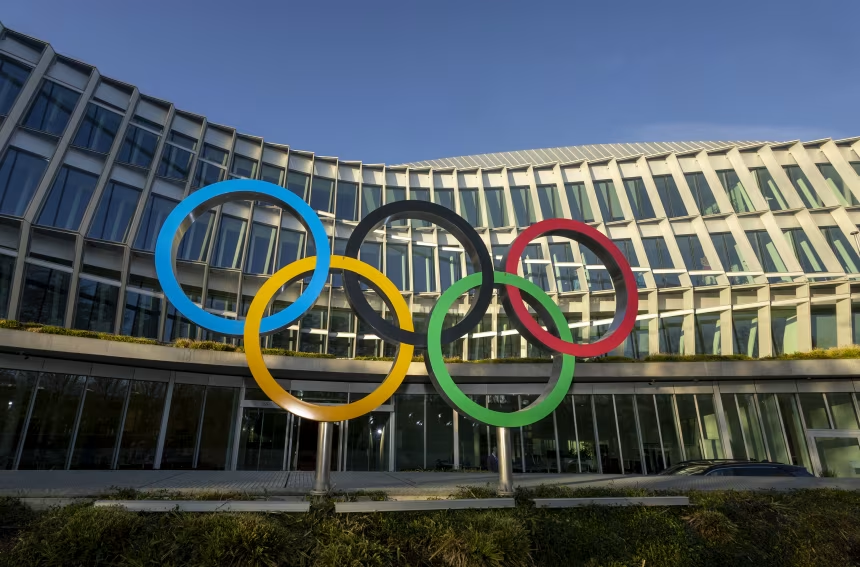
The International Olympic Committee has announced a major policy shift, banning transgender women and athletes with differences in sex development (DSD) from competing in the female category at the 2028 Los Angeles Olympics and future Games. The decision marks one of the most significant changes in Olympic eligibility rules in recent years, sparking global debate across the sporting community.
IOC President Kirsty Coventry stated that the move is aimed at ensuring fairness and safety in women’s sports. The new guidelines will apply to elite competitions across both individual and team events.
New Eligibility Rules and Genetic Screening Introduced
Under the updated policy, athletes wishing to compete in the female category will be required to undergo a one-time genetic screening test. This test will detect the presence of the SRY gene, which is associated with male biological development.
The screening process is expected to be conducted through non-invasive methods such as saliva samples or cheek swabs. According to the IOC, this approach is based on scientific evidence and is designed to provide an accurate assessment of biological sex.
The organisation emphasised that the presence of the SRY gene is a reliable indicator of male development and remains constant throughout an individual’s life. The screening will be required only once, reducing the need for repeated testing.
The policy will be implemented across all Olympic disciplines and is expected to influence eligibility rules in international sports federations as well.
Fairness and Safety at the Core of Decision
The IOC has justified its decision by citing performance differences between male and female athletes. According to its findings, biological males may retain physical advantages even after transitioning, particularly in strength, endurance, and speed.
The organisation highlighted that these advantages can significantly impact competition outcomes, especially in elite-level sports where margins of victory are minimal. In some categories, such as contact or strength-based sports, safety concerns were also cited as a key factor.
The policy aims to preserve a level playing field in women’s sports while maintaining the integrity of competition. IOC officials stressed that the decision was guided by medical experts and scientific research.
At the same time, the committee reiterated that all athletes should be treated with dignity and respect, regardless of eligibility criteria.
Past Cases and Ongoing Debate
The issue of transgender and DSD athlete participation has been a subject of debate for over a decade. Notable cases include Laurel Hubbard, who became the first transgender woman to compete at the Olympics in 2021, and Caster Semenya, a DSD athlete who won Olympic gold medals.
Another high-profile example is Imane Khelif, who competed successfully at the Paris 2024 Olympics. These cases have contributed to ongoing discussions about inclusion, fairness, and the evolving nature of sports regulations.
Reactions to the IOC’s decision have been mixed. Some organisations have welcomed the move as a step toward protecting women’s sports, while others have expressed concern about its impact on inclusivity and the rights of athletes.
Critics argue that eligibility rules must balance fairness with respect for diversity and avoid causing harm to affected individuals. The debate is expected to continue as the policy is implemented.
Impact on Future Olympic Competitions
The new rules are likely to have far-reaching implications for future Olympic Games and international sports competitions. By setting a clear standard, the IOC aims to create consistency across different sports and governing bodies.
However, the decision may also lead to legal challenges, policy reviews, and further discussions on how to balance fairness and inclusion in competitive sports.
The guidelines apply specifically to elite-level competitions and do not extend to grassroots or recreational sports programmes, where participation rules may differ.
Conclusion
The IOC’s decision to ban transgender women and DSD athletes from female events marks a significant moment in the evolution of sports governance. While aimed at ensuring fairness and safety, the move has also reignited global debate on inclusion and athlete rights.
As the sporting world adapts to these changes, the focus will remain on how effectively the new policy is implemented and whether it achieves its intended objectives.