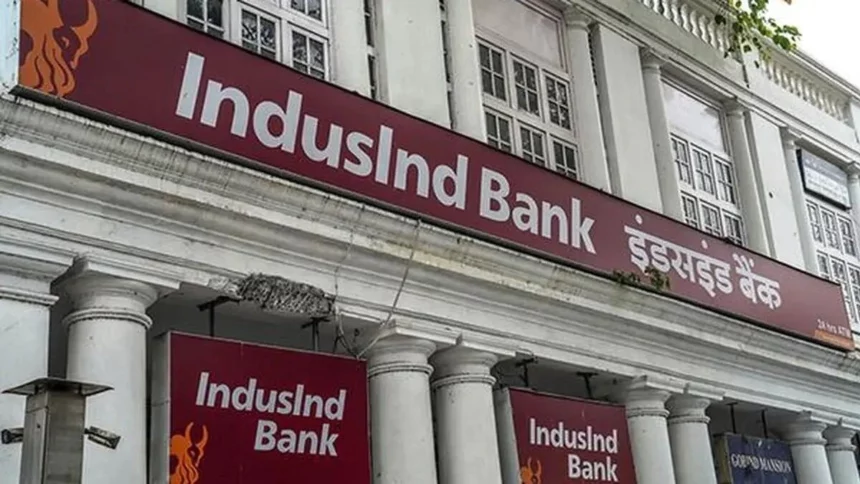
IndusInd Bank witnessed a sharp dip in its stock price on Wednesday morning after its Chief Executive Officer, Sumant Kathpalia, stepped down, taking moral responsibility for serious lapses in the bank’s derivatives accounting. The leadership shake-up, paired with financial impact disclosures, spooked investors and pushed the stock down nearly 3% in early trading.
Sumant Kathpalia, who had been leading the bank since March 2020, resigned amid mounting regulatory pressure following an external audit. The audit exposed irregularities in how the bank accounted for derivative transactions—prompting both the CEO and Deputy CEO Arun Khurana to step down within days of each other. In his resignation letter, Sumant Kathpalia cited “moral responsibility” for the discrepancies and the ensuing damage to the bank’s credibility.
Audit reveals massive financial impact
The issue first surfaced on March 10 when the bank reported possible inconsistencies in derivative accounting balances. An internal review suggested a 2.35% impact on its net worth as of December 2024. However, a deeper investigation conducted by an external auditor revised the figure sharply, estimating a loss of ₹1,979 crore by June 2024.
The bank, responding to the audit findings, updated its estimate and now expects a 2.27% post-tax impact on its net worth. These adjustments will be recorded in the financials for FY2024-25, according to a statement from the bank. IndusInd Bank also assured stakeholders that it would bolster its internal controls around derivatives to prevent future lapses.
Leadership transition and market reaction
With Sumant Kathpalia’s exit and no interim CEO yet announced, the bank has approached the Reserve Bank of India for approval to form a temporary executive committee to manage top-level responsibilities. This committee will oversee operations until a suitable successor is appointed.
As of 9:22 a.m. on Wednesday, IndusInd Bank shares had declined by 2.78%, trading at ₹814. Analysts view the situation as serious but manageable, provided the bank acts swiftly to contain financial fallout and rebuild regulatory and investor trust. The leadership change, while unsettling, is seen as a necessary step toward regaining credibility amid increased scrutiny from the central bank and the markets.