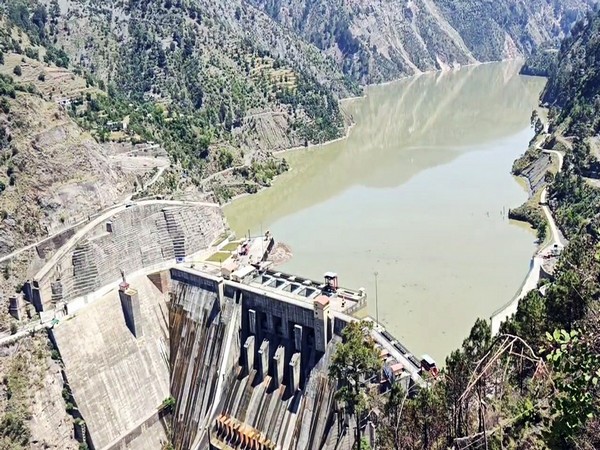
New Delhi [India], May 11 (ANI): India has decided to keep the Indus Water Treaty in abeyance amid ongoing tensions with Pakistan, however, India will continue to employ non-kinetic measures, such as diplomatic and economic actions, to pressure Pakistan, according to the sources.
The treaty will remain suspended until further notice, following Pakistan’s violation of the treaty’s preamble, which emphasises goodwill and good neighborliness.
India warned that it will exercise kinetic measures, including military action, if Pakistan launches any form of aggression, such as drone or missile attacks.
“The Indus Water Treaty will stay in abeyance. The DGMO-level talks have to go forward. Operation Sindoor is still on. Non-Kinetic measures stay in place. Kinetic measures are options we will exercise if Pakistan makes any moves to send drones or missiles or any other form of aggression. Pakistan violated the preamble of the Indus Treaty, which says it is being done with goodwill and good neighbourliness,” according to the sources.
The Indus Water Treaty, signed in 1960, governs the sharing of waters between India and Pakistan. India’s decision to keep the treaty in abeyance reflects the strained relations between the two countries.
A day after the horrific terrorist attack in Jammu and Kashmir’s Pahalgam that led to the loss of 26 lives, mostly tourists, the Indus Waters Treaty of 1960 was kept in abeyance with immediate effect, until Pakistan credibly and irrevocably abjures its support for cross-border terrorism.
The Treaty allocates the Western Rivers (Indus, Jhelum, Chenab) to Pakistan and the Eastern Rivers (Ravi, Beas, Sutlej) to India. At the same time, the Treaty allows each country certain waters of the rivers allocated to the other. The treaty gives India 20 per cent of the water from the Indus River System and the rest 80 per cent to Pakistan.
Meanwhile, diplomatic communication between India and Pakistan remained restricted to military channels, with no talks taking place between the National Security Advisors (NSA) or Foreign Ministers of the two countries, sources reported.
The only discussions occurred between the Directors General of Military Operations (DGMOs). This limited engagement became critical as a series of events unfolded, leading to Indian airstrikes on key Pakistani military installations.
The situation escalated significantly on May 9 and the morning of May 10, when India launched precision airstrikes on Pakistani military targets. Described by sources as a “hell fire” operation, the strikes targeted critical sites, including the Rahim Yar Khan airbase, where the runway was “totally flattened,” and the Pakistan Air Force Base Nur Khan in Chaklala, which suffered severe damage. The strikes were characterised by precision and intensity, directly impacting strategic locations.
Tensions had been building in the days leading up to the strikes. According to sources, India had informed Pakistan’s DGMO on May 7 that it had targeted terror infrastructure in Pakistani territory, but there was no response. It was only after the airstrikes on May 9 and 10 that Pakistan’s DGMO requested a conversation with his Indian counterpart at 1:00 pm on May 10.
The escalation drew international attention when US Secretary of State Marco Rubio, after speaking with Pakistan’s Chief of Army Staff General Asim Munir, reached out to Indian External Affairs Minister S Jaishankar. Rubio informed Jaishankar that Pakistan was prepared for talks. However, India maintained that any discussions should be strictly between the DGMOs. Following this, Pakistan’s DGMO initiated contact.
The airstrikes were not limited to military bases. According to sources, they also targeted terror camps in Muridke and Bahawalpur, known to be closely linked with Pakistan’s Inter-Services Intelligence (ISI). India’s approach was clear — it would not focus on minor camps but directly target key headquarters associated with terror activities.
India is now preparing to present a detailed dossier at the United Nations Security Council (UNSC) with the latest evidence of Pakistan’s involvement in terrorism. A team is expected to present this evidence next week before the UNSCR 1267 sanctions committee.
Sources further highlighted that the strikes demonstrated a significant gap in military capabilities between India and Pakistan. Indian airstrikes were described as precise and devastating, while Pakistan’s retaliatory attempts were largely ineffective. “The difference between India and Pakistan was massive. India attacked at will, and most of Pakistan’s attacks were foiled,” sources stated. (ANI)
, https://www.aninews.in/news/national/general-news/indus-water-treaty-in-abeyance-kinetic-options-remain-open-sources20250511231353