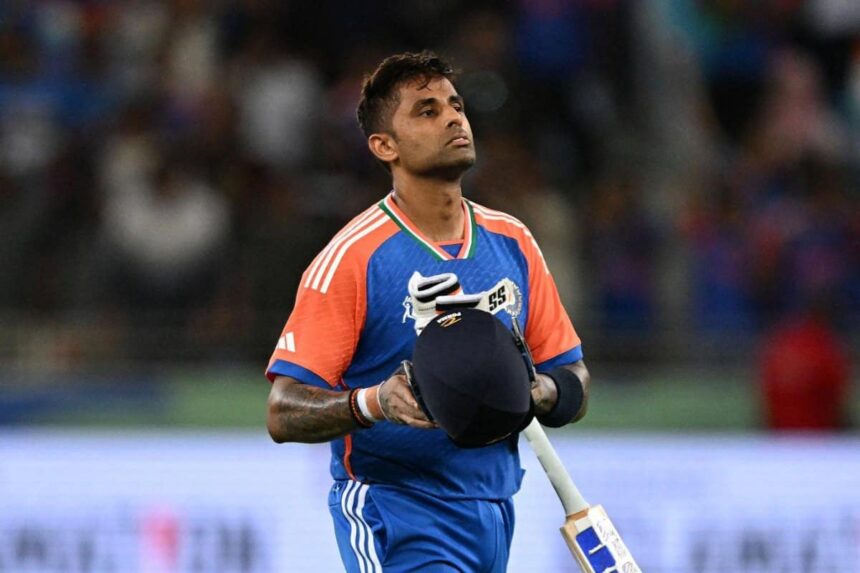
India’s emphatic seven-wicket victory over Pakistan in the Asia Cup 2025 clash in Dubai was more than just another chapter in the storied rivalry. While the on-field performance highlighted India’s growing dominance in the shortest format, it was the team’s symbolic off-field gesture—refusing to shake hands with the Pakistani players—that underscored the larger message they wanted to convey. Under the leadership of captain Suryakumar Yadav, the Indian side merged cricketing brilliance with solidarity for national causes, dedicating the victory to the victims of the Pahalgam terror attacks and the armed forces who continue to serve the nation with courage.
Suryakumar Yadav Leads With Symbolism and Substance
The rivalry between India and Pakistan has always been defined by intensity, but the 2025 Asia Cup encounter was infused with a deeper sense of resolve. After sealing the win with a commanding six, captain Suryakumar Yadav, along with Shivam Dube and other teammates, walked off directly toward the dressing room, pointedly refusing to engage in the customary post-match handshake with the opposition. For many, this decision was startling, yet it was a clear reflection of the broader mood in the Indian camp, one aligned with the government’s and BCCI’s stance following the heinous Pahalgam terror attacks that had claimed innocent lives.
Suryakumar, when asked about the move in the post-match press conference, provided a measured and powerful response. “I think our government and the BCCI were perfectly aligned. We came here and took a call. We came here just to play the game, and we gave a proper reply,” he stated. His words carried a sense of responsibility that went beyond cricket, emphasizing that there are moments when human values and national solidarity take precedence over traditional sporting courtesies.
He further explained, “I feel a few things in life are ahead of a sportsman’s spirit also. And I have already answered it. I have told it at the presentation as well—that we actually stand with all the victims of the Pahalgam terror attack. And we stand with their families also, express our solidarity.” His remarks struck a chord not just with cricket fans but with millions across the country who saw the refusal to shake hands as an assertion of India’s collective grief and resilience.
Going a step further, the Indian skipper dedicated the victory to the armed forces who participated in Operation Sindoor. “We dedicate this win to our brave armed forces who took part in Operation Sindoor. And as they continue to inspire us all, we will try our best whenever given an opportunity to inspire them as well,” Surya declared. It was a statement that seamlessly blended sport, patriotism, and empathy, transforming the match into something much larger than a cricket contest.
India’s On-Field Dominance Reflects a Changing Rivalry
While the off-field decision drew headlines, the match itself underlined how dramatically the dynamics of the India-Pakistan cricketing rivalry have shifted in recent years. India’s seventh-wicket victory was convincing and comprehensive, showcasing their dominance in all three departments of the game. The performance extended India’s commanding record, with the men in blue securing their eleventh win in the last fourteen T20 internationals against Pakistan. What was once a contest known for unpredictability has now become one where India dictates terms.
From the very first ball, the Indian bowlers seized control. Hardik Pandya and Jasprit Bumrah struck early, reducing Pakistan to 6 for 2 within the first two overs after captain Salman Agha had chosen to bat first. Pakistan’s batting order, already under pressure, was unable to find fluency. Fakhar Zaman and Sahibzada Farhan attempted to rebuild with a partnership, but the innings lacked momentum, boundaries dried up, and the Indian bowlers tightened the noose.
The spinners—Kuldeep Yadav, Axar Patel, and Varun Chakaravarthy—played their roles to perfection. Their combined effort dismantled Pakistan’s middle order, leaving the opposition struggling to even cross the three-figure mark. At one stage, Pakistan looked destined to finish below 100, their batting reduced to a state of despair. It was only Shaheen Afridi’s spirited cameo, a quickfire 33 off just 16 balls, that gave the scoreline some semblance of respectability. His late hitting helped Pakistan crawl to a total that at least avoided outright embarrassment, though it never looked competitive against India’s formidable batting lineup.
India’s chase began with aggression and intent. Abhishek Sharma, facing Shaheen Afridi, played with remarkable fearlessness, dispatching him for boundaries with ease. His blistering 13-ball 31 set the tone for the innings, ensuring that nearly half the target was wiped off within the Powerplay. Although India lost both openers in quick succession, the chase was never under threat.
Captain Suryakumar Yadav anchored the innings with composure and flair, supported ably by Tilak Varma and Shivam Dube. The trio ensured there were no hiccups in the pursuit of Pakistan’s modest total, guiding India home comfortably. The winning runs, fittingly, came off a Suryakumar six—a symbol of India’s dominance both in style and substance.
The victory highlighted a deeper narrative: the gulf in quality between the two sides is widening. India, with its well-rounded squad and depth in every department, has consistently set higher standards, while Pakistan continues to falter under pressure. For Indian fans, the match reaffirmed their team’s superiority; for Pakistan, it was another reminder of how far they have slipped in the contest that once defined their cricketing aspirations.
The Intersection of Sport, Patriotism, and Collective Sentiment
Beyond the statistics and scorecard, the Asia Cup encounter became a canvas for larger emotions. Cricket, often described as a religion in the subcontinent, has always been a mirror of national sentiment, and the Indian team’s actions in Dubai were no exception. By walking off without shaking hands, India made a silent yet resounding statement. It was not a moment of unsportsmanlike conduct but a reflection of grief, solidarity, and an unwavering stand against terrorism.
The symbolism resonated powerfully across India. Social media platforms buzzed with praise for the team’s gesture, interpreting it as a blend of dignity and defiance. Fans lauded Suryakumar Yadav not only for his match-winning performance but also for the manner in which he articulated the team’s emotions with grace. His dedication of the win to both the Pahalgam victims and the armed forces struck an emotional chord, reinforcing the belief that cricket in India transcends sport to embody national spirit.
The Indian team’s stance also underscored a growing maturity within the squad. This was not a spontaneous decision made in the heat of the moment but one that, as Surya emphasized, was aligned with the government and the cricketing board. The clarity and unity behind the gesture reflected an evolving ethos: cricket can serve as a vehicle for larger messages, provided it is expressed with dignity and purpose.
The broader implications of such actions cannot be ignored. In an era where sports are increasingly intertwined with politics, diplomacy, and national identity, the Indian team’s choice was emblematic of how athletes can represent more than just athletic excellence. They can become voices of solidarity, symbols of resilience, and ambassadors of national values.
India’s Asia Cup victory, therefore, will be remembered not just for the runs scored or wickets taken but for the context in which it unfolded. It showcased the ability of sport to amplify sentiments, honor victims, and send messages far beyond the boundary ropes. In Suryakumar Yadav, India has found not only a dynamic cricketer but also a leader capable of embodying this synthesis of sport and patriotism.