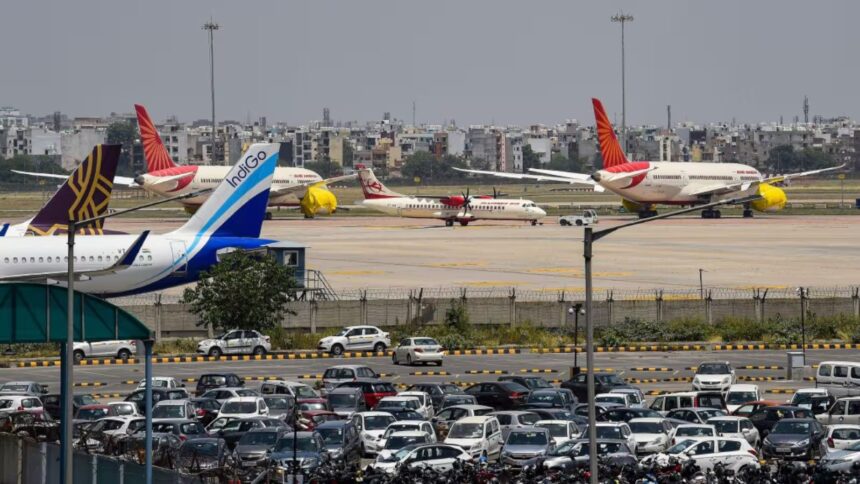
India is embarking on a significant plan to enhance its airport infrastructure and air traffic management, aiming to match the efficiency and capacity of the world’s busiest airports. The government is commissioning an extensive study of leading global airports to understand their operations and identify innovative solutions for increasing the number of safe landings and take-offs per hour in India. This effort reflects a commitment to modernizing air traffic control systems and expanding airport capacities, particularly at major hubs like Delhi, Mumbai, Bengaluru, and others, to accommodate rising air traffic demands.
Global Benchmarking to Improve Indian Airports
The Airports Authority of India (AAI), which manages 137 airports including 23 international ones, is seeking a consultant to conduct a detailed global study focusing on operational systems, technological innovations, and best practices at the busiest and most efficient airports worldwide. Airports such as Hartsfield-Jackson Atlanta (the world’s busiest), Heathrow in London, Dubai International, Tokyo Haneda, and Istanbul are among those being studied. The goal is to create a strategy that improves the operational efficiency of Indian airports, particularly for aircraft movements on runways.
This study will analyze infrastructure, processes, and technological tools used globally, including automation systems and communications, navigation, and surveillance (CNS) technologies. The findings will help India optimize runway throughput, enhance terminal airspace efficiency, and implement advanced air traffic services. The focus will be on airports handling more than 500 daily air traffic movements, single runway operations with peak hourly movements, and multi-runway operations with high traffic volume.
Modernizing Air Traffic Control for Future Challenges
In addition to capacity expansion, India’s ATC towers will undergo a major revamp to manage not just traditional aircraft but also emerging technologies like drones and electric vertical take-off and landing (eVTOL) vehicles. This modernization is critical for managing the future airspace landscape safely and efficiently. The government prioritizes airports such as Delhi, Mumbai, Bengaluru, Hyderabad, Chennai, Kolkata, Jaipur, Ahmedabad, Coimbatore, and Lucknow for these upgrades.
Delhi Airport currently stands as India’s busiest with 77 million passengers handled in 2024, while Mumbai ranks 31st globally. The study’s insights are expected to drive technological adoption and process improvements, supporting India’s vision of becoming a global aviation hub equipped to handle increasing air traffic while ensuring safety and efficiency. The final draft of the report is anticipated within six months, paving the way for transformative changes in Indian aviation infrastructure.