India’s Remarkable Poverty Reduction: A 12-Year Success Story
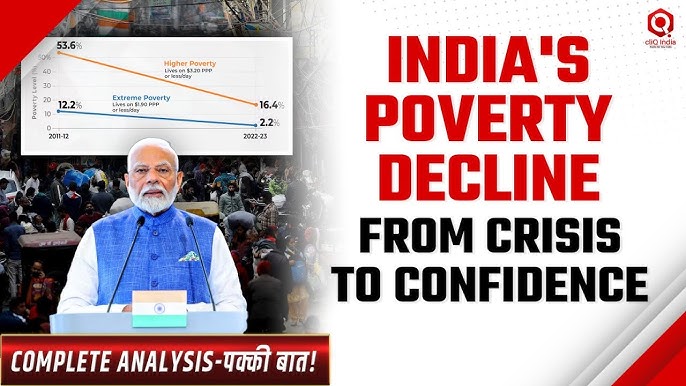
In just over a decade, India has achieved a milestone that has caught global attention: a sharp decline in poverty rates. From 2011-12 to 2023-24, rural poverty fell from 25.7% to 4.86%, while urban poverty dropped from 13.7% to an impressive 4.09%. This is not merely a statistical triumph but a testament to the resilience and transformation of the nation.
A Historical Context of Change
The journey to this remarkable transformation began in 2011-12, when poverty levels were alarmingly high. Over the next 12 years, targeted policies, direct benefit transfers, and rural development initiatives revolutionized lives in rural and urban areas. According to data derived from consumption expenditure surveys, poverty lines were defined as ₹1,632 per person per month for rural areas and ₹1,944 for urban areas. This progress is a testament to India’s focused and strategic efforts to improve quality of life.
Key Drivers of the Transformation
- Direct Benefit Transfers (DBT):
Programs like PM-KISAN and MNREGA eliminated corruption and ensured financial aid reached beneficiaries directly, creating a robust safety net for millions. - Rural Infrastructure Development:
Under the PM Gram Sadak Yojana, over 700,000 kilometers of roads were built, improving connectivity and generating employment. The Swachh Bharat Mission and rural electrification further uplifted living standards. - Agricultural Reforms:
Crop insurance schemes like PM Fasal Bima Yojana stabilized rural incomes, while MSP reforms provided financial security to farmers. - Rising Rural Consumption:
A report by SBI highlighted increased consumption among the lowest income groups, reflecting better access to goods and services in rural areas.
Consumption Patterns and Lifestyle Changes
Rural households are now spending more on education, healthcare, and modern amenities. The gap between rural and urban monthly per capita expenditure (MPCE) has narrowed significantly, from 88.2% in 2004-05 to 69.7% in 2023-24. This indicates a shift from survival to aspiration in rural India.
Challenges and the Road Ahead
Despite the progress, regional disparities persist. High-income states have seen faster poverty reduction compared to low-income regions. To sustain this success, policies must focus on healthcare, education, and skill development while bridging regional inequalities.
A Story of Resilience
India’s journey from 25.7% rural poverty in 2011-12 to 4.86% in 2023-24 showcases the power of collective effort and policy reform. As the nation continues to progress, this transformation serves as an inspiration to the world and a call for sustained, inclusive growth.
Watch full video here: https://youtu.be/DvY8cfOpXRc