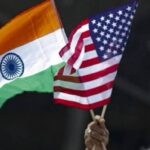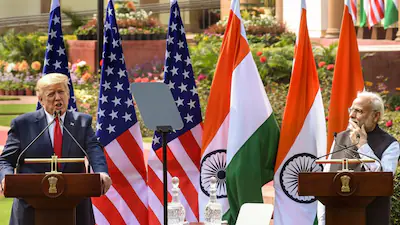
The Donald Trump administration’s imposition of a 50 percent tariff on Indian goods, effective from August 27, has escalated tensions between the United States and India, marking a pivotal moment in bilateral trade relations. While Washington claims the tariffs are a corrective measure in response to India’s ongoing purchase of Russian crude oil, New Delhi has maintained a firm stance, emphasizing national interest, energy security, and protection of domestic industries. Despite the growing trade strain, Indian leaders from Prime Minister Narendra Modi to External Affairs Minister S. S. Jaishankar have articulated measured, resolute positions, highlighting India’s commitment to self-reliance, swadeshi initiatives, and safeguarding the interests of farmers, small-scale industries, and cattle-rearers. As bilateral trade, valued at over $190 billion, continues to be a cornerstone of economic ties, India remains steadfast in navigating complex global pressures while reinforcing domestic resilience.
The United States Tariff Move and Its Justifications
The United States announced an additional 25 percent tariff on Indian goods, adding to an existing 25 percent duty on select commodities, effectively bringing some Indian exports under a 50 percent tariff. The move targets over $48 billion of Indian exports and has been justified by Washington as a response to India’s procurement of Russian crude oil, deemed a national security concern by the Donald Trump administration. White House officials, including Press Secretary Karoline Leavitt and Vice President JD Vance, have argued that the tariffs serve as a form of “aggressive economic leverage” to compel India to influence Russia’s actions in the ongoing Russia-Ukraine conflict. The administration maintains that India, by purchasing discounted Russian oil, indirectly supports Moscow, and the tariffs aim to recalibrate these strategic dynamics.
US officials have also criticized India for maintaining high tariffs on American goods, describing India as a “maharaj” in trade policies with non-tariff barriers and a trade deficit that they claim negatively impacts American businesses and workers. Trade advisor Peter Navarro, in particular, highlighted concerns regarding India’s relationship with China and suggested that these dynamics affect the overall economic impact on the United States. These public criticisms underscore the transactional nature of the current U.S. approach to trade with India, combining strategic security concerns with economic considerations.
Despite these tensions, U.S. officials have repeatedly emphasized the importance of maintaining bilateral relations with India. Washington insists that the tariffs are not intended to sever ties but rather to serve as a corrective measure, encouraging India to adopt policies more aligned with U.S. economic interests. While the administration’s public approach has drawn criticism for its unorthodox style, it reflects a broader strategy aimed at leveraging economic measures to achieve geopolitical objectives.
India’s Measured Response and National Interest
India has consistently framed the U.S. tariff move as unfair, unjustified, and unreasonable. Ambassador to Russia Vinay Kumar highlighted that India’s energy strategy is guided by the objective of securing supplies for 1.4 billion citizens and stabilizing the global oil market. India’s engagement with Russia, Kumar noted, is in line with broader market dynamics and national interest, not political expediency. Similarly, External Affairs Minister S. Jaishankar stressed that India’s business decisions, including procurement of Russian oil, are legitimate and reflective of sovereign choice. He responded to criticism with a pointed observation: if the United States objects to India’s energy purchases, it can simply choose not to buy Indian exports rather than dictate India’s procurement decisions.
Prime Minister Narendra Modi, addressing the nation and investors, underscored the importance of swadeshi and the Make in India initiative in response to external pressures. He emphasized that domestic production and employment generation are central to India’s economic resilience, regardless of the source of investment. Highlighting the recent investment commitment by Japan’s Suzuki Motor Corporation of over Rs 70,000 crore, PM Modi stressed that the value lies not in foreign currency but in domestic labor, resources, and output. By framing swadeshi as a national priority, the Prime Minister reinforced India’s commitment to protecting farmers, small-scale industries, and local enterprises from the potential disruptions of international trade tensions.
Union Agriculture Minister Shivraj Singh Chouhan echoed the Prime Minister’s stance, affirming that India would not compromise on its agricultural policies to appease external pressures. Chouhan emphasized that domestic farmers’ interests, cattle-rearers’ livelihoods, and small business sustainability are non-negotiable priorities. The government, he stated, is prepared to absorb external pressure while ensuring that domestic economic and social interests remain protected. This approach signals India’s intention to balance global trade diplomacy with robust domestic policy safeguards, asserting sovereignty in economic decision-making.
S. Jaishankar, while acknowledging ongoing trade negotiations with the U.S., stressed that India has “redlines” that must be defended. These include maintaining protection for farmers and small producers while navigating discussions on trade liberalization and market access. He characterized President Donald Trump’s approach to foreign policy as unconventional and highly public, noting that the American strategy represents a departure from traditional diplomatic engagement. By emphasizing India’s right to act in its national interest, S. Jaishankar reinforced the government’s commitment to measured, strategic decision-making in the face of unilateral U.S. measures.
International Support and Strategic Implications
In response to the U.S. tariffs, other countries, including Russia and China, have voiced support for India. China, through its envoy Xu Feihong, stated that silence or compromise in the face of unilateral tariff measures would only embolden aggressors. Xu emphasized that China supports India’s position in maintaining a multilateral trading system grounded in WTO principles. The Chinese envoy also highlighted India’s competitive strengths in IT, software, and biomedicine, suggesting that expanded trade with India aligns with China’s economic interests.
Russia, a long-standing strategic partner of India, continues to uphold energy cooperation and defense ties. India’s reliance on Russian crude, purchased at discounted rates following Western sanctions, underscores a strategic choice guided by energy security and global market stability. These international alignments highlight India’s ability to navigate complex geopolitical environments, balancing economic engagement with multiple global partners while asserting sovereign decision-making.
The trade tension with the United States has also reignited debates over India’s broader foreign policy and economic strategy. While U.S. pressure seeks to shape India’s energy and trade choices, India is signaling that domestic priorities, market realities, and strategic autonomy will remain paramount. Leaders like PM Modi and S. Jaishankar are positioning India as a nation capable of standing firm on sovereign choices while remaining open to global trade relationships that respect its national interests.
Through public statements and policy actions, India is conveying a clear message: the country will absorb temporary economic pressures, pursue swadeshi production, protect domestic stakeholders, and continue strategic engagement with global partners. The emphasis on self-reliance, Make in India, and safeguarding farmers and small enterprises underscores a comprehensive approach to balancing trade, diplomacy, and national interest.
The U.S. tariff imposition also carries broader implications for global trade governance. By imposing punitive tariffs on a major emerging economy like India, the Donald Trump administration has raised questions about the role of unilateral measures in multilateral trade frameworks. India’s response, supported by allies such as China, underscores the importance of adhering to WTO principles and resisting coercive trade tactics. The situation illustrates the evolving dynamics of international trade, where economic leverage intersects with geopolitical considerations, and sovereign nations assert their right to make decisions aligned with domestic priorities.
Prime Minister Modi’s emphasis on swadeshi and self-reliance not only addresses the immediate challenge posed by U.S. tariffs but also reinforces long-term economic objectives. By framing domestic production and employment as central to national strategy, India is signaling to investors, global partners, and domestic stakeholders that resilience and self-sufficiency are key policy pillars. The government’s messaging integrates economic pragmatism with a clear assertion of sovereignty, ensuring that India’s policy choices are guided by national priorities rather than external pressures.
The Donald Trump administration’s tariff move, while significant in its economic impact, has become a catalyst for India to reiterate its commitment to self-reliance, strategic autonomy, and multilateral engagement. Indian leaders have consistently highlighted that domestic priorities, including farmer welfare, small enterprise protection, and energy security, cannot be compromised. By articulating a coherent, measured, and resolute response, India is navigating a complex global landscape where trade, diplomacy, and geopolitical strategy intersect.
As bilateral trade negotiations continue, India maintains that redlines must be respected and national interests safeguarded. The unfolding situation reflects the delicate balance India seeks between participating in global commerce, defending domestic stakeholders, and asserting strategic independence. While the United States frames the tariffs as corrective measures, India frames its response around sovereignty, swadeshi production, and protection of national interests.
The international response, including support from China and Russia, underscores India’s ability to maintain strong partnerships even as it withstands unilateral pressure from a major trading partner. By emphasizing strategic autonomy, self-reliance, and resilience, India is sending a clear message that global trade relationships must respect national priorities while enabling mutual economic benefit.
Through the combined messaging of Prime Minister Modi, Union Ministers S. Jaishankar and Piyush Goyal, and diplomatic engagement with allies, India is navigating a multifaceted challenge involving trade, energy security, and geopolitical strategy. The government’s approach combines domestic resilience, swadeshi initiatives, strategic diplomacy, and multilateral engagement to ensure that national interests remain paramount.