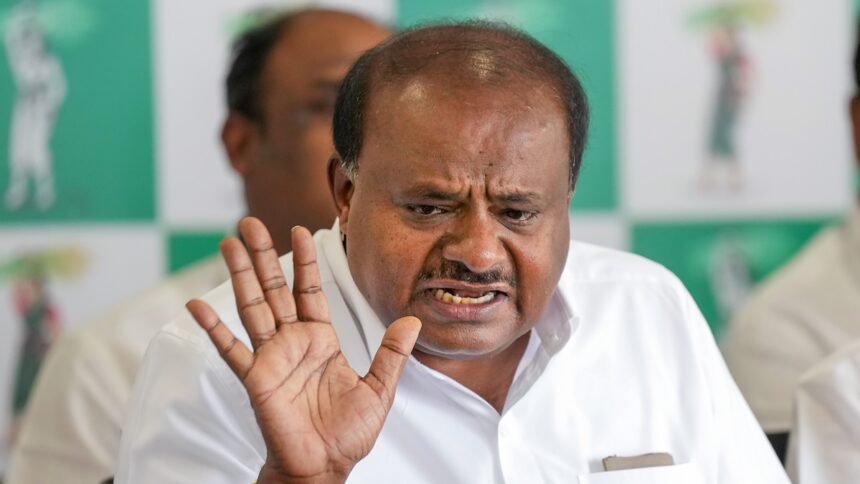
India is expected to face only a marginal impact from the United States’ decision to double tariffs on steel and aluminium imports, according to Union Steel and Heavy Industries Minister H D Kumaraswamy. The minister’s assessment offers some reassurance amid global trade tensions, but industry leaders are sounding the alarm over potential trade diversions that could hurt domestic producers.
US President Donald Trump recently announced plans to increase tariffs on imported steel and aluminium from 25% to 50%, a move aimed at protecting American manufacturing. While the US imports nearly 25% of its steel needs, most of this supply comes from countries like Mexico, Canada, Japan, South Korea, and Germany. India’s direct steel exports to the US are relatively minimal in comparison, which, according to Kumaraswamy, cushions the immediate blow.
Industry concerns over trade diversion
Despite the government’s confidence, steel industry executives are urging pre-emptive measures to safeguard local manufacturers. Jayant Acharya, Joint MD and CEO of JSW Steel, emphasized that India’s strong domestic demand could attract redirected shipments from countries now facing higher tariffs in the US. He called for timely and proactive trade measures to prevent a surge in low-priced imports.
Similarly, Ranjan Dhar, director and vice-president at AMNS India, expressed concern over the likelihood of increased imports. He stated that while the current exposure to US trade is limited, India must remain vigilant and offer protection to domestic producers in line with global practices.
Global tariff shifts could reshape steel flows
In March, Fitch Ratings had warned that Indian steelmakers could face indirect consequences if countries with higher US exposure reroute their surplus steel to India. Such a shift would increase competition in the local market, potentially dragging down prices and pressuring domestic margins.
Industry voices are unified in their call for the Indian government to adopt a defensive trade posture. They argue that if other nations are actively shielding their industries, India should do the same to maintain stability and growth in its critical steel sector.
As global trade patterns shift under evolving tariff regimes, Indian policymakers may be forced to strike a balance between open markets and national economic interest, especially in sectors as vital as steel.