India and Chile have successfully concluded the first round of negotiations for a comprehensive economic partnership agreement (CEPA) in New Delhi, following five intense days of discussions covering 17 key areas. This initial round has laid the groundwork for a deeper and broader economic collaboration between the two nations, aiming to move beyond the existing preferential trade agreement (PTA) and address sectors like digital services, investment, and critical minerals. Both countries are targeting the completion of this agreement by 2026, which promises to enhance bilateral trade, economic growth, and employment.
The talks focused on a comprehensive set of topics that will form the basis of the CEPA. These include trade in services, movement of natural persons, rules of origin, sanitary and phytosanitary measures, technical barriers to trade, customs procedures, trade facilitation, and intellectual property rights, among others. Both sides agreed on these 17 chapters during the negotiations held from May 26 to 30, 2025. The Indian delegation was led by Vimal Anand, joint secretary in the ministry of commerce and industry and India’s chief negotiator for CEPA. The Chilean team, headed by Pablo Urria, director for Asia and Oceania at Chile’s ministry of foreign affairs, included 17 delegates.
Following the first round, the next set of discussions is scheduled for July-August 2025. These will be preceded by virtual intersessional talks to resolve outstanding issues and ensure smoother negotiations in the upcoming round. The ministry of commerce emphasized that both nations are committed to a cooperative and constructive negotiation process, aiming to unlock the full potential of their trade and commercial relationship.
Expanding beyond current trade framework
The CEPA is expected to broaden the scope of India-Chile economic ties significantly. Unlike the existing preferential trade agreement, CEPA will cover critical sectors such as digital services, investment promotion, and trade in strategic minerals. This expansion reflects the growing importance of diversified trade relations and the need to adapt to evolving global economic trends.
India’s bilateral trade with Chile has doubled in recent years, reaching $3.6 billion in 2024-25, up from $1.8 billion in 2016-17. However, India currently runs a trade deficit with Chile, estimated at around $2.5 billion in 2024-25. The new agreement aims to create a more balanced and sustainable trade relationship, benefiting industries and consumers in both countries.
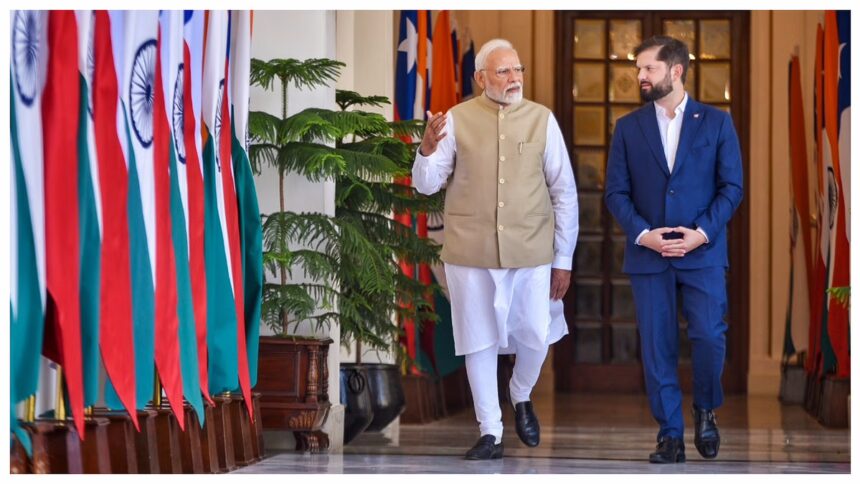
The momentum for the CEPA talks was set during Chilean President Gabriel Boric Font’s visit to India in April 2025, where both leaders expressed their intent to strengthen bilateral cooperation. Commerce secretary Sunil Barthwal highlighted that the CEPA will pave the way for deeper economic partnerships and enhanced global value chains, reinforcing India and Chile’s position as key trade partners in the region.