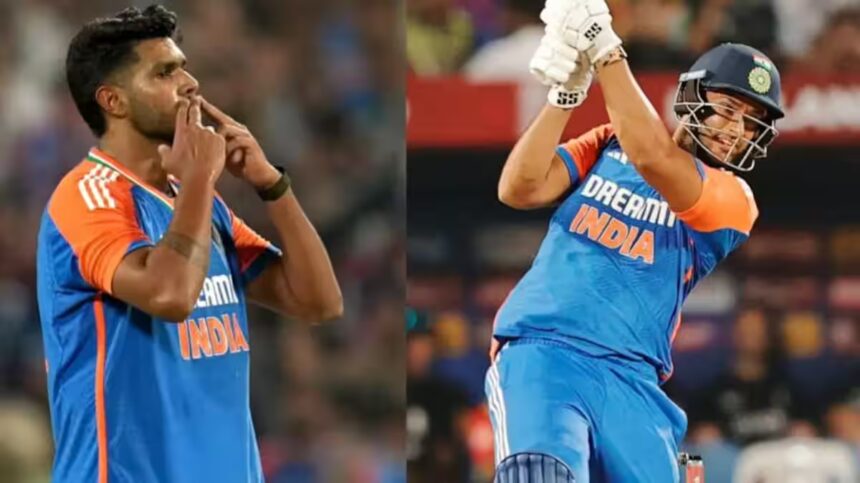
The ongoing controversy surrounding the concussion substitute incident in the 4th T20I between India and England continues to make headlines, even after the completion of the T20I series. India secured a commanding 4-1 victory in the series, but the row over the concussion substitute has refused to die down. The issue remains a subject of heated debate, drawing attention from former players on both sides of the spectrum.
The controversy initially erupted when Harshit Rana was brought in as a substitute for Shivam Dube, who had sustained a blow to the helmet during the match. Many, including former England cricketers, voiced their concerns, arguing that the substitute was not a like-for-like replacement for Dube. Among the notable critics was former England captain Kevin Pietersen, who questioned the legitimacy of Rana’s inclusion as a concussion substitute. In response to Pietersen’s remarks, ICC match referee Chris Broad weighed in with some strong opinions of his own.
Broad, a highly respected figure in the world of cricket officiating, publicly expressed his agreement with Pietersen’s concerns. “Absolutely agree,” Broad stated when responding to Pietersen’s comment. He further added a scathing remark, questioning how an Indian match referee could allow such a replacement, suggesting that match officials should be independent and free from any potential bias. His comments have sparked further discussion on the matter, with many taking sides in the debate.
It’s important to note that Chris Broad is an esteemed ICC official with a vast experience in the sport. Having officiated in over 622 international matches, Broad ranks third in the list of most matches officiated by an ICC official, trailing behind Ranjan Madugalle and Jeff Crowe. His remarks, therefore, carry significant weight in the cricketing world, and his disapproval of the incident has added fuel to an already contentious issue.
While Broad’s comments have drawn attention, even Indian cricket legends have weighed in on the controversy. Sunil Gavaskar, one of India’s greatest batsmen, was also highly critical of the decision to allow a concussion substitute in the first place. In a column for The Telegraph, Gavaskar expressed that Dube, who had continued batting after the blow to his helmet, could not have been considered concussed. “In the Pune game, Dube batted right till the end after having got hit on the helmet earlier, so clearly, he was not concussed. So, allowing a concussion substitute itself was not correct,” Gavaskar stated. He went on to elaborate that a substitute could have been used only if Dube had suffered a muscle strain while batting, but even then, the substitute could only have been fielding, not bowling.
Gavaskar, while acknowledging the generous stretch of the term “like-for-like” in this case, pointed out the significant differences between Dube and Rana in terms of playing style and skill. He humorously noted that while both players may share similar height and fielding standards, they were not comparable in other aspects of the game. Gavaskar also emphasized that the Indian team, being a formidable side, should not be subjected to such controversies that could tarnish their victories. He suggested that England, given their own team’s quality, had every right to feel aggrieved by the incident.
The controversy has raised questions about the protocols surrounding concussion substitutes in cricket and the role of match referees in ensuring fairness. While both the Indian and English teams have now moved on to other challenges, the debate surrounding the use of concussion substitutes continues to stir emotions. The incident has added to the complex dynamics of the India-England rivalry and has highlighted the need for clearer guidelines regarding concussion replacements.
In the aftermath of the series, the focus has shifted back to the cricketing action, but the lingering effects of the concussion substitute controversy remain a talking point in the cricketing world. With strong opinions from both sides of the debate, it is clear that this issue is far from being put to rest, and it could have lasting implications on how similar situations are handled in the future.