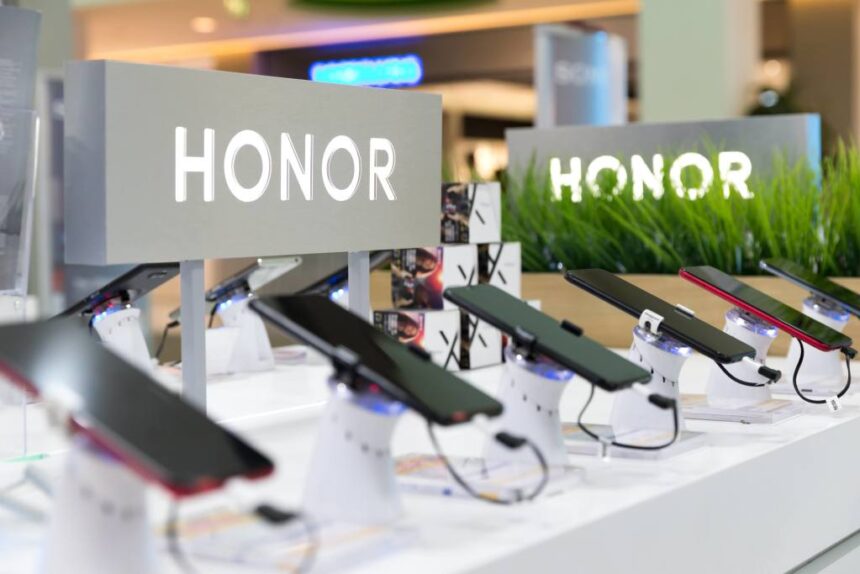
Honor, the Huawei spinoff, has announced its intention to enter Indonesia’s smartphone market by the end of March, marking its latest expansion move into Southeast Asia. This development comes amid reports that Apple is negotiating with the Indonesian government over a ban on selling the iPhone 16, a consequence of local production requirements. Indonesia mandates that 40% of the components in smartphones sold in the country must be sourced domestically, a rule that has kept Apple from launching its latest iPhone model in the region. While Apple is reportedly in talks over a potential $1 billion investment to meet these requirements, Honor’s entry into the market signals a growing competition for dominance in one of Southeast Asia’s largest and fastest-growing economies.
Honor is already well-established in the region, having set up a local office in Indonesia. The company is working closely with a local manufacturing partner to ensure compliance with Indonesian regulations and to strengthen its market presence. Justin Li, the president of Honor’s South Pacific operations, revealed last week that one of the company’s first products to be launched in Indonesia will be a folding smartphone, with an expected lineup of around 10 products within the medium to high-end range. By the end of the year, Honor plans to offer around 30 products, including smartphones and tablets, across Indonesia.
Indonesia, with a population of over 270 million, is the fourth-largest country in the world by population, just behind the United States. It is a strategic market, especially for smartphone manufacturers, given the country’s growing middle class and rapid economic development. According to Canalys analyst Chiew Le Xuan, while 80% of the smartphone market in Indonesia is dominated by devices priced under $200, the country holds tremendous potential for long-term growth, driven by its expanding middle class and economic dynamism. Indonesia accounts for 35% of smartphone shipments in Southeast Asia and is seen as a crucial regional hub for tech companies.
Honor’s entry into Indonesia is seen as a significant move in the highly competitive Southeast Asian smartphone market. The market has been primarily dominated by Chinese brands such as Oppo, Xiaomi, and Transsion, with these companies holding the top three spots in smartphone shipments. Oppo, headquartered in Shenzhen, recently launched its flagship Find X8 phone in Indonesia and also operates a factory in the country. Samsung and Vivo, both Chinese-backed companies, round out the top five in terms of market share in Indonesia.
Honor, which is planning a public offering, is confident in its ability to compete with other well-established brands in the region. Despite the challenges posed by Apple’s negotiations and the highly competitive market, Honor has closely observed Indonesia’s smartphone market over the years, doubling down on its expansion efforts in the last six months. Li, however, emphasized that Honor’s decision to enter Indonesia is independent of Apple’s presence, signaling the company’s long-term strategy to tap into the country’s growing demand for smartphones.
In addition to expanding its product offerings, Honor also plans to open at least 10 of its own stores in Indonesia within the year, further solidifying its presence in the region. The company will also sell its products through local retail partners, making them more accessible to Indonesian consumers. Honor aims to have a predominantly local workforce in the country and continues to hire new staff to meet the demand of its expansion plans.
As Honor makes its move into Indonesia, it faces the challenge of navigating a market where competition is fierce, and established brands like Oppo, Xiaomi, and Samsung have already carved out substantial market shares. However, with its strong product portfolio and growing recognition in Southeast Asia, Honor is well-positioned to capture a slice of the market in the coming months.
While Honor primarily sells its smartphones in Europe and other Southeast Asian markets outside of China, the company’s expansion into Indonesia underscores its broader goal of diversifying its presence in key international markets. The move also reflects the company’s resilience in the face of challenges, including the impact of U.S. sanctions on its former parent company, Huawei. Despite the challenges posed by geopolitical tensions, Honor continues to thrive and is optimistic about its future prospects in the global smartphone market.
As Honor works to establish itself in Indonesia, the broader implications for the region’s smartphone market are significant. With major Chinese players competing for market share in Southeast Asia’s largest economy, Indonesia is set to become an even more important battleground for smartphone manufacturers in the years to come. Honor’s arrival is expected to heighten competition, benefiting consumers and driving innovation in the region’s rapidly evolving tech landscape.