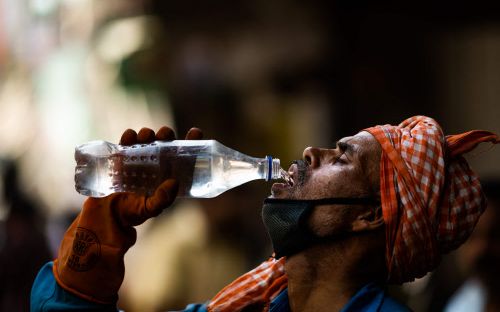
The India Meteorological Department (IMD) has issued a heatwave alert for Mumbai, Thane, Palghar, and Navi Mumbai, warning residents of extreme temperatures for the next three days. The alert comes as the city and its surrounding areas experience temperatures significantly above normal, with meteorologists predicting no substantial relief in the near future.
According to an IMD official, the current temperatures in Mumbai are soaring six to seven degrees above the seasonal average, creating an unusual weather pattern for February. Mumbai’s maximum temperature recently touched 38.5 degrees Celsius, an exceptionally high reading for this time of the year. Experts indicate that the mercury is expected to rise further by one to two degrees on Wednesday, February 26. Although a slight dip of 1-2 degrees is anticipated on February 27 and 28, this marginal decrease will not be enough to bring significant relief from the sweltering conditions.
Despite the ongoing extreme heat, there has been no formal announcement declaring a heatwave situation. However, several weather stations, including the Santacruz observatory, have reported that key parameters for a heatwave have already been met. The presence of heatwave-like conditions has also been noted in the Konkan belt, raising concerns about prolonged high temperatures affecting daily life, health, and overall comfort levels.
The intense heatwave comes at a time when weather patterns across India are undergoing significant fluctuations. Speaking about the broader meteorological developments, IMD scientist Dr. Soma Sen Roy highlighted the impact of western disturbances approaching northern India. She stated that rainfall activity over the Western Himalayan region is expected to increase in the coming days. The IMD has also issued a heavy rainfall warning for this region from February 26 to 28, signaling a contrast in weather conditions across different parts of the country.
With the ongoing heatwave alert in Mumbai and its neighboring areas, authorities are advising residents to take necessary precautions to avoid heat-related illnesses. Hydration, limited exposure to direct sunlight, and wearing light, breathable clothing are some of the recommended measures to cope with the extreme heat. As the city braces for another round of high temperatures, meteorologists continue to monitor the situation closely, while residents await updates on any possible relief from the scorching weather.