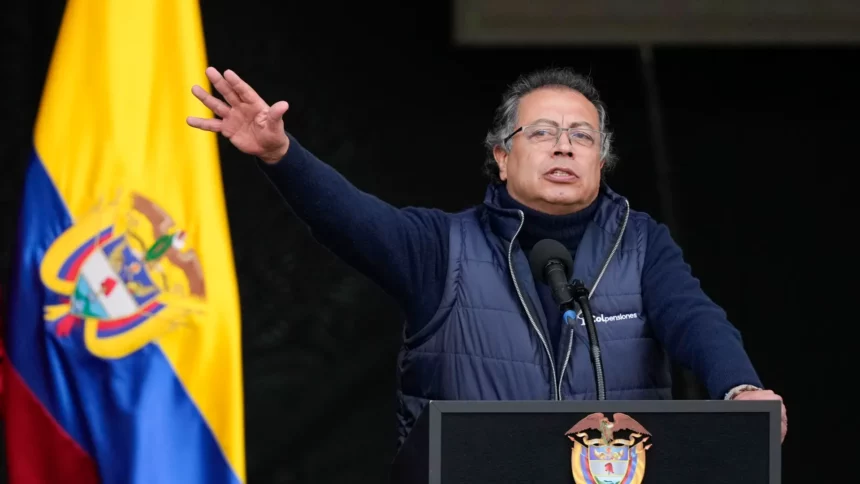
On January 26, a late-night message from Colombian President Gustavo Petro sparked a diplomatic crisis that has since threatened to reshape Colombia’s international relations. The message, posted on the social media platform X at 3:41 AM (08:41 GMT), saw Gustavo Petro take aim at the United States for its treatment of deported Colombian migrants. News had emerged that some migrants were reportedly handcuffed during their deportation flights, and Gustavo Petro was quick to condemn the US for what he called a “criminal” treatment of Colombian citizens. He stated, “The US cannot treat Colombian migrants as criminals,” and went further to announce that he would “disallow the entry of US planes carrying Colombian migrants into our territory.”
As the Colombian president’s statement went viral, two US flights carrying deported Colombian migrants were already airborne. These planes were subsequently denied entry into Colombia’s airspace, escalating the diplomatic tension between the two nations. Gustavo Petro’s move was seen as a strong stance against the treatment of his countrymen, but it was also viewed by critics as yet another misstep in his administration’s handling of foreign policy.
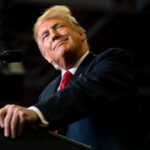
In the days that followed, Gustavo Petro further amplified his demands, stating that the deported migrants should return on civilian aircraft rather than military planes and that they should be “treated with the dignity a human being deserves.” His words ignited an immediate response from US President Donald Trump, who swiftly threatened to impose 25 percent tariffs on Colombian goods entering the US. Donald Trump warned that if the deportation flights were not accepted, the tariffs would escalate to 50 percent by the end of the week. Along with these economic sanctions, Donald Trump also revoked the visas of Colombian government officials and pledged additional punitive measures.
Initially, Gustavo Petro responded with his own threats, pledging retaliatory tariffs on US goods. However, within just two days, the situation began to defuse, and the deportation flights resumed, this time with migrants being transported on Colombian Air Force planes. The Donald Trump administration quickly declared victory in the diplomatic standoff. “Today’s events make clear to the world that America is respected again,” White House Press Secretary Karoline Leavitt said in a statement.
However, the fallout in Colombia was far from simple. Political analysts, including Sergio Guzmán, director of Colombia Risk Analysis, viewed the episode as a major miscalculation on Gustavo Petro’s part. “Gustavo Petro wanted to confront Donald Trump, and it backfired badly because Gustavo Petro made a big miscalculation in terms of the strength with which Donald Trump would respond,” Guzmán stated. Despite this, the incident opened a window into how Latin American leaders might confront disagreements with the US under Donald Trump’s leadership.
Gustavo Petro’s decision to engage in this high-profile confrontation with Trump came at a crucial moment in his presidency, as he entered the final year of his term. Known for his combative and often provocative stance on social media, Gustavo Petro had previously become embroiled in disputes with Israeli officials, which led to the severing of diplomatic ties between Colombia and Israel. However, the clash with Trump shocked even his closest allies, who were unaware of the president’s decision to block the deportation flights.
The decision triggered political divisions in Colombia, with Gustavo Petro’s move being criticized by both allies and opposition. On January 28, just two days after the crisis began, Colombia’s centre-left Liberal Party withdrew from Gustavo Petro’s governing coalition, citing the diplomatic row with the US as a key reason for their decision. The withdrawal has further complicated Gustavo Petro’s ability to pass important legislation in Colombia’s Congress. Political experts noted that the crisis also had broader implications for Colombia’s economy, with concerns about potential capital flight and a weakening of investor confidence.
Gustavo Petro’s approval rating, which has remained relatively steady throughout his presidency, stands at around 30 percent, a sharp decline from the 56 percent support he enjoyed when he first took office. Although his approval ratings have dipped, Gustavo Petro still maintains a “hard floor of support,” according to analysts. However, Guzmán emphasized that the clash with Donald Trump highlighted a lack of direction in Colombia’s foreign policy, which could lead to serious consequences for the country in the long term.
For decades, Colombia and the US have shared a strong diplomatic relationship, primarily centered around the “war on drugs” and US aid to Colombia’s peace process. Since 2017, the US has committed an estimated $1.5 billion in aid to Colombia. Despite the long-standing partnership, Gustavo Petro’s confrontation with Donald Trump exposed underlying tensions in their relationship. Analysts argue that this incident highlights the need for Colombia to diversify its alliances and move away from its historically close ties with the US.
Gustavo Petro’s foreign policy has already been strained by his reform initiatives in areas such as drug policy, where his shift from forced coca eradication to focusing on development has put him at odds with Washington. As a result, US aid to Colombia has been reduced in recent years, and relations between the two countries have become increasingly tense. Gustavo Petro’s public clash with Donald Trump, however, was considered unusual, even by those familiar with his confrontational style.
“This is a crisis that, although short-lived, is unprecedented in the relationship with the US,” said Jorge Mantilla, a Colombian political analyst. “Gustavo Petro continued to add fuel to the fire, and it’s not the conventional way in which Colombia has handled its international relations – especially with an ally such as the US.”
Gustavo Petro’s presidency has been marked by a series of political crises, both within Colombia and on the international stage. His outreach to Venezuela and Cuba as mediators in Colombia’s peace process has faced resistance from conservative sectors, and his ambitious domestic reforms on healthcare, pensions, and labor have been hindered by legislative roadblocks. Moreover, internal disputes and corruption allegations involving Gustavo Petro’s son and his 2022 campaign financing have undermined public confidence in his leadership.
Despite these challenges, some of Gustavo Petro’s supporters view his confrontation with Donald Trump as a symbol of his resistance to US interventionism and his commitment to protecting Colombian sovereignty. “I thought that what he did was good,” said Robinson Duarte, an economist who voted for Gustavo Petro in 2022. “It hasn’t distanced me from him. I support him.”
While Donald Trump’s threats of tariffs and sanctions have been temporarily averted, concerns about the economic repercussions linger. If economic anxiety continues to grow, Gustavo Petro-aligned candidates may struggle in Colombia’s 2026 elections. However, experts argue that Gustavo Petro’s ability to turn crises into populist rallying points should not be underestimated. His resilience in the face of political challenges could help him frame the Donald Trump clash as a stand against foreign aggression, further solidifying his support ahead of the 2026 race.
As the political landscape in Colombia remains uncertain, the clash between Gustavo Petro and Donald Trump serves as a reminder of the complexities of international diplomacy and the delicate balance between national sovereignty and international relations. With Colombia’s future at stake, it is clear that Gustavo Petro’s handling of this diplomatic crisis could have lasting consequences for the country’s foreign policy, economic stability, and political future.