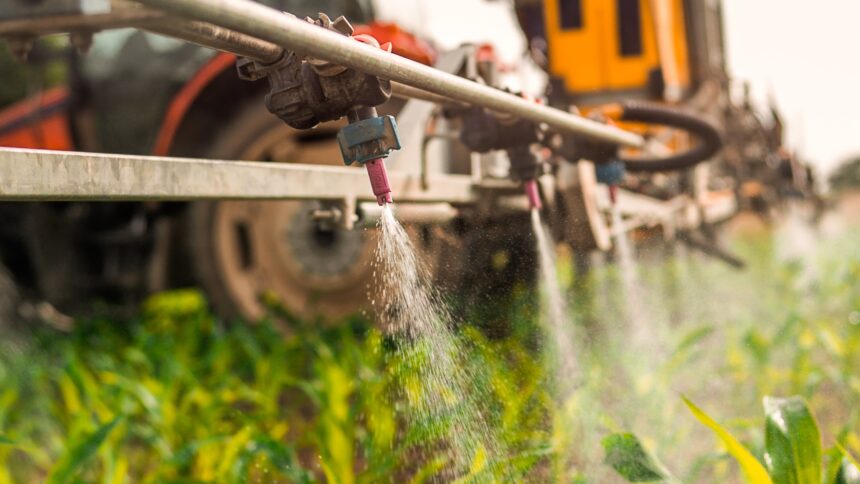
In a development that poses new challenges for British agriculture, scientists have confirmed the presence of a glyphosate-resistant weed in the United Kingdom for the first time. The discovery, made on a farm in Kent, involves Italian ryegrass, a species increasingly recognized as high-risk for herbicide resistance. Glyphosate, widely regarded as one of the most effective herbicides, is used extensively to clear vegetation before planting crops and in settings like gardens, pavements, and orchards.
While glyphosate-resistant weeds have been documented globally, this marks the first case in the United Kingdom, creating significant concerns for farmers. Although the resistance is unlikely to impact food prices, it has severe financial implications for individual farmers. Some may be forced to adopt more costly and environmentally damaging weed control methods, potentially jeopardizing access to sustainability-focused subsidies.
Weed science consultant John Cussans, who identified the resistant Italian ryegrass in Kent, suggested that the resistance likely arose through natural selection rather than widespread transmission. However, he warned that further cases could be detected as monitoring increases. “The impact could be massively consequential for a small number of farmers, who may already face narrow profit margins,” John Cussans said. He highlighted the challenges faced by farmers attempting to maintain profitability while contending with inheritance tax changes and rising input costs.
The discovery also raises broader concerns for Britain’s transition to regenerative farming practices, which often rely on glyphosate to clear vegetation without resorting to soil-damaging techniques like tilling. “This resistance could affect our ability to transition our farming system,” John Cussans noted, emphasizing the importance of integrated weed management.
Dr. Helen Metcalfe, an agricultural ecologist at Rothamsted Research, underscored the need for farmers to reduce their reliance on glyphosate. “This is a warning sign,” Dr. Helen Metcalfe said, advocating for diversified approaches, including crop rotation and mechanical weeding, to curb weed competition while preserving glyphosate as a viable tool.
The increasing risk of herbicide resistance stems from the rising prevalence of Italian ryegrass, farmers’ reliance on glyphosate, and reduced cultivation practices to maintain soil health. Previous studies estimated that the total loss of herbicide control against black-grass, another resistant weed, could cost £1 billion annually worldwide, with £0.4 billion attributed to England alone.
While glyphosate resistance has existed in Australia since the 1990s without catastrophic consequences, experts caution against complacency. Paul Neve, professor of crop science at the University of Copenhagen, acknowledged the economic burden but reassured that it can be managed with strategic interventions.