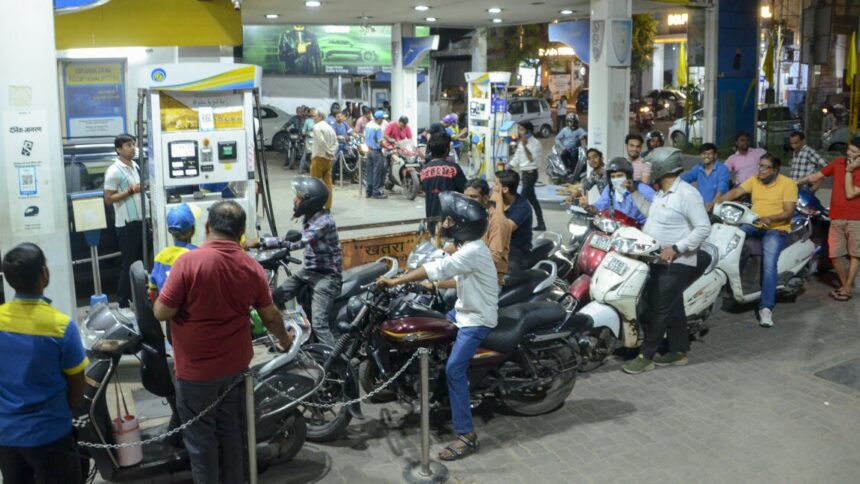
The Government of India has issued a strong clarification dismissing widespread rumours about a shortage of petrol and diesel across the country, stating that fuel supplies remain stable and sufficient. Officials from the Ministry of Petroleum and Natural Gas emphasized that all refineries are functioning at high capacity, retail outlets are fully operational, and supply chains are running smoothly. The advisory comes amid panic buying in certain regions triggered by misinformation circulating on social media, which led to unusually high demand and crowding at fuel stations.
Fuel Availability Across India and Official Clarification
Authorities have confirmed that there is no shortage of petrol or diesel at any retail outlet across the country. Oil refineries are operating efficiently with adequate crude oil inventories, ensuring continuous production. Distribution networks, including storage terminals and transport logistics, are functioning without disruption, maintaining consistent supply nationwide.
Officials have highlighted that panic buying has been observed in some areas due to rumours rather than actual shortages. This sudden spike in demand created temporary pressure at fuel stations, but it does not reflect the true availability of fuel. Citizens have been advised to rely only on verified government communication and avoid unnecessary purchases.
The government has reiterated that India maintains strong fuel reserves and has the capacity to meet domestic demand even during global uncertainties. The assurance aims to restore confidence and prevent further panic-driven behaviour among consumers.
LPG Supply Situation and Global Disruptions
While petrol and diesel availability remains unaffected, LPG supply has experienced some impact due to geopolitical tensions in the Strait of Hormuz. This region is a key route for global energy supplies, and disruptions have affected imports of liquefied petroleum gas.
India depends on imports to meet a significant portion of its LPG demand, and any disturbance in supply chains can create pressure on availability. However, the government has clarified that there are no reports of LPG shortages at the consumer level. Cylinder deliveries are continuing, and additional allocations have been made to ensure uninterrupted supply.
To manage the situation effectively, authorities have prioritised domestic household consumption while limiting supply to commercial establishments such as restaurants and hotels. This approach ensures that essential needs are met without disruption.
Steps Taken to Stabilise Energy Supply
The government has implemented multiple measures to maintain stability in fuel supply and reduce pressure on LPG availability. One of the key initiatives is accelerating the transition to piped natural gas, which provides a more stable and continuous energy source.
City gas distribution networks are being expanded rapidly, and new connections are being provided to households and institutions. This shift reduces dependency on LPG cylinders and strengthens long-term energy security.
Additional steps include increasing domestic LPG production, allocating extra kerosene supplies to states, and promoting alternative energy sources such as electricity and natural gas. These measures are aimed at ensuring that consumers continue to receive uninterrupted energy supply despite global challenges.
Crackdown on Hoarding and Black Marketing
Authorities have taken strict action against hoarding and black marketing activities that emerged due to panic buying. Enforcement agencies have conducted extensive inspections across various regions, leading to the seizure of illegally stored fuel and LPG cylinders.
Legal action has been initiated against those involved in such activities, including arrests and registration of cases. State governments have been directed to remain vigilant and take immediate action against any attempts to exploit the situation.
These measures are crucial in maintaining fair distribution and preventing artificial shortages that can arise from unethical practices.
Oil Companies Reassure Public on Fuel Supply
Major oil marketing companies, including Indian Oil Corporation, Bharat Petroleum Corporation Limited, and Hindustan Petroleum Corporation Limited, have also issued statements confirming that there is no shortage of fuel across the country.
These companies have assured that all petrol pumps are well-stocked and operating normally. Supply chains are functioning efficiently, and there is no disruption in fuel availability. They have urged consumers to avoid panic buying and continue with normal consumption patterns.
Officials have also pointed out that India is a net exporter of petrol and diesel, which further strengthens its ability to manage supply effectively even during global uncertainties.
Impact of Global Situation on Energy Supply
The ongoing tensions in West Asia have affected global energy markets, particularly crude oil, LNG, and LPG supplies. However, India’s diversified sourcing strategy has helped mitigate these impacts.
The country imports crude oil from multiple regions, including West Africa, Latin America, and the United States, ensuring stable supply. This diversification reduces dependence on any single region and enhances energy security.
While LPG imports have been more affected due to reliance on Gulf countries, proactive measures by the government have ensured that domestic needs continue to be met.
Advisory for Citizens and Responsible Consumption
The government has strongly advised citizens to avoid panic buying and rely only on official information. Unverified rumours can create unnecessary panic and disrupt supply chains, even when sufficient stocks are available.
Consumers have been encouraged to maintain normal consumption patterns and avoid hoarding fuel. Responsible behaviour plays a key role in ensuring smooth distribution and preventing artificial shortages.
Energy conservation has also been emphasised as part of broader efforts to manage resources efficiently. Small actions such as reducing unnecessary fuel usage can contribute to overall stability.
Conclusion
The government’s assurance highlights that there is no shortage of petrol or diesel in the country, and supply systems remain strong despite global challenges. While LPG supply has been affected to some extent, effective management and prioritisation have ensured that essential needs are met.
With strict action against hoarding, proactive policy measures, and cooperation from citizens, the overall fuel supply situation remains stable. Continued awareness and responsible consumption will be essential in maintaining this balance in the coming days.