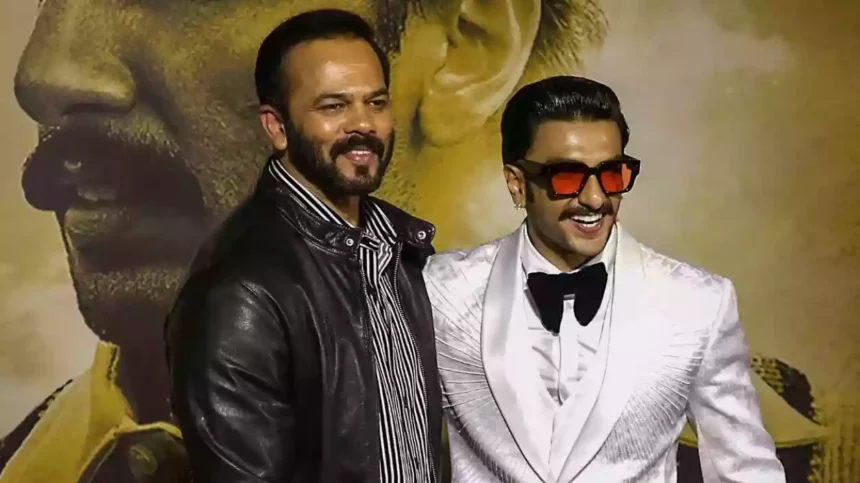
Mumbai: Bollywood stars Ranveer Singh and filmmaker Rohit Shetty have once again come under threat, this time through a chilling new audio clip allegedly sent by the notorious Lawrence Bishnoi gang. This marks the third such threatening message linked to the gang in recent times, intensifying concerns about the safety of prominent film personalities and their staff. In the latest recording, a person claiming to be Harry Boxer, identified as a member of the gang, warns Ranveer Singh for allegedly reneging on a previous commitment and extends threats toward his staff and families. Shetty and the wider Bollywood community are also targeted in the message, which cautions them to “fall in line.” Boxer, a Rajasthan native currently residing abroad, had made headlines last year after shots were fired at comedian Kapil Sharma’s café in Canada. The threatening audio has been shared with law enforcement agencies, and the Mumbai Crime Branch is investigating the authenticity of the message, including the possibility of it being AI-generated, while alerting technical teams across the country for analysis.
Threats, Audio Clip, and Alleged Activities of the Bishnoi Gang
The fresh audio clip has raised alarm bells across the film industry due to its explicit threats and the alleged targeting of high-profile individuals. In the message, Harry Boxer mocks Singh and Shetty for seeking police protection, claiming credit for recent firing incidents in Portugal. He asserts that both actors and the entire Bollywood community are being watched, and the gang has detailed knowledge of their families, residences, and work schedules. The clip states that the punishment for reneging on commitments will be shown to Singh, while Shetty and other members of the film industry are instructed to “fall in line.” Boxer’s tone and the content of the message indicate a combination of intimidation and control, underscoring the gang’s continued willingness to employ violence to assert authority and instill fear. The police are meticulously analyzing the clip to determine its authenticity, noting that there are no existing records of individuals claiming responsibility. The message also references incidents at Marina Grand and Sukhdev’s shop in Portugal, claiming responsibility on behalf of the gang, which adds a cross-border dimension to the threats and highlights the gang’s audacious operations.
Officials have stressed that the clip’s context remains unclear, including whether it was prompted by a particular disagreement or dispute involving Singh and Shetty. Regardless, the nature of the threats has compelled both the actor and filmmaker to cooperate fully with authorities, recording their statements and clarifying that they had no prior communication with the Bishnoi gang. The threats also extend to their teams, particularly managers and employees, signaling a disturbing level of planning and intent that could have significant implications for security measures within the film industry. Law enforcement agencies have indicated that the investigation will include detailed technical and forensic analysis, including verifying whether the voice in the audio has been artificially generated or manipulated. The Crime Branch is also coordinating with other agencies nationwide to ensure a comprehensive response to the threat.
Impact on Bollywood Security and Legal Measures Being Considered
The emergence of this audio clip has reignited concerns about the vulnerability of celebrities and their teams to criminal networks operating both domestically and internationally. Bollywood has a long history of threats from organized crime groups, but the repeated targeting of Singh and Shetty highlights the ongoing challenges in safeguarding high-profile figures. Security protocols for actors, filmmakers, and staff are being revisited, with additional protection measures likely to be implemented in response to the latest developments. Police officials have indicated that, beyond immediate protective measures, there will be an effort to trace the origins of the clip, identify potential collaborators, and preempt any planned attacks. The warning to families and residences of Singh’s associates adds urgency to the situation, necessitating a coordinated strategy to monitor movements, secure locations, and ensure that precautionary measures are strictly followed.
The legal implications of these threats are also significant, as law enforcement agencies are exploring multiple avenues to hold those responsible accountable. The possibility of cross-border operations and prior incidents, such as the Portugal firing and the attack on Kapil Sharma’s café in Canada, suggest that the gang has both capability and intent to engage in serious criminal activity. Investigators are reviewing the gang’s history, known associates, and previous communication patterns to build a profile that can help anticipate and mitigate risks. The repeated targeting of celebrities, coupled with the explicit threats against family members, underscores the need for a proactive, multi-layered security approach that includes coordination between city, state, and international law enforcement agencies.
Authorities are also carefully examining the psychological impact of such threats on the victims and the broader entertainment community. The explicit mention of staff and family members is a tactic aimed not only at intimidation but also at influencing professional decisions and maintaining control over perceived transgressions or disagreements. Experts note that criminal organizations often exploit public figures’ visibility to amplify fear, making preventive measures and timely intervention critical. In this instance, the audio clip’s circulation has sparked conversations within Bollywood about the adequacy of current security arrangements, the potential need for technological safeguards, and the importance of vigilance in day-to-day operations.
The collaboration between law enforcement and industry representatives is expected to be crucial in addressing these threats effectively. Measures under consideration include enhanced personal security for actors and filmmakers, real-time monitoring of communications for potential criminal intent, and the use of digital forensics to analyze suspicious audio or messages. Additionally, maintaining open channels of communication between authorities and affected individuals is being emphasized to ensure rapid response in case of any escalation. The recurring nature of these threats from the Lawrence Bishnoi gang indicates that a combination of investigative rigor, preventive security measures, and legal accountability will be necessary to mitigate risks effectively.
As investigators continue to analyze the audio, attention is being given to the broader implications for Bollywood and other high-profile sectors that may be vulnerable to similar intimidation tactics. The targeting of well-known figures such as Ranveer Singh and Rohit Shetty sends a message to the entire entertainment industry about the potential reach of criminal gangs and the consequences of non-compliance with their demands. In response, officials are likely to expand surveillance efforts, employ predictive threat assessment techniques, and enhance inter-agency collaboration to ensure comprehensive coverage. The investigative process also involves identifying patterns in gang activity, linking prior incidents, and gathering intelligence to prevent future occurrences.
This development has prompted discussion among film industry stakeholders about the adequacy of current safety protocols, including private security personnel, controlled access to residences and studios, and monitoring of travel schedules. Many actors, directors, and producers are now reviewing security measures, including digital surveillance, risk assessments, and coordination with local authorities to reduce vulnerability to threats. The repeated targeting of Singh and Shetty underscores the need for sustained vigilance, proactive risk mitigation, and strategic planning in response to organized criminal activity. Law enforcement officials have reiterated that threats to families are treated with equal seriousness, emphasizing that protective strategies must address both primary targets and associated personnel.
In addition to immediate protective measures, investigators are also considering the use of technology to analyze and trace the source of threatening messages. Voice analysis, digital footprint tracking, and cross-referencing with known criminal networks are key components of the ongoing investigation. Experts in criminal psychology and organized crime are being consulted to better understand the gang’s motivations, tactics, and potential next steps. The audio clip represents a complex challenge that combines threats of violence, cross-border criminal activity, and potential use of digital manipulation to amplify fear. Consequently, law enforcement agencies are approaching the investigation with a multi-faceted strategy that integrates fieldwork, digital forensics, and inter-agency cooperation.
The recurrence of threats from the Bishnoi gang demonstrates the persistent challenges of ensuring safety for high-profile individuals in India. Past incidents, both domestically and internationally, have shown that criminal organizations can operate with significant planning, resources, and audacity. Consequently, the situation requires continuous assessment, refinement of security measures, and swift action in response to credible threats. The collaboration between police, legal authorities, and industry representatives is intended to build a comprehensive framework for risk management and prevention, with the goal of protecting both public figures and their associates.
Law enforcement authorities have highlighted that the investigation into the latest audio clip will focus not only on verifying authenticity but also on understanding the potential operational capabilities of the gang. This involves evaluating whether the threats are idle or backed by real-world logistics, including personnel, weapons, and planning for potential attacks. By combining intelligence-gathering with technological analysis, investigators aim to mitigate risks and provide a rapid response framework for affected individuals. The high-profile nature of the victims increases the urgency of the investigation, emphasizing the importance of collaboration across multiple jurisdictions.
The repeated targeting of Singh and Shetty also underscores the psychological warfare employed by organized crime groups. By threatening not only the individuals but also their families and associates, gangs seek to extend their influence and exert control. Experts note that managing such threats requires a holistic approach, including personal security, mental health support, and proactive engagement with law enforcement. In this context, the ongoing investigation aims to combine preventive measures, intelligence analysis, and direct action to neutralize the threat posed by the Bishnoi gang.
The audio clip has also raised questions about the potential role of AI or digital manipulation in criminal communications. Law enforcement agencies are exploring whether the voice recording could be artificially generated or modified to mimic the tone and speech patterns of gang members. This emerging threat vector highlights the intersection of technology and organized crime, necessitating innovative investigative techniques and enhanced digital literacy among security teams. By considering all possibilities, authorities aim to ensure that protective measures are both comprehensive and adaptive to evolving risks.
Authorities have emphasized the importance of maintaining calm while implementing heightened security measures. Both Ranveer Singh and Rohit Shetty have expressed cooperation with the police and confirmed no prior interaction with the gang, but vigilance remains essential. Protective strategies now focus on securing residences, workplaces, travel routes, and key personnel. The investigation also involves liaising with counterparts in other cities and countries to gather intelligence, verify threats, and preempt any coordinated criminal actions.
As the investigation progresses, the case underscores the broader challenge of safeguarding the film industry against criminal intimidation. Bollywood, as a high-visibility sector, remains a prime target for organized crime groups seeking to leverage influence and instill fear. The recurrence of threats from the Bishnoi gang highlights the need for sustained investment in security infrastructure, coordination with law enforcement, and implementation of preventive protocols. By combining legal, technological, and operational approaches, authorities aim to neutralize threats while ensuring that the creative and commercial activities of the industry can continue without disruption.
The latest audio message has also prompted introspection within the Bollywood community regarding awareness, training, and preparedness for potential threats. Industry stakeholders are increasingly prioritizing security briefings, emergency protocols, and collaboration with law enforcement to ensure that everyone from actors to production staff is prepared for contingencies. The lessons from this incident are likely to influence future industry-wide safety practices, emphasizing risk awareness, communication channels, and proactive measures to prevent escalation.
The emergence of fresh threats from the Lawrence Bishnoi gang targeting Ranveer Singh and Rohit Shetty represents a serious challenge for both law enforcement and the Bollywood industry. The explicit nature of the threats, combined with cross-border references and potential use of digital manipulation, has elevated the stakes and underscored the need for a coordinated, multi-layered response. Investigators are employing a combination of technical, operational, and strategic measures to protect the actors, their families, and associated personnel while assessing the authenticity and implications of the audio clip. The situation highlights the ongoing threat posed by organized criminal groups to high-profile individuals and the necessity of rigorous security and preventive protocols to mitigate risks effectively.