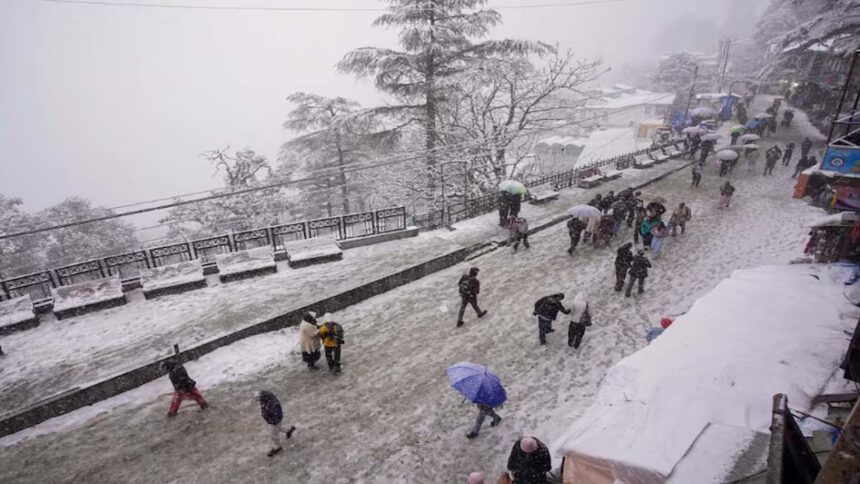
Jammu and Kashmir is witnessing a surge in tourism as fresh snowfall blankets the region, transforming areas like the Gandoh Bhalesa Mountain in Doda into a winter paradise. The lush green landscape is now covered in a thick layer of snow, offering a picturesque winter wonderland. The snow-capped Himalayan peaks and tranquil surroundings continue to attract visitors from across the country, drawn by the allure of a magical winter experience in the region.
At the same time, Srinagar’s iconic Dal Lake is experiencing a rise in tourist footfall, with travelers flocking to the area to enjoy the breathtaking views and serene environment. One of the most popular attractions remains the traditional shikara ride, allowing visitors to explore the inner parts of the lake while enjoying the scenic beauty. These rides offer an unparalleled opportunity to witness Dal Lake’s captivating charm, especially during the winter months.
The boom in tourism has brought positive changes to local businesses, benefiting houseboat owners, shikara operators, and handicraft vendors. The famous houseboats, known for their intricate woodwork and cozy interiors, offer tourists a one-of-a-kind stay, while shikara operators guide them through the crystal-clear waters of the lake. Additionally, local artisans are showcasing their traditional Kashmiri handicrafts, and beautifully crafted souvenirs have become highly sought after by visitors.
However, the increased tourism also presents challenges, particularly concerning the preservation of Dal Lake’s delicate ecosystem. Authorities are focusing on sustainable tourism practices, including initiatives to reduce plastic waste and promote eco-friendly shikara rides. These measures are vital in ensuring that the lake’s natural beauty remains intact for future generations.
Tourists like Rahul Gupta from Lucknow expressed their admiration for the region’s charm, calling it “the paradise of Kashmir.” He highlighted the pollution-free environment and the excellent facilities, noting that his experience staying on a houseboat was unforgettable. Another tourist, Urvashi, shared her joy of exploring the local market and taking a shikara ride to famous spots like Zero Point and Lal Chowk. The peaceful atmosphere and the friendly locals left a lasting impression on her.
In the Jammu region, the Border Roads Organisation (BRO) is working hard to maintain connectivity despite the harsh weather. Snow clearance operations on the Budhal-Mahore-Gool Road are ensuring that the districts of Rajouri, Mahore, and Ramban remain connected.
The resurgence in tourism comes alongside an improved security situation. General Upendra Dwivedi, Chief of Army Staff, remarked on the region’s shift from “Terrorism to Tourism” as a result of strengthened security measures and coordinated efforts from government agencies. With enhanced infrastructure and security, Jammu and Kashmir is experiencing a notable economic recovery, fueled by the growing tourism sector.