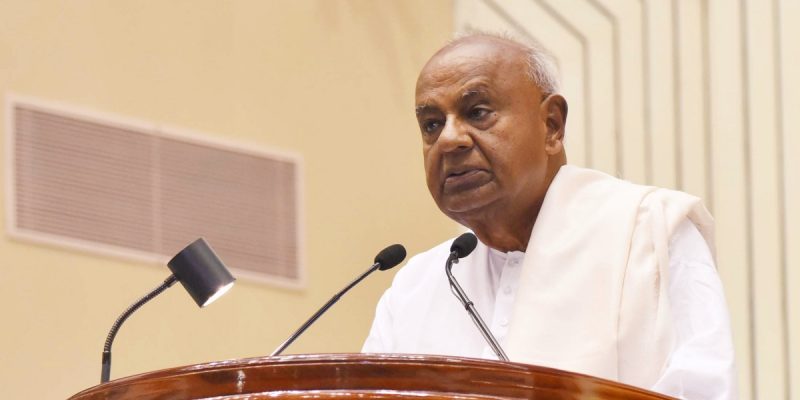
In a surprising revelation, former Prime Minister H. D. Deve Gowda made a statement in the Rajya Sabha on Friday, claiming that Andhra Pradesh Chief Minister N. Chandrababu Naidu wanted to be appointed as the vice president of the National Democratic Alliance (NDA) after the 2024 Lok Sabha elections. His remarks have triggered discussions and speculations about political ambitions within the NDA camp.
According to Deve Gowda, Prime Minister Narendra Modi rejected the proposal, choosing not to appoint Chandrababu Naidu as the NDA vice president. He stated that despite Naidu’s willingness to take up the role, Modi did not approve of the idea as he understands how to manage governance effectively. The remarks came during the discussion on the motion of thanks to the president’s address in Parliament. Deve Gowda pointed out that Naidu, who leads a bloc of 16 Members of Parliament, has been supporting the NDA government, but his request for a senior position within the alliance was not entertained.
The claims have caused a stir within political circles, prompting a response from the Bharatiya Janata Party (BJP). BJP national president J. P. Nadda quickly dismissed the claim, stating that no such discussions had taken place within the NDA. He reiterated that all allied party leaders have accepted Narendra Modi’s leadership without any reservations. Nadda further clarified that there has never been any formal or informal conversation about appointing a vice president for the NDA, and Deve Gowda’s statement does not reflect the reality of internal alliance discussions.
The political landscape in Andhra Pradesh remains dynamic, with Chandrababu Naidu’s Telugu Desam Party (TDP) playing a crucial role in regional politics and aligning with national coalitions based on strategic interests. While Deve Gowda’s statement has sparked curiosity and debate, the BJP’s prompt denial indicates that there is no official consideration of such a role within the NDA framework.
Deve Gowda also used his speech to praise Prime Minister Narendra Modi, acknowledging his leadership style and governance abilities. His remarks highlighted the internal political equations shaping the NDA and the balance of power among its key allies.
The controversy over this claim is likely to fuel further political discussions, especially as parties gear up for the upcoming general elections. Whether Naidu himself will respond to these claims remains to be seen, but the political narrative around alliance dynamics continues to evolve