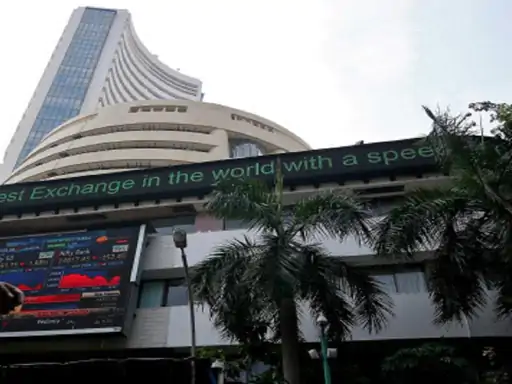
Foreign portfolio investors reversed their buying trend in November by pulling ₹3,765 crore out of Indian equities, a sharp shift from the strong inflows recorded in October, as global monetary uncertainty, geopolitical tensions and domestic valuation concerns prompted investors to turn risk-averse once again.
Sharp reversal after October inflows as global and domestic pressures weigh heavily on sentiment
November brought renewed turbulence for the Indian equity market as foreign portfolio investors resumed selling after a brief period of optimism. In October, FPIs had infused ₹14,610 crore into Indian equities, breaking a three-month spell of persistent outflows that lasted from July through September. During that period, FPIs withdrew ₹17,700 crore in July, ₹34,990 crore in August and ₹23,885 crore in September, largely due to global risk aversion and concerns surrounding interest rate movements in the United States.
Despite October’s positive reversal, November’s renewed negative trend highlights the extent to which India’s equity market remains sensitive to global financial cycles. So far in the current calendar year, foreign portfolio investors have withdrawn more than ₹1.43 lakh crore from Indian equities. This substantial outflow indicates that global conditions continue to play a decisive role in shaping foreign investor behaviour, despite India’s relatively strong macroeconomic position.
The picture in the debt market has been comparatively better, though still mixed. While ₹8,114 crore was invested under the general limit, ₹5,053 crore was withdrawn through the Voluntary Retention Route. This uneven pattern reflects the cautious approach that investors are adopting toward Indian fixed-income instruments as they await clarity on global interest rate trends and inflation patterns.
According to market analysts, the current sell-off is primarily rooted in global uncertainties. The biggest factor is the lack of clarity surrounding the US Federal Reserve’s interest rate path. Investors around the world continue to speculate whether the Fed will initiate rate cuts early next year or hold its stance due to persistent inflation indicators. This uncertainty has led investors to pull back from emerging markets and shift toward safer assets such as the US dollar and government bonds.
Domestically, India’s economic outlook remains largely stable, but certain indicators have caused investors to reassess the equity market’s valuation levels. High valuations in sectors such as consumer services, technology and healthcare have been singled out as areas of concern. Slower industrial output and mixed short-term data have also weakened sentiment. According to Himanshu Srivastava, Principal Manager for Research at Morningstar Investment Research India, global uncertainties combined with high domestic valuations have strengthened a “risk-off” tone among international investors.
The behaviour of FPIs in November has also been described as highly inconsistent. On some days, they were net buyers, and on others, sellers. This lack of a clear trend reflects the broader confusion in global markets. Market strategist V K Vijayakumar from Geojit Investments noted that while FPI flows remained volatile, market sentiment briefly improved when Nifty and Sensex hit record highs on November 27. Strong Q2 earnings and expectations of continued growth in Q3 and Q4 contributed to short-lived optimism.
IT, consumer and healthcare sectors face the brunt as investors turn risk-averse; future flows depend on Fed and India-US trade progress
The sectors that have been most affected by the FPI sell-off are IT services, consumer services and healthcare. These sectors were already under pressure due to global business uncertainties, weakening export demand, currency fluctuations and volatility in international tech markets. With the broader global environment turning unfavourable, investors quickly moved out of these segments to minimise exposure.
According to Vaqar Javed Khan, Senior Fundamental Analyst at Angel One, global risk aversion combined with ongoing turbulence in technology stocks has disproportionately impacted these sectors. The IT sector, in particular, remains vulnerable to global economic cycles and is often the first to be affected when global investors reduce exposure to emerging markets.
The consumer and healthcare sectors have also experienced pressure. High domestic valuations, muted short-term indicators and the shift in foreign investor focus have weighed on their performance. Investors have become more selective, favouring sectors with stronger balance sheets, lower valuation risks and more predictable earnings cycles.
Looking ahead, the primary factors that will determine FPI behaviour in December are the US Federal Reserve’s rate-cut signals and the progress of the India-US trade agreement. If the Fed makes a dovish announcement, market confidence is likely to rebound, encouraging foreign investors to resume buying. However, if rate cuts remain uncertain or are delayed, FPIs may continue their selling pattern into the final month of the year.
Another important factor is the India-US trade pact, which could influence investor confidence significantly. Positive developments on this front would attract renewed interest, especially from FPIs focusing on long-term structural themes in the Indian market. However, analysts caution that the absence of clear progress may lead to further outflows.
Despite the volatility, the Indian markets did manage to achieve record highs on November 27, demonstrating the strength of domestic investors and the resilience of India’s economic fundamentals. Domestic institutional investors have played a crucial role in stabilising the market during periods of foreign selling. On November 28, foreign institutional investors sold shares worth ₹3,672.27 crore in the cash segment, while domestic institutional investors purchased ₹3,993.71 crore, helping counterbalance some of the pressure.
The broader market, however, did end lower on that day. The Sensex closed 14 points down at 85,707, while the Nifty fell 13 points to finish at 26,203. These marginal declines reflect the tug-of-war between domestic optimism and foreign caution.
Market observers believe that while the near-term outlook remains uncertain, India’s longer-term trajectory continues to be strong. The country’s macroeconomic fundamentals—ranging from consumption to manufacturing to foreign exchange reserves—remain robust. However, the persistent volatility in FPI flows serves as a reminder that global financial dynamics continue to influence Indian markets powerfully, regardless of domestic resilience.
As December approaches, investors are closely watching global central bank decisions, geopolitical developments and domestic economic numbers. While the recent rally may have provided temporary relief, market experts advise caution, emphasising that the situation could swing in either direction depending on global cues.