India’s economic growth outlook has taken a hit as both Fitch Ratings and the Reserve Bank of India (RBI) have trimmed their GDP projections for the coming fiscal years. The revisions reflect rising global trade tensions, policy uncertainties, and concerns over potential impacts of new tariff measures. Fitch now expects India’s GDP to grow by 6.2% in FY25, a reduction of 10 basis points from its earlier estimate. Meanwhile, the RBI has also cut its growth forecast for FY25, citing similar macroeconomic challenges.
Fitch cuts outlook for three consecutive fiscal years
Fitch Ratings has revised its GDP growth forecast for India downwards for three fiscal years in a row. The latest projection for FY25 is now set at 6.2%, compared to the previous estimate of 6.3%. For FY26, Fitch has reduced the growth estimate by another 10 basis points, bringing it to 6.4%. The forecast for FY27 stands slightly higher at 6.3%.
According to Fitch, the revised numbers are a direct response to a worsening global economic climate. The ongoing trade tensions between the United States and China, coupled with increasing global protectionism, have dampened export prospects for emerging economies like India. These geopolitical shifts are expected to weigh on global trade flows, ultimately impacting India’s external sector performance and investment outlook.
RBI revises projections amid tariff and policy concerns
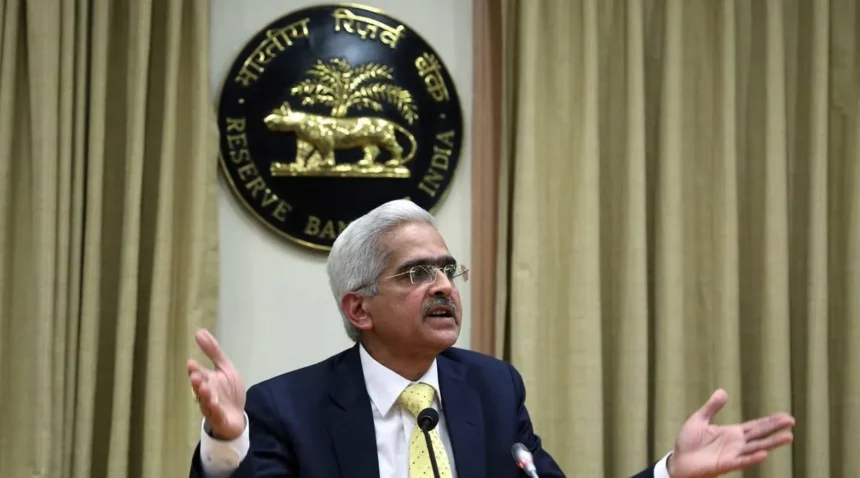
The Reserve Bank of India’s Monetary Policy Committee (MPC), under the new leadership of Governor Sanjay Malhotra, has also downgraded its expectations. In its latest meeting, the MPC lowered India’s GDP forecast for FY25 to 6.5% from the earlier 6.7%. Governor Malhotra attributed the change to “growing concerns over the economic impact of recently announced tariffs and global policy uncertainty.”
He further elaborated that the revised projections take into account a 20 basis point cut due to these external challenges. The central bank had previously projected a 6.7% GDP growth for FY26 during Malhotra’s first policy meeting as governor.
Both Fitch and the RBI have signaled caution as India navigates a more volatile global economic environment. Despite continued domestic resilience, the uncertain external outlook is prompting financial institutions to recalibrate their expectations. While India remains one of the faster-growing major economies, policymakers now face heightened pressure to support growth while managing inflation and maintaining macroeconomic stability.