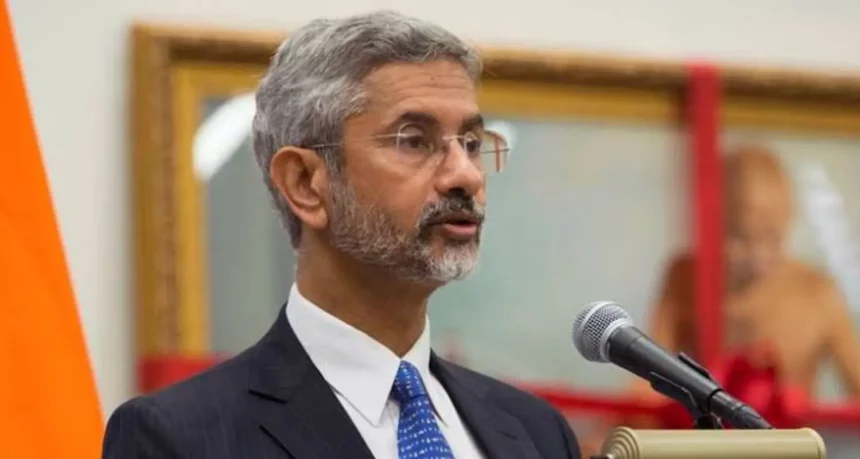
External Affairs Minister Subrahmanyam Jaishankar engaged in a series of high-level diplomatic meetings with his counterparts from neighboring countries, including Bangladesh, Nepal, Sri Lanka, the Maldives, and Mauritius, on the sidelines of the Indian Ocean Conference in Muscat, Oman, on Sunday. The discussions focused on strengthening bilateral ties, regional cooperation, and maritime security under the theme “Voyages to new horizons of maritime partnership.”
Among the significant meetings was his discussion with Foreign Affairs Advisor Md. Touhid Hossain from the interim government of Bangladesh led by Muhammad Yunus. The two leaders deliberated on various aspects of the India-Bangladesh bilateral relationship, with a special emphasis on the Bay of Bengal Initiative for Multi-Sectoral Technical and Economic Cooperation. Subrahmanyam Jaishankar later shared insights from their meeting, reinforcing India’s commitment to maintaining strong diplomatic ties with its neighbor.
The conference also provided an opportunity for Subrahmanyam Jaishankar to hold talks with Nepal’s Minister of Foreign Affairs Arzu Rana Deuba, Sri Lanka’s Minister of Foreign Affairs Vijitha Herath, Maldives’ Minister of Foreign Affairs Abdulla Khaleel, and Mauritius’ Minister of Foreign Affairs Dhananjay Ritish Ramful. These discussions aimed at enhancing regional cooperation and fostering maritime security in the Indian Ocean.
The Indian Ocean Conference, now in its eighth edition, serves as a vital platform for dialogue among nations with shared interests in maritime security and regional stability. The event, organized by the India Foundation in collaboration with the Ministry of Foreign Affairs of Oman, saw participation from key policymakers, diplomats, and strategic experts from across the region.
Subrahmanyam Jaishankar’s meeting with Md. Touhid Hossain was particularly noteworthy, as it marked another high-level engagement between India and Bangladesh’s interim government following their discussions on the sidelines of the United Nations General Assembly in New York in September 2024. This meeting came against the backdrop of strained ties between the two nations since the political turmoil in Bangladesh that led to the ousting of former Prime Minister Sheikh Hasina’s Awami League government on August 5, 2024.
India has continued to advocate for stability in Bangladesh and a normalization of ties despite tensions surrounding the interim government’s policies. The administration in Dhaka has faced criticism over its treatment of minority communities and allegations of politically motivated accusations following mass student-led protests. In December, Foreign Secretary Vikram Misri visited Dhaka on a one-day trip, where he conveyed India’s concerns regarding the safety and welfare of Bangladesh’s Hindu minority to the country’s leadership.
The discussions at the conference also touched upon the upcoming Bay of Bengal Initiative for Multi-Sectoral Technical and Economic Cooperation Summit, which is set to take place in Bangkok, Thailand, from April 2 to 4, 2025. At the summit, Bangladesh is set to assume the chairmanship of the regional grouping, which plays a crucial role in economic and technical cooperation among South and Southeast Asian nations.
The diplomatic engagements at the Indian Ocean Conference underscore India’s strategic focus on deepening regional partnerships and maintaining a stable and cooperative Indian Ocean region. Subrahmanyam Jaishankar’s meetings in Muscat highlight New Delhi’s proactive role in shaping regional policies and addressing pressing geopolitical challenges in South Asia and the broader Indo-Pacific.