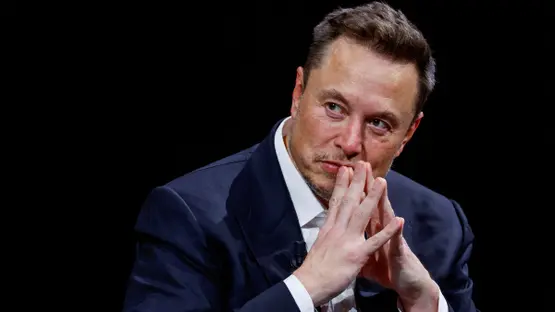
Elon Musk, the chief executive of Tesla and SpaceX, has entered uncharted financial territory after his personal net worth surged past $750 billion, a level of wealth never before achieved by an individual and greater than the combined gross domestic product of Pakistan, Nepal, and Sri Lanka.
The extraordinary jump in Musk’s fortune unfolded over a matter of days, with his net worth rising by an estimated $150 billion in less than a week. The surge has once again placed the world’s richest individual at the centre of global debate about wealth concentration, executive compensation, and the expanding influence of technology-driven businesses. The scale of Musk’s fortune has drawn comparisons not just with other billionaires, but with entire national economies, highlighting how rapidly valuations linked to technology, space exploration, and electric vehicles have transformed individual wealth.
Corporate decisions and market forces behind the historic surge
A key catalyst behind the dramatic rise in Musk’s wealth was a landmark judicial decision in the United States. The Delaware Supreme Court reinstated a long-contested Tesla compensation package that was originally approved in 2018. The deal, structured as a stock option plan tied to ambitious performance milestones, was initially valued at $56 billion. Over time, as Tesla’s market capitalisation expanded and its shares appreciated, the value of this package ballooned to approximately $139 billion.
The court’s decision reversed a lower court ruling that had struck down the compensation plan earlier in 2024, triggering an immediate reassessment of Musk’s net worth. Investors interpreted the ruling as a strong signal of stability in Tesla’s leadership structure, contributing to renewed momentum in the company’s share price. Because Musk holds roughly 12 percent of Tesla, even modest upward movements in the stock have an outsized impact on his personal wealth.
At the same time, SpaceX has emerged as an equally powerful driver of Musk’s fortune. During a recent internal share sale, the private aerospace company was valued at around $800 billion, a figure that places it among the most valuable companies in the world despite not being publicly listed. Musk owns an estimated 42 percent stake in SpaceX, meaning the paper value of his holding alone runs into several hundred billion dollars. Market observers note that if SpaceX were ever to list at or near this valuation, Musk’s wealth could rise by an additional $300 billion or more.
Tesla’s broader market performance has also played a decisive role. In November 2025, shareholders approved a new long-term compensation framework that could eventually be worth up to $1 trillion, contingent on extreme growth and performance targets. While much of that figure remains theoretical, the approval reinforced investor confidence in Musk’s leadership and vision. In 2025 alone, his net worth increased by more than $340 billion, driven by rising equity valuations and the reinstated compensation package.
The cumulative effect of these developments has pushed Musk’s wealth beyond benchmarks previously thought unimaginable. At various points during the surge, estimates placed his net worth above $750 billion, far exceeding the combined economic output of Pakistan, Nepal, and Sri Lanka, which together account for roughly $555 billion in GDP. Even conservative estimates put Musk’s wealth on par with the combined fortunes of dozens of the world’s richest individuals.
From early entrepreneurship to unmatched personal wealth
Musk’s rise to unprecedented wealth is rooted in a long entrepreneurial journey that began in childhood. He reportedly started learning computer programming around the age of ten and, by twelve, had created a simple video game called “Blaster,” which he sold to a local magazine for $500. The episode is often cited as his first business success and an early indication of his technical curiosity.
His professional breakthrough came in the mid-1990s with the founding of Zip2, a web software company that provided online business directories and maps. In 1999, Zip2 was acquired by Compaq for $307 million, earning Musk approximately $22 million for his stake. That deal provided the capital and confidence for his next ventures.
Musk went on to co-found PayPal, which revolutionised online payments in the early days of e-commerce. When eBay acquired PayPal in 2002 for $1.5 billion, Musk received about $180 million, cementing his status as a successful technology entrepreneur. Rather than slowing down, he reinvested much of that wealth into far more ambitious projects.
SpaceX was founded with the audacious goal of reducing space launch costs and ultimately enabling human settlement beyond Earth. Despite early failures that nearly bankrupted the company, SpaceX went on to secure major government and commercial contracts, transforming the global space industry. Today, it dominates the commercial launch market and plays a central role in satellite deployment and space exploration.
Tesla followed a similarly disruptive trajectory, challenging established automotive giants by pushing electric vehicles into the mainstream. Under Musk’s leadership, Tesla evolved from a niche startup into one of the world’s most valuable companies, reshaping consumer perceptions of electric mobility and energy storage. Each surge in Tesla’s valuation has directly amplified Musk’s personal wealth due to his significant equity stake.
As Musk’s fortune has grown, so too has scrutiny of its implications. His net worth now surpasses the combined wealth of other leading technology billionaires such as **Larry Page**, **Larry Ellison, and Jeff Bezos, and rivals the aggregate wealth of dozens of top business figures in emerging economies.
The sheer scale of Musk’s wealth has reignited discussions about executive compensation, shareholder governance, and economic inequality in an era where technology companies can create enormous value at unprecedented speed. Supporters argue that Musk’s fortune reflects genuine value creation and risk-taking across industries that are reshaping transportation and space exploration. Critics counter that such concentration of wealth raises ethical and systemic questions, particularly when individual fortunes eclipse national economies.
What remains clear is that Musk’s financial ascent represents a defining feature of the modern economic landscape, where innovation, equity markets, and judicial decisions can combine to produce outcomes once considered impossible.