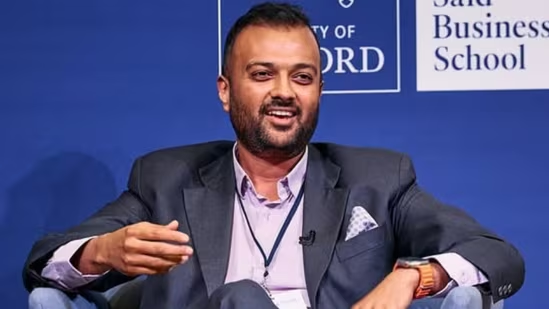
The Indian fantasy gaming industry is facing an unprecedented challenge following the government’s ban on real-money online games, a move that has had an immediate and severe impact on Dream Sports, the parent company of Dream11. Harsh Jain, co-founder and CEO of the fantasy gaming giant, revealed that 95 percent of the company’s revenue vanished overnight due to the regulatory restrictions, and 100 percent of the profits were wiped out. Despite this sudden and dramatic financial disruption, Harsh Jain emphasized that Dream Sports has no plans to lay off employees and intends to redeploy its talent pool to explore new revenue-generating avenues. His comments come days after the Indian Parliament passed the Promotion and Regulation of Online Gaming Bill, 2025, which criminalizes the offering and financing of real-money online gaming, with penalties of up to five years in prison for offenders. The statement underscores the company’s commitment to its workforce and a strategic pivot toward innovation and diversification in the sports and creator economy.
Impact of the Online Gaming Ban on Dream11’s Revenue and Business Operations
Dream Sports has historically been a dominant player in India’s real-money gaming sector, with Dream11 at the forefront of fantasy sports platforms. The sudden regulatory ban, however, has forced the company to cease all money-based games, effectively shutting down a core component of its business model. Harsh Jain’s remarks to Moneycontrol highlighted the severity of the financial impact, noting that the ban obliterated almost the entirety of the company’s revenue stream and profitability overnight. Despite the severe revenue loss, the company has made a conscious decision to protect its workforce, assuring employees that no layoffs will occur and that the talent pool will remain intact.
The government’s Online Gaming Bill, 2025, plays a central role in shaping this new business reality. By criminalizing the offering and financing of online money-based games, the legislation introduces stringent legal risks for operators of real-money gaming platforms. Industry analysts have described the regulatory shift as one of the most significant disruptions to India’s gaming ecosystem, affecting not only revenue but also partnerships and sponsorship agreements. For instance, Dream11 has already informed the Board of Control for Cricket in India that it will be unable to continue its title sponsorship of the Indian Premier League team due to the anticipated loss in revenue.
In response to these changes, Harsh Jain emphasized the need to innovate and pivot strategically. “The only way to deal with 95 percent of your revenue being gone is to build new products that you can monetize in the future. That will always start with talent,” he said. By retaining its employees and redeploying them across existing and emerging business units, Dream Sports aims to create new revenue streams while maintaining operational stability. The CEO also clarified that the company has no intention of challenging the government on the ban, signaling a pragmatic approach toward navigating the new regulatory landscape while safeguarding employee welfare.
Strategic Pivot, Talent Redeployment, and Expansion into AI and Financial Services
To counteract the loss of revenue from real-money games, Dream Sports is actively redeploying its workforce of 500 engineers and other staff across existing ventures such as FanCode, DreamSetGo, Dream Game Studios, and Dream Money. The company is also exploring innovative AI-driven solutions aimed at enhancing the sports and creator economy. Harsh Jain underscored the potential of AI to disrupt and transform various business areas, including sports content, fan engagement, analytics, performance optimization, and merchandise. With a skilled team now available for redeployment, the company is positioning itself to develop advanced products and services for Indian sports fans.
Dream Sports’ financial resilience is a crucial factor in its ability to navigate this period of disruption. The company has sufficient cash reserves to sustain operations and retain staff for the next few years, providing a buffer against immediate financial pressures. In FY23, Dream Sports reported operational revenue of ₹6,384.49 crore, a significant increase from ₹3,841 crore in FY22, reflecting strong growth prior to the regulatory clampdown. This financial stability enables the company to invest in new ventures without compromising its workforce or operational capabilities.
One such initiative is the development of the Dream Money app, which marks the company’s entry into the financial services sector. Currently under pilot testing, the platform has not been officially launched but aims to offer innovative services such as daily gold purchases starting at ₹10 and fixed deposits beginning at ₹1,000. Marketed under the entity “Dream Suite Platform Private Limited” and published via Dreamsuite, the app represents a strategic diversification from fantasy gaming to financial technology. Analysts note that this pivot demonstrates Dream Sports’ commitment to leveraging its technological expertise and user base to create new monetizable products in adjacent sectors.
Even as Dream Sports closes its real-money gaming operations, other business verticals continue to operate, including Dream Set Go, which offers sports experiences and travel services; FanCode, which provides sports event ticketing and merchandise; and Dream Game Studios, which focuses on game development. The non-profit arm, Dream Sports Foundation, also continues to function, reflecting a multi-faceted business model capable of withstanding significant regulatory changes. This diversified portfolio, combined with a highly skilled workforce, positions the company to recover and potentially expand in areas that are not restricted by the new legislation.
Harsh Jain emphasized that the strategic focus now lies in using AI, data analytics, and technology to create engaging sports content, improve fan experiences, and develop innovative solutions for the growing sports ecosystem in India. By doing so, Dream Sports aims to monetize its platforms in ways that align with legal requirements and market demand. The CEO expressed confidence in the company’s ability to navigate the current crisis, highlighting both the talent at its disposal and the company’s vision for technological innovation in sports, financial services, and the broader creator economy.
The broader industry perspective indicates that the Indian online gaming sector is at a pivotal moment. Regulatory interventions such as the Online Gaming Bill, 2025, have fundamentally altered the competitive landscape, forcing established players to reconsider their business strategies and pivot toward new growth avenues. Companies like Dream Sports, with a combination of financial stability, technological expertise, and a diversified portfolio, are better positioned to absorb shocks and innovate, while smaller operators face higher operational risks.
Harsh Jain’s commitment to retaining talent reflects a larger trend in the tech and gaming industry, where human capital is recognized as a critical driver of innovation and revenue generation. By maintaining a skilled workforce, Dream Sports ensures that it has the internal capabilities to rapidly prototype and deploy new products, respond to market opportunities, and adapt to regulatory challenges. The CEO’s statements convey a long-term vision, emphasizing that preserving talent is essential for building sustainable business models that can thrive even in a restricted regulatory environment.
In conclusion, Dream Sports’ response to India’s real-money gaming ban represents a case study in strategic resilience and proactive adaptation. By redeploying talent, exploring AI-driven innovations, expanding into financial services, and maintaining operational stability, the company is positioning itself to not only survive the immediate regulatory shock but also lay the groundwork for long-term growth. Harsh Jain’s leadership emphasizes a balance between protecting employees, complying with legal requirements, and seizing new opportunities in the evolving Indian sports and technology landscape.
The developments at Dream Sports highlight the challenges and opportunities faced by major players in India’s online gaming sector, demonstrating that with strategic planning, innovation, and a focus on human capital, companies can navigate sudden regulatory disruptions while continuing to pursue growth and technological advancement. The industry is now watching closely how Dream11 and Dream Sports leverage their talent, resources, and expertise to redefine their business models, create new revenue streams, and maintain their position as leaders in the sports and gaming ecosystem.