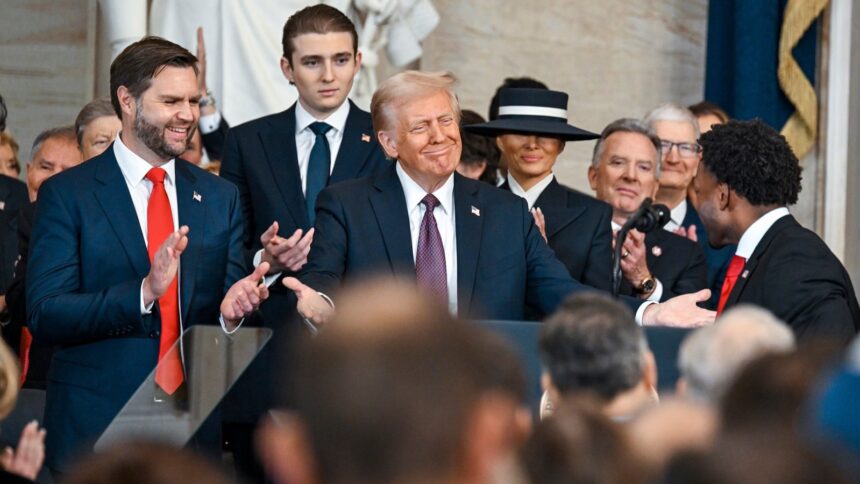
Former U.S. President Donald Trump has wasted no time making headlines on his first day back in the White House, signing a series of controversial executive orders that have set off debates across the globe. From birthright citizenship to climate policy, federal hiring freezes to trade tariffs, these decisions reflect Trump’s aggressive policy agenda and have far-reaching implications.
Birthright Citizenship Under Threat
One of Trump’s most contentious orders challenges the long-held interpretation of the 14th Amendment, which grants automatic citizenship to anyone born in the U.S. If implemented, this policy could face fierce legal battles, as the provision has remained unchanged since the Civil War. Critics argue it alienates immigrant communities, while supporters view it as a necessary step toward stricter immigration laws.
Withdrawing from the Paris Climate Agreement – Again
In another move, Trump announced plans to withdraw the U.S. from the Paris Climate Agreement, citing regulatory burdens on American industries. This decision risks isolating the U.S. from global climate initiatives and repeating the international criticism Trump faced in 2017 when he exited the agreement for the first time. Critics warn of long-term climate and diplomatic costs, while Trump defends the move as a win for American businesses.
Federal Hiring Freeze Sparks Concerns
Trump’s federal hiring freeze, exempting military and essential safety roles, is aimed at reducing government spending. However, critics warn this could worsen staffing shortages in critical sectors like education and healthcare, affecting public services. Economically, local economies reliant on federal jobs could face significant strain, making this order a double-edged sword.
Expanding the Death Penalty
Trump’s expansion of the death penalty for drug-related and violent crimes is framed as a tough-on-crime approach, but it has drawn criticism from human rights activists. Critics argue it violates global norms and risks backlash from states that have abolished the death penalty. Politically, the move appeals to Trump’s base but may alienate moderate voters.
Trade Tariff Reviews and Potential Trade Wars
Trump’s review of trade agreements with countries like China, Mexico, and Canada has reignited concerns about a new trade war. While the tariffs aim to protect American industries and jobs, they risk disrupting global supply chains and hurting industries dependent on imports and exports. The move is a clear extension of Trump’s “America First” policy.
Pardoning January 6 Capitol Rioters
Perhaps the most controversial order is Trump’s full pardon for January 6 Capitol riot participants. Critics argue this undermines accountability, threatens democratic institutions, and could encourage political violence. Public opinion remains sharply divided, with civil rights groups planning to challenge the order in court.
Ending Remote Work for Federal Employees
In a move impacting federal employees nationwide, Trump has ordered an end to remote work, mandating a return to in-person offices. Supporters say this will boost productivity, while critics warn of logistical challenges and potential health risks during future pandemics. Economically, the decision may benefit local businesses near offices but could impact employee satisfaction.
Global Impact of Trump’s Policies
Trump’s decisions on birthright citizenship, climate policy, death penalty, and trade agreements are set to spark new debates and challenges, influencing not just America but the global system. His aggressive approach signals a determined agenda, with sharp political and economic consequences.
What are your thoughts on Trump’s executive orders? Share your views in the comments!
Watch Full Video here: https://youtu.be/Z8maDnZrbaE